Guide
Supportive House Shoes for Plantar Fasciitis: Fit Guide (2026)
By Plantar Fasciitis Guides Editorial Team · Updated 2026-08-18
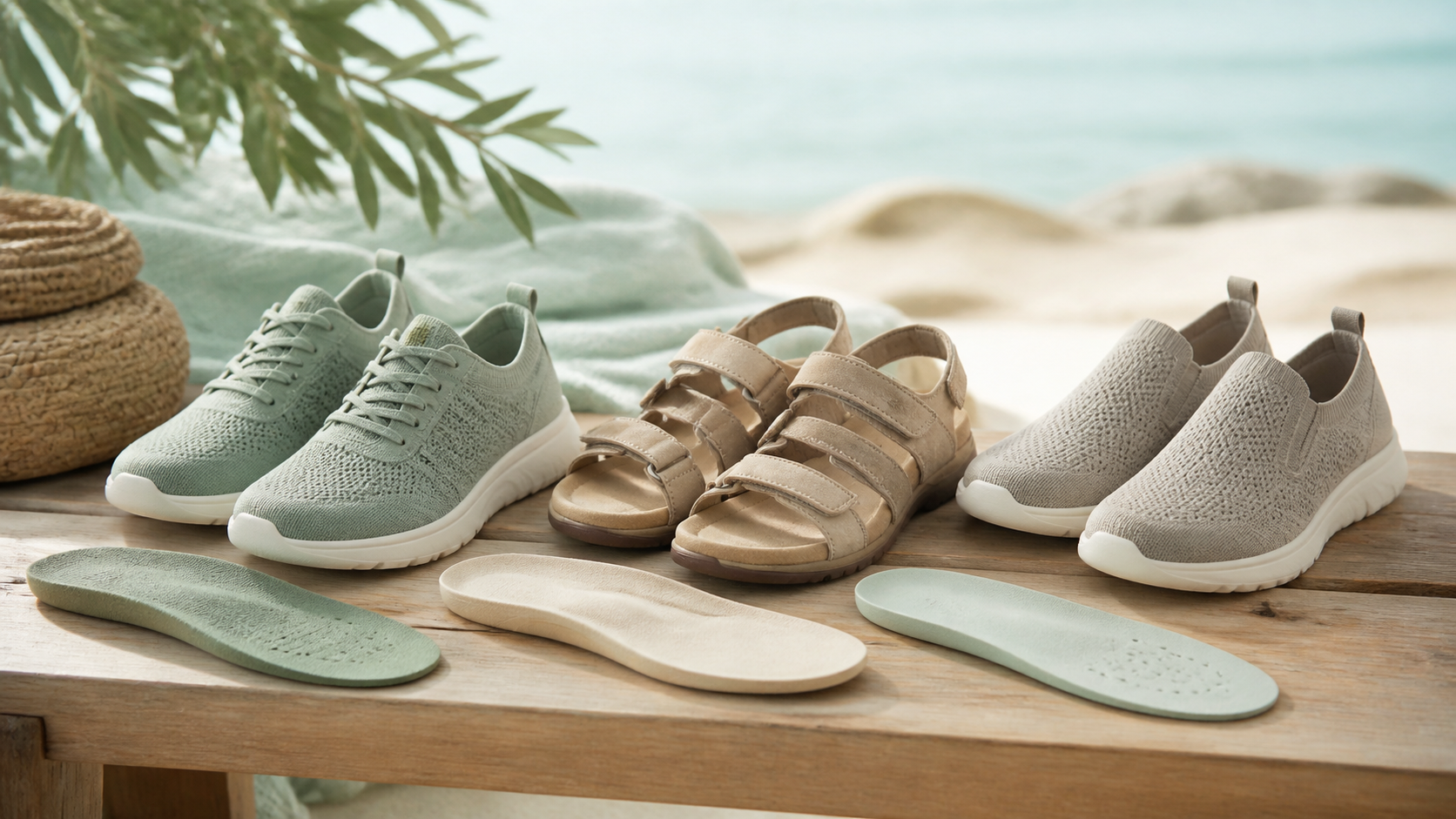
Quick answer: for plantar heel pain, prioritize an indoor shoe that stays attached to the heel, bends mainly at the toes rather than through the arch, has enough heel cushioning, fits the full width and length of both feet, and grips the household floor. Backless, very flexible or worn slippers may provide less control. A house shoe can support a broader management plan, but no untested product should be described as curing plantar fasciitis.
Affiliate disclosure: Plantar Fasciitis Guides may earn a commission from qualifying purchases made through clearly marked Amazon links. We have not hands-on tested the products returned by the retailer search in this article. This guide compares fit and construction criteria, not named brands.
Plantar fasciitis is one possible cause of pain under the heel and arch. Seek medical assessment for severe or sudden pain, inability to bear weight, significant injury, redness or heat, fever, numbness, an open wound, or symptoms that persist despite self-care. People with diabetes, circulation problems, reduced sensation or a history of foot ulceration should obtain individualized footwear advice.
Table of Contents
- Why indoor footwear matters
- House shoe versus slipper versus trainer
- Eight fit and construction criteria
- How to measure both feet
- How to assess support without marketing claims
- Fit for different home surfaces
- Insoles and removable footbeds
- A safe indoor trial
- Buying checklist
- Frequently asked questions
- Sources and editorial method
Why indoor footwear matters
People often focus on running or work shoes while spending hours barefoot or in loose slippers at home. The first steps after rest can be especially uncomfortable with plantar heel pain, so the transition from bed to hard flooring is a practical part of the day to plan.
The NHS plantar fasciitis guidance recommends shoes with cushioned heels and good arch support and advises against high heels, tight pointy shoes, flip-flops, backless slippers and walking barefoot on hard surfaces. The American Academy of Orthopaedic Surgeons likewise discusses supportive shoes, cushioning, heel pads and orthotics as conservative measures.
That guidance does not mean every structured slipper is medically effective. It establishes useful design questions:
- Is the heel secured?
- Does the shoe hold its shape under load?
- Is the heel cushioned without instability?
- Does the arch contour fit rather than press painfully?
- Is there space for toes?
- Does the sole grip the floor?
Indoor footwear also affects falls, trip risk, stairs, wet areas and transfers. Comfort is only one outcome.
House shoe versus slipper versus trainer
Backless slipper
A backless slipper is easy to put on but may require the toes to grip to keep it attached. It can slide off on stairs and commonly has a flexible, thin sole. Some models are firmer, but the open heel remains a control tradeoff.
Closed-back house shoe
A closed back or heel strap helps the footwear move with the foot. It may be a purpose-built indoor shoe, clog with a secure strap, or supportive slipper. Check that the heel counter does not rub and the opening is easy to use safely.
Indoor trainer
A clean athletic or walking shoe reserved for indoors can provide fastening, heel structure, removable insoles and known sizing. It may be warmer and heavier than a slipper but is often easier to assess using normal footwear standards.
Recovery-style sandal
A sandal may provide a thick contoured footbed, but open designs vary in stability and heel control. NHS sources caution against flip-flops and backless footwear. A secure backstrap changes the design but does not guarantee fit.
Orthopedic or comfort shoe
These labels are broad. Ask for dimensions, fastening, sole construction, heel counter and removable footbed. “Podiatrist recommended” needs a named, verifiable basis and does not establish suitability for your foot.
Eight fit and construction criteria
1. Heel security
A fastening, closed back or secure strap reduces the need to grip with the toes. The heel should not lift excessively during a normal step. The upper should hold without cutting into the Achilles area.
NHS Borders’ clinical guidance encourages supportive footwear with laces or hook-and-loop fastening and advises avoiding slip-on, flexible and backless footwear in plantar fasciitis management.
2. Heel cushioning
Cushioning can reduce the harshness of a hard floor, but softness alone is not support. A heel should settle without contacting a hard base or wobbling side to side. Thick foam that collapses quickly may change fit and increase instability.
AAOS notes that thick soles and extra cushioning can be helpful and that soft heel pads or orthotics may be used. Individual response varies, and a product should not promise tissue healing based only on foam thickness.
3. Sole stiffness through the arch
Hold a display sample or unworn shoe at heel and forefoot. It should normally bend near the toe-joint area rather than fold easily through the middle. Twist resistance can indicate structure, but there is no universal hand-test score.
AAOS footwear advice says a shoe should bend in the toe box rather than the shank and that a stable shank provides support. Do not force a shoe so hard that it is damaged or cannot be returned.
4. Arch contour
An arch feature should meet the foot comfortably; a prominent lump in the wrong place is not support. Arch height labels are not standardized. People with rigid, flexible, high or low arches may need different shapes.
Begin with short wear. Persistent pressure, numbness or increased pain is a reason to stop. Custom devices require appropriate professional assessment.
5. Toe-box length, width and depth
The toes should not be pinched or stacked. Measure both feet and fit the larger one, while ensuring the smaller foot is secured by fastening rather than sliding. A square or rounded toe shape commonly provides more room than a pointed one.
AAOS advises measuring length and width of both feet, ensuring toe room and avoiding the idea that a poor fit will simply “break in.”
6. Heel counter
A structured heel counter can guide the rear foot and help the shoe stay attached. It should not be so hard or poorly shaped that it creates rubbing. Try gentle pressure around the counter and inspect seams.
7. Floor grip
Check the outsole pattern and material on the home’s actual surfaces. Deep lugs can catch on rugs; a smooth sole can slip on tile. Grip claims should identify test method and surface if used as evidence.
8. Weight and ease of use
Heavy footwear can feel secure but may increase effort. Very light footwear may lack structure. Fastening must be usable for the wearer without requiring unsafe bending or balancing. A long-handled shoehorn or seated dressing method may help some users.
How to measure both feet
Feet change with age, time of day, swelling, pregnancy, activity and health conditions. Do not rely indefinitely on an old size.
Equipment
- Two sheets of paper larger than the feet.
- Pencil held upright.
- Ruler or measuring tape.
- Socks normally worn indoors.
- A helper if balance or reach is limited.
Length
Stand with weight distributed safely if able, using support as needed. Trace each foot. Measure from the back of the heel to the longest toe. Do not assume the big toe is longest.
Width
Measure the broadest forefoot area. Also note heel width and any bunion, hammer toe or swelling that changes volume.
Depth
Toe-box depth is harder to measure at home. Look for contact on top of toes, nail pressure and upper creasing. A removable insole can be stood on briefly to see whether the foot spills over its outline, but this does not replace trying the complete shoe.
Compare with brand chart
Use the manufacturer’s model-specific chart, not a generic conversion. Confirm whether dimensions refer to foot length or internal shoe length. Read width definitions.
Recheck while walking
Feet lengthen and widen under load. Walk indoors on a clean surface within the return terms. Check stairs only when safe and permitted, and use a handrail.
How to assess support without marketing claims
Read specifications
Useful information includes:
- Heel-to-toe drop or sole profile.
- Midsole material and thickness.
- Removable footbed.
- Fastening type.
- Heel counter construction.
- Outsole material.
- Product weight.
- Width options.
- Care method.
- Return window after indoor trial.
Challenge medical phrases
“Plantar fasciitis relief,” “orthopedic,” “therapeutic,” “corrective” and “doctor designed” can overstate evidence. Ask whether the exact product was studied, what outcome was measured, how many participants were included and whether results apply to you.
Separate certification types
A material-safety, slip-resistance or professional-acceptance mark covers a defined scope. It is not proof that the shoe treats plantar fasciitis. Verify the certifier, current listing and exact model.
Use reviews for logistics, not diagnosis
Reviews can reveal sizing trends, odor, closure durability and floor noise. They cannot diagnose your pain or prove that a shoe will treat it. Sponsored or incentivized reviews require disclosure.
Prefer reversible decisions
A clear indoor return policy matters because fit cannot be inferred from images. Keep packaging, avoid outdoor wear until the decision is made, and document any defect promptly.
Fit for different home surfaces
Hardwood and laminate
Prioritize grip without a marking outsole. Check manufacturer floor-care guidance. Loose rugs over hard floors can catch a sole edge.
Tile
Tile can be hard and slippery when wet. Cushioning and grip both matter. Do not wear contaminated or wet soles into the area.
Carpet
Very grippy or deeply lugged outsoles can catch on carpet or transitions. A thick soft slipper can feel unstable on plush pile. Trial turns and door thresholds.
Stairs
The footwear should remain attached, permit toe clearance and fit the tread. Avoid backless designs that can slip. Use rails and adequate lighting.
Bathroom and kitchen
Water and oil change traction. No consumer shoe is slip-proof on every contaminant. Clean spills and use appropriate floor controls rather than relying on the outsole.
Bedside use
Position shoes so they can be put on while seated, without walking barefoot to retrieve them. Keep the path lit and free of trip hazards.
Insoles and removable footbeds
Removable footbed advantage
A removable insole creates space for another device and makes drying or replacement easier. The shoe must have enough depth after any orthotic is inserted.
Do not stack casually
Placing an orthotic on top of an existing insole can raise the heel, reduce toe depth and destabilize the foot. Remove the original only when the manufacturer and prescribing professional permit it.
Heel pads
A heel cup or pad changes occupied volume. It can lift the heel out of the counter. Trial it in the complete shoe and stop if rubbing or instability increases.
Custom orthoses
Take the device when trying footwear. The shoe needs a suitable platform, fastening and depth. Follow the podiatrist or orthotist’s break-in and review plan.
Our insole guide and night splint guide cover other product categories, but neither replaces diagnosis.
A safe indoor trial
Common sizing traps
Do not assume a unisex size has the same width and volume as a gender-specific last. Converting between US, UK and EU sizes can also create errors because conversion tables differ by brand. Use the manufacturer’s exact chart and confirm whether half sizes and wide widths are genuinely separate constructions.
Fleece, shearling and padded linings reduce internal volume. They may compress with use, but a shoe that pinches at purchase should not be selected on a promise that the lining will flatten. Thick winter socks require another fit check. Swollen feet may need adjustable fastening rather than simply a longer shoe.
Check the pair late in the day if swelling normally increases, while still following any clinician advice. Fit both feet; do not size only to the painful side.
Care and replacement
Indoor footwear collects dust, sweat and kitchen or bathroom contaminants. Follow the manufacturer’s washing and drying instructions. Machine washing can deform foam, loosen adhesives or change outsole grip when it is not permitted. Dry completely before use and never place footwear near heat that exceeds care guidance.
Inspect monthly during regular use. Compare left and right outsole wear, heel-counter shape, midsole compression and fastening. A shoe can look clean while its cushioning or structure has changed. Uneven wear may reflect gait, floor or fit and is worth discussing with a podiatrist or physiotherapist when symptoms persist.
Keep a second safe pair available while one pair dries, rather than wearing wet shoes or returning to an unsuitable loose slipper. Label indoor-only footwear if household members might take it outside. Grit carried indoors can reduce grip and scratch floors. When replacement is needed, remeasure the feet instead of automatically ordering the previous size, because both the foot and the manufacturer’s model can change.
On arrival
Confirm model, size, width, color and left/right pair. Inspect stitching, outsole, footbed, fastener and odor. Do not wear a damaged shoe.
First 10 minutes
Try both shoes with normal socks on a clean floor. Stand near support. Check:
- Toe room.
- Heel slip.
- Arch pressure.
- Seam rubbing.
- Side-to-side stability.
- Ease of fastening.
Walking tasks
Walk a short normal route. Turn both directions. Sit and stand. If appropriate and safe, test a few stairs with a rail. Do not perform a long “break-in” session in painful footwear.
Gradual use
Increase wear over several days within the return window. Note morning first steps, household task duration, heat and any new pressure. Change one footwear variable at a time where practical.
Stop criteria
Stop for increased heel or arch pain, new forefoot pressure, numbness, blistering, skin change, ankle instability or repeated catching. Seek clinical advice for concerning symptoms.
Reassess the wider plan
Footwear is one component. Activity modification, calf and plantar fascia exercises, body-weight considerations, medication, physiotherapy or other care may be relevant. Use our treatment guide as an overview and discuss persistent symptoms with a professional.
Buying checklist
- A closed back or secure strap keeps the shoe attached.
- Both feet were measured for length and width.
- Toe box matches the larger foot without crowding.
- Heel counter is stable and not abrasive.
- Sole bends mainly at the toe box, not through the arch.
- Cushioning does not bottom out or wobble.
- Arch contour meets the foot comfortably.
- Outsole suits hardwood, tile, carpet and stairs in this home.
- Fastening is easy to use safely.
- Removable footbed provides space if an orthotic is needed.
- Indoor return policy allows a realistic fit trial.
- No cure or guaranteed-relief claim is driving the purchase.
With foot measurements and floor needs recorded, you can compare supportive closed-back house-shoe specifications on Amazon. This is a retailer search, not a tested recommendation. Verify exact size, width, fastening, sole, seller and return terms.
Frequently asked questions
Are slippers bad for plantar fasciitis?
Loose, backless, thin or very flexible slippers may provide less support and control. Some structured house shoes are marketed as slippers but have fastening, cushioning and a stable sole. Judge construction and fit.
Should I wear shoes inside all day?
Some clinical guidance recommends supportive footwear and avoiding barefoot walking on hard surfaces during plantar heel pain. Individual needs vary; discuss persistent symptoms or skin and circulation concerns with a clinician.
Is more arch support always better?
No. An arch contour in the wrong location or height can create pressure. The goal is comfortable fit and function, not the largest visible arch.
Are memory foam slippers supportive?
Memory foam describes one cushioning material. It does not reveal heel security, shank stiffness, outsole grip or long-term compression. Assess the complete shoe.
Can I put my orthotics in house shoes?
Yes if the shoe has adequate depth, a removable footbed, stable base and secure fastening and if your orthotic plan allows it. Do not stack insoles casually.
How often should I replace indoor shoes?
Replace when cushioning collapses, outsole grip wears, the upper no longer secures the foot, the shoe deforms or fit changes. Calendar age alone is not enough.
Should the shoe have a raised heel?
Some guidance describes a cushioned heel or small heel as helpful, but a high heel is not recommended. Evaluate the whole sole profile and individual fit.
Can supportive shoes cure plantar fasciitis?
No product should be presented as a guaranteed cure. Supportive footwear may be one conservative measure within a broader plan. Persistent or severe symptoms require assessment.
Sources and editorial method
We recheck the fit framework whenever cited clinical guidance changes, and we separate general footwear principles from any individual diagnosis or prescription.
This guide was prepared by the Plantar Fasciitis Guides Editorial Team. We used orthopaedic and NHS footwear guidance, separated construction checks from treatment claims, and did not claim hands-on testing or rank named products.
Sources:
- AAOS OrthoInfo: plantar fasciitis and bone spurs
- AAOS OrthoInfo: shoe selection and fit
- NHS: plantar fasciitis
- NHS Borders: plantar fasciitis footwear guidance
- Sherwood Forest Hospitals: heel pain and supportive slippers
Last reviewed: August 18, 2026. Medical guidance, footwear models and retailer terms can change. Recheck the exact product and seek individualized advice where appropriate.