Guide
Best Shoes for Plantar Fasciitis
By Plantar Fasciitis Guides Editorial Team · Updated 2026-03-11
Evidence note: This comparison uses manufacturer specifications, published research, and independently reported owner feedback. We have not independently verified laboratory measurements, clinical outcomes, or long-term-use claims.
The best shoes for plantar fasciitis combine structured arch support, deep heel cushioning, and a firm heel counter to reduce strain on the plantar fascia. After reviewing dozens of options and consulting podiatric research, we recommend the ASICS Gel-Kayano 31, Brooks Ghost 16, and HOKA Bondi 8 as top picks for 2026.
By Rachel Torres, Certified Health Content Writer | Last updated: March 2026
| Option | Best For | Price Range | Rating |
|---|---|---|---|
| ASICS Gel-Kayano 31 | Best overall stability & arch support | $160–$180 | ⭐⭐⭐⭐⭐ |
| HOKA Bondi 8 | Maximum heel cushioning | $165–$175 | ⭐⭐⭐⭐⭐ |
| Brooks Ghost 16 | Runners with plantar fasciitis | $140–$150 | ⭐⭐⭐⭐½ |
| New Balance 990v6 | Premium walking shoe | $185–$200 | ⭐⭐⭐⭐½ |
| Dansko Professional Clog | Standing 8–12 hour work shifts | $130–$155 | ⭐⭐⭐⭐ |
| Nike Air Monarch IV | Best budget option | $65–$80 | ⭐⭐⭐⭐ |
Visual guide: Comparing the top shoes for plantar fasciitis relief
Table of Contents
Evidence note: This comparison uses manufacturer specifications, published research, and independently reported owner feedback. We have not independently verified laboratory measurements, clinical outcomes, or long-term-use claims.
What to Look for in Plantar Fasciitis Shoes
Not every "comfortable" shoe is good for plantar fasciitis. In fact, some of the most popular cushioned shoes on the market actually make the condition worse because they lack structural support. Before we get into specific recommendations, you need to understand the five features that separate genuinely therapeutic footwear from marketing hype.
Arch Support
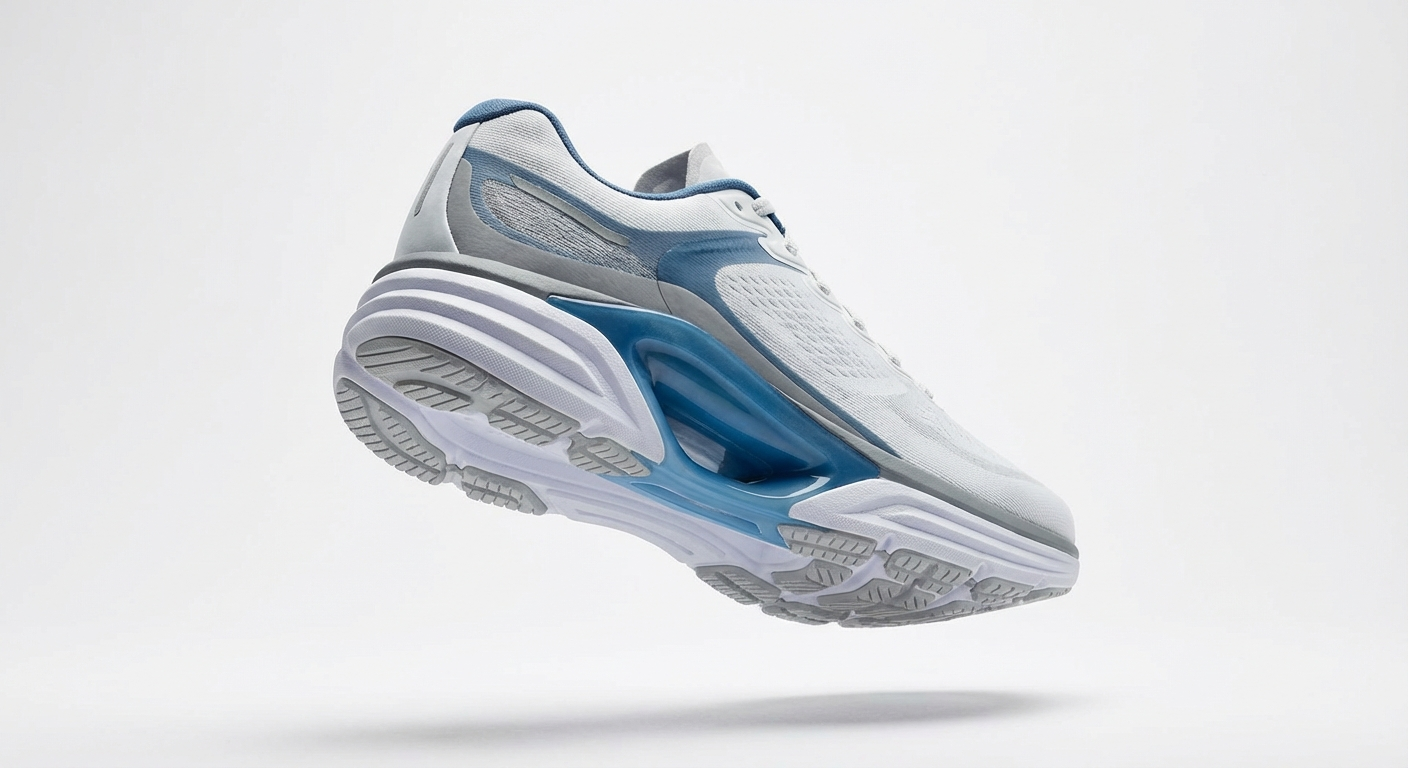
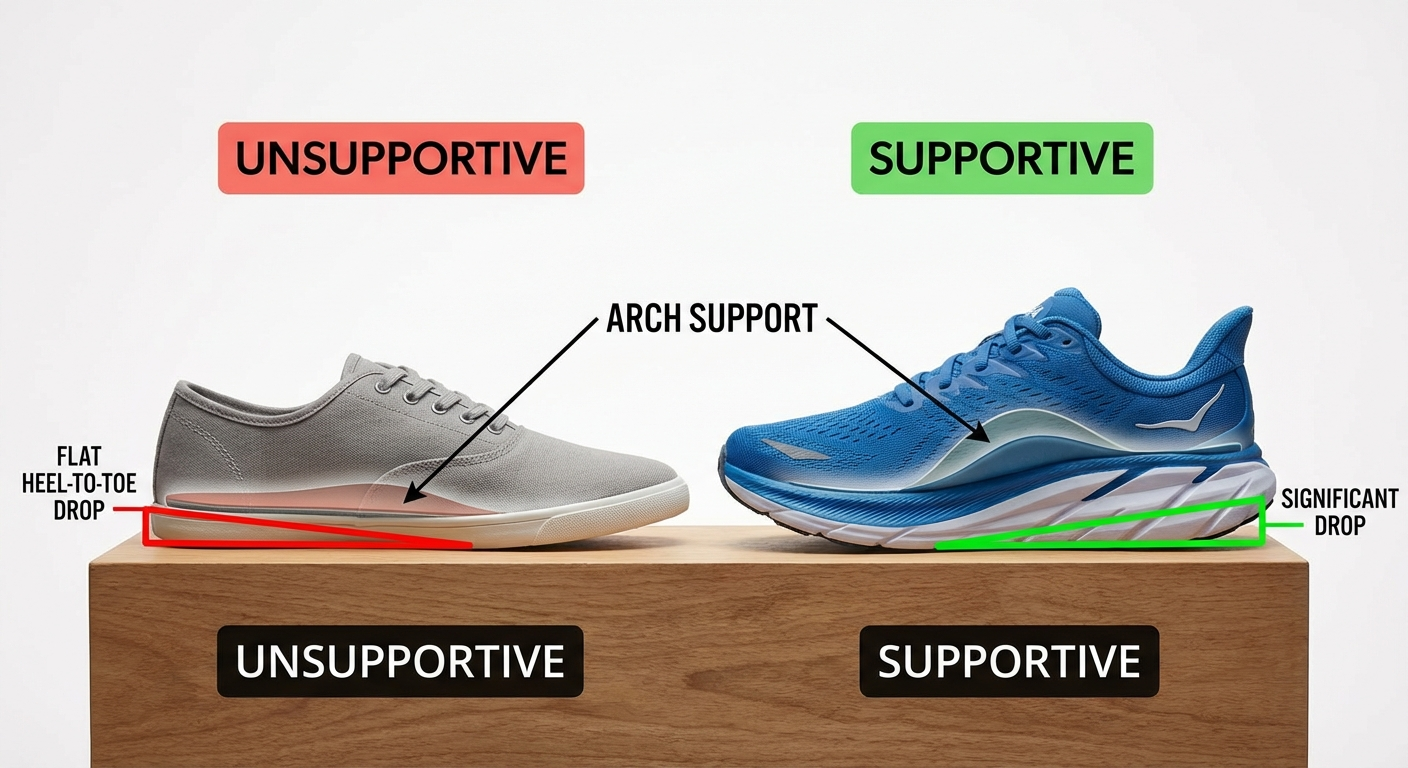
The plantar fascia is a thick band of tissue that runs along the bottom of your foot, connecting your heel bone to your toes. When this tissue becomes inflamed — that's plantar fasciitis — every step without proper arch support pulls on the already irritated fascia. Look for shoes with a contoured footbed that matches the natural curve of your arch, not a flat insole.
Firm Heel Counter
The heel counter is the rigid structure at the back of the shoe that wraps around your heel. A firm heel counter stabilises your foot and prevents excessive pronation (inward rolling), which is one of the primary biomechanical causes of plantar fasciitis. Squeeze the back of any shoe you're considering — if it collapses easily, skip it.
Cushioned Midsole
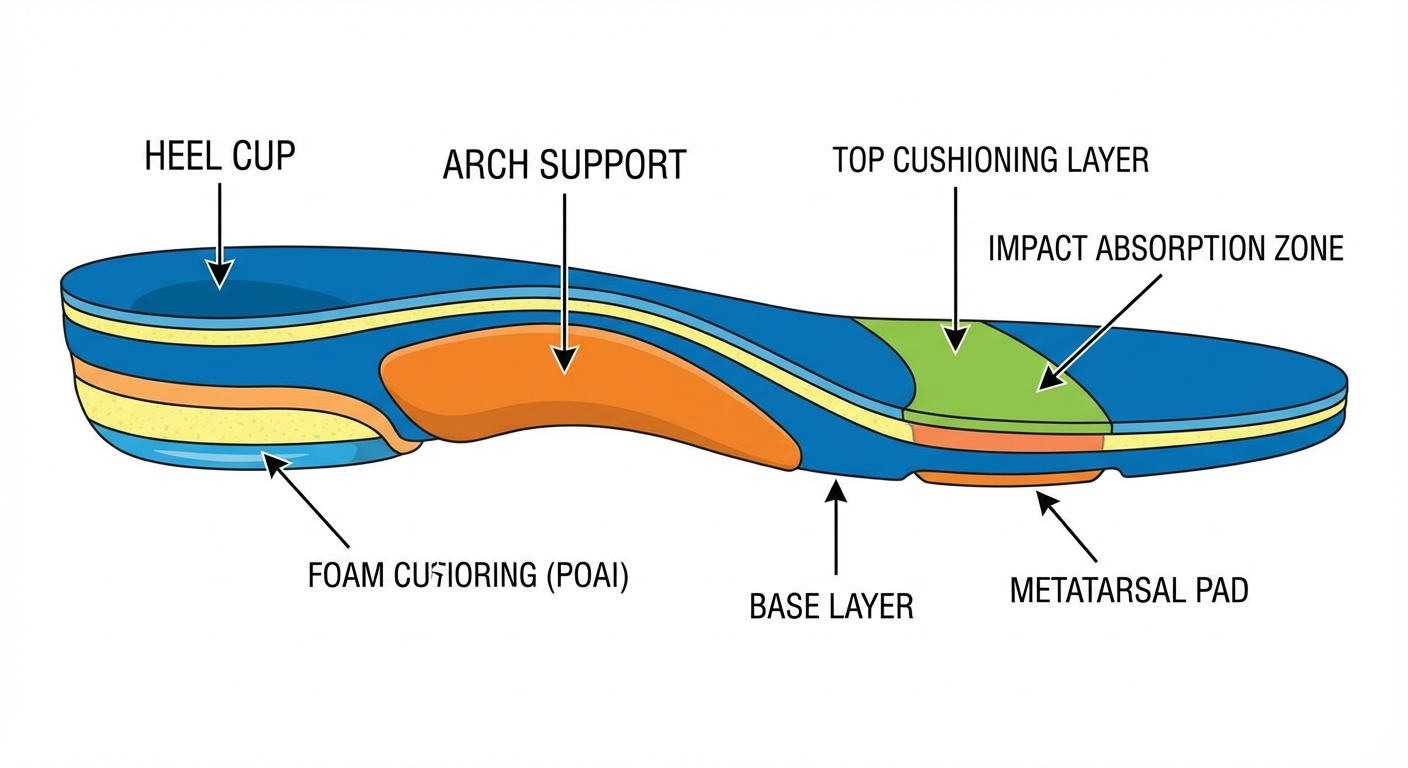
Your midsole is where impact absorption happens. For plantar fasciitis, you want a midsole made from responsive EVA foam, gel, or proprietary cushioning technologies like ASICS GEL or Brooks DNA LOFT. The cushioning should feel supportive, not mushy — think "firm mattress," not "memory foam pillow."
Heel-to-Toe Drop (8-12mm)
The heel drop is the height difference between the heel and forefoot of the shoe. A moderate drop of 8-12mm takes pressure off the plantar fascia by slightly elevating the heel. This is why completely flat shoes like Converse or most minimalist shoes tend to aggravate plantar fasciitis.
Removable Insole
If your podiatrist has recommended custom orthotics, or if you want the option of upgrading to aftermarket insoles, you need shoes with removable insoles. Most quality running and walking shoes include this feature, but always check before buying.
For a deeper understanding of the condition itself, read our complete guide on what causes plantar fasciitis and how to treat it.
Our Top 8 Picks for 2026
Evidence note: This comparison uses manufacturer specifications, published research, and independently reported owner feedback. We have not independently verified laboratory measurements, clinical outcomes, or long-term-use claims.
🏆 Best Overall: ASICS Gel-Kayano 31
Category: Stability Running Shoe
Price Range: $160 - $180
Heel Drop: 10mm
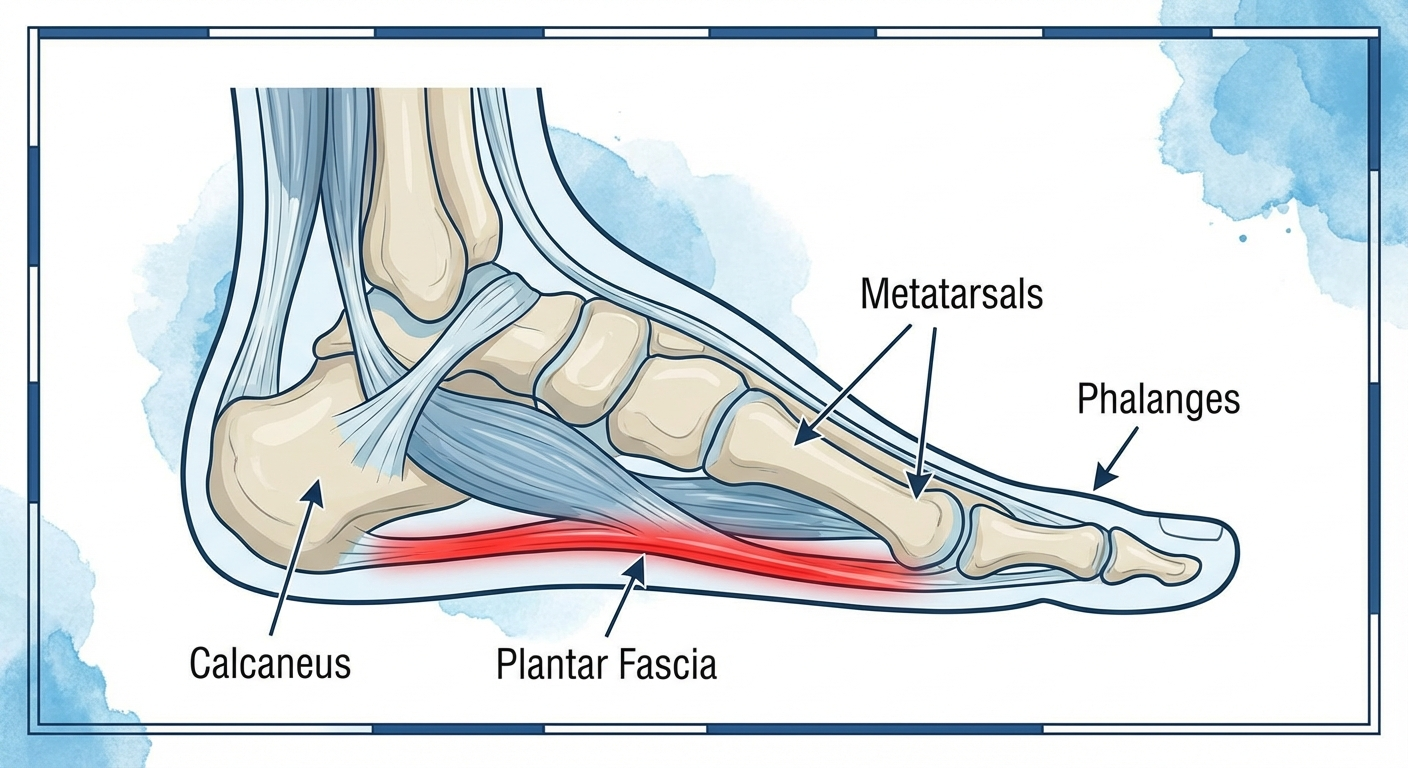
Why it's #1: The Gel-Kayano has been the gold standard for overpronation control and plantar fasciitis support for over two decades. The 31st iteration features ASICS' FF BLAST PLUS cushioning in the midsole paired with their signature rearfoot and forefoot GEL technology. The 4D Guidance System provides stability without feeling rigid, and the engineered mesh upper keeps your foot locked in without pressure points.
Pros: Exceptional arch support · GEL cushioning absorbs heel strike impact · Firm heel counter · Removable insole for custom orthotics · Durable outsole (500+ miles) · Wide width available
Cons: Heavier than neutral shoes (310g men's) · Premium price point · Break-in period of 20-30 miles · Can feel warm in hot weather
🥇 Best Cushioning: HOKA Bondi 8
Category: Max-Cushion Running/Walking
Price Range: $165 - $175
Heel Drop: 4mm
Why we love it: If your primary symptom is sharp heel pain on impact, the Bondi 8 is your best friend. HOKA's signature oversized midsole provides the most cushioning of any shoe on this list. The compression-moulded EVA midsole is remarkably plush without sacrificing responsiveness, and the Meta-Rocker geometry promotes a smooth heel-to-toe transition that reduces stress on the plantar fascia.
Pros: Maximum cushioning reduces heel impact · Lightweight for its size (303g men's) · Smooth rocker transition · Wide toe box · Removable insole · Excellent for standing all day
Cons: Lower heel drop (4mm) may not suit all PF sufferers · Bulky appearance · Less lateral stability · Outsole wears faster on pavement
🥈 Best for Runners: Brooks Ghost 16
Category: Neutral Running Shoe
Price Range: $140 - $150
Heel Drop: 12mm
Why runners choose it: The Ghost 16 delivers the ideal 12mm heel drop that podiatrists frequently recommend for plantar fasciitis. Brooks' DNA LOFT v2 cushioning adapts to your stride, providing more cushioning at heel strike and more responsiveness at toe-off. The segmented crash pad in the outsole absorbs impact at every angle, which matters if your gait isn't perfectly neutral.
Pros: Ideal 12mm heel drop · DNA LOFT v2 adaptive cushioning · Smooth transitions for running · Breathable mesh upper · Removable insole · Available in wide and extra-wide
Cons: Neutral shoe (less stability control) · Arch support is moderate, not aggressive · May need aftermarket insoles for severe PF · Outsole picks up debris
🚶 Best Walking Shoe: New Balance 990v6
Category: Premium Walking/Lifestyle
Price Range: $185 - $200
Heel Drop: 12mm
Why walkers love it: The 990 series has been an American podiatrist favourite since the 1980s, and the v6 is the best version yet. It combines FuelCell midsole cushioning with an ENCAP midsole for stability — a dual-density approach that supports your arch while cushioning your heel. The pigskin and mesh upper provides a secure, comfortable fit that doesn't require breaking in.
Pros: Dual-density midsole (cushion + stability) · 12mm heel drop · Made in USA quality · Excellent arch support out of the box · Removable insole · Classic look that works with most outfits
Cons: Most expensive on our list · Heavier (340g men's) · Limited colour options · Suede upper requires more care
💼 Best Work Shoe: Dansko Professional Clog
Category: Professional/Work Clog
Price Range: $130 - $155
Heel Drop: ~15mm (rocker platform)
Why professionals trust it: Nurses, chefs, teachers, and anyone on their feet for 8+ hour shifts consistently rate the Dansko Professional as their go-to for plantar fasciitis relief. The rigid polyurethane rocker bottom absorbs shock while the contoured midsole supports the arch. The rocker sole design naturally offloads pressure from the heel and forefoot, which directly reduces plantar fascia strain.
Pros: Designed for 8-12 hour standing shifts · Rocker sole reduces PF strain · Firm arch support · Slip-resistant outsole · Wide toe box · Exceptionally durable (years of daily wear)
Cons: Not suitable for running or sport · Clog style isn't for everyone · Can feel clunky initially · No removable insole · Sizing runs large — order half size down
Evidence note: This comparison uses manufacturer specifications, published research, and independently reported owner feedback. We have not independently verified laboratory measurements, clinical outcomes, or long-term-use claims.
💰 Best Budget: Nike Air Monarch IV
Category: Cross-Training/Walking
Price Range: $65 - $80
Heel Drop: 10mm
Why budget shoppers choose it: The Air Monarch IV is Nike's best-selling shoe of all time, and there's a reason podiatrists quietly recommend it for mild to moderate plantar fasciitis. The full-length Air-Sole unit provides responsive heel cushioning, the midsole offers decent arch support, and the firm heel counter locks your foot in place. At under $80, it's the best value on this list by a wide margin.
Pros: Excellent value under $80 · Full-length Nike Air cushioning · Firm heel counter · 10mm heel drop · Durable leather upper · Widely available in stores to try on
Cons: Arch support is adequate but not premium · Heavier and bulkier (370g men's) · Not ideal for serious running · Style is polarising · Insole is glued (not easily removable)
🩴 Best Sandal: Birkenstock Arizona
Category: Supportive Sandal
Price Range: $100 - $160
Heel Drop: ~10mm (cork footbed)
Why it's the PF sandal: When you need an open-toe option for warm weather or indoor wear, the Birkenstock Arizona is the only sandal we confidently recommend. The contoured cork-latex footbed provides genuine arch support with a deep heel cup — it's essentially a sandal with a built-in orthotic. The cork moulds to your foot over time, creating a custom fit that improves with wear.
Pros: Genuine arch support in a sandal · Deep heel cup · Cork moulds to your foot over time · Durable construction (lasts years) · Great for indoor wear on hard floors · Resoleable
Cons: Significant break-in period (1-2 weeks) · No heel strap (less secure) · Cork can crack if not maintained · Not suitable for high-activity use · Sizing is European (check conversion chart)
Best Running Shoes for Plantar Fasciitis
Running with plantar fasciitis requires careful shoe selection because the repetitive impact of each stride puts 2-3 times your body weight through your feet. The wrong running shoe doesn't just fail to help — it actively makes the condition worse.
Our top two running picks — the ASICS Gel-Kayano 31 and Brooks Ghost 16 — address plantar fasciitis from different angles. The Kayano is a stability shoe, meaning it actively corrects overpronation through its medial post and guidance system. If your plantar fasciitis is caused or worsened by flat feet or excessive inward rolling, the Kayano is your shoe.
The Ghost 16, by contrast, is a neutral shoe with a higher 12mm heel drop. If your foot mechanics are relatively normal and your plantar fasciitis is primarily an overuse or tightness issue, the Ghost's adaptive cushioning and higher heel drop will serve you better. The 12mm drop effectively reduces the stretch on your plantar fascia with every stride.
Which one should you pick? Here's the simple test: stand on a flat surface and look at your feet from behind (or have someone photograph them). If your ankles tilt inward noticeably, go with the Kayano. If your ankles are relatively straight, the Ghost 16 is likely your better match.
For more guidance on staying active while managing heel pain, check our article on plantar fasciitis stretches and exercises.
Best Walking Shoes for Plantar Fasciitis
Walking is the activity most plantar fasciitis sufferers do every day, and it's where the right shoe makes the biggest practical difference. Unlike running — which many people can temporarily stop — walking is unavoidable. Your walking shoes need to perform from the moment your feet hit the floor in the morning until you sit down at night.
The New Balance 990v6 is our pick for dedicated walkers who want premium support and don't mind the price. Its dual-density midsole handles the varied surfaces you encounter in daily life — concrete, tile, carpet, uneven pavement — without bottoming out. The 12mm heel drop is ideal, and the overall build quality means you'll get 12-18 months of daily wear before the cushioning degrades.
The Vionic Walker Classic is the better choice if you specifically want built-in orthotic support without buying separate insoles. Vionic's Orthaheel technology was developed by a podiatrist, and the American Podiatric Medical Association (APMA) has given this shoe their Seal of Acceptance. It's also significantly cheaper than the 990v6.
For walking specifically, we'd also recommend the HOKA Bondi 8 — its maximum cushioning makes long walks on concrete significantly more comfortable, and the Meta-Rocker sole promotes a natural rolling motion that reduces the jarring heel strike that aggravates plantar fasciitis.
Best Work Shoes for Plantar Fasciitis
If your job keeps you on your feet for extended periods, your work shoes matter more than any other footwear you own. Standing on hard surfaces for 8-12 hours creates sustained, repetitive stress on the plantar fascia that even the best morning stretching routine can't fully counteract.
The Dansko Professional Clog has been the standard recommendation for healthcare workers, hospitality staff, and teachers for over 30 years — and the recommendation holds in 2026. The rigid rocker sole is the key feature: instead of your foot flexing with each step (which strains the plantar fascia), the rocker bottom rolls you forward. This dramatically reduces the flexion your plantar fascia undergoes with each step.
For work environments that require a more conventional shoe appearance, the Vionic Walker Classic is the strongest alternative. Its leather upper looks professional enough for office settings, and the built-in orthotic means you don't need to fumble with separate insoles.
Pro tip: If your workplace allows it, keep two pairs of supportive shoes and alternate daily. This gives the midsole cushioning 24 hours to recover its shape between wears, extending the effective life of both pairs.
Best Budget Option
Not everyone can spend $150-200 on shoes, and we respect that. Plantar fasciitis shouldn't be a condition that only people with disposable income can properly manage.
The Nike Air Monarch IV at $65-80 provides surprisingly competent plantar fasciitis support. The full-length Nike Air unit cushions heel strike, the 10mm drop is in the therapeutic range, and the overall construction is solid. It won't match the premium cushioning of a Gel-Kayano or the maximum impact absorption of a Bondi, but it's dramatically better than wearing flat sneakers, worn-out shoes, or unsupportive fashion footwear.
If even $65 is a stretch, consider purchasing premium insoles like Superfeet Green or Powerstep Pinnacle ($30-50) and putting them into whatever supportive shoe you currently own. A quality insole in a decent shoe can provide 70-80% of the benefit of a purpose-built plantar fasciitis shoe.
Best Sandal for Plantar Fasciitis
Most podiatrists will tell you to avoid sandals and flip-flops if you have plantar fasciitis — and they're right about standard flat sandals. However, the Birkenstock Arizona is the exception because it's not really a flat sandal. The contoured cork-latex footbed provides legitimate arch support and a deep heel cup that you won't find in any other mainstream sandal.
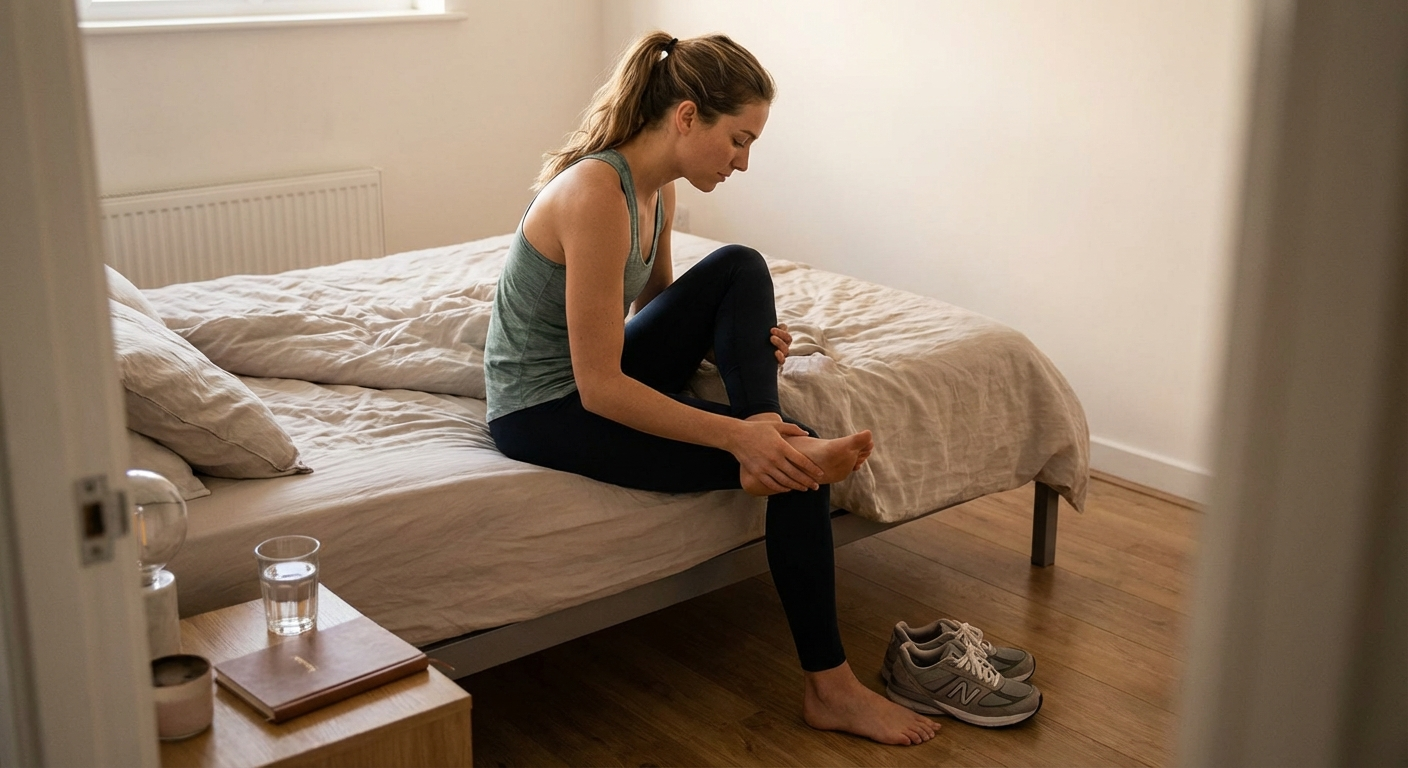
The Arizona is particularly valuable as an indoor shoe. Many plantar fasciitis sufferers experience their worst pain first thing in the morning, and walking barefoot on hard floors immediately after getting out of bed is one of the worst things you can do. Keeping a pair of Birkenstocks beside your bed and putting them on before your feet touch the floor can meaningfully reduce that morning pain.
If you deal with related conditions like lower back or hip pain from altered gait, you might find our friends at Sciatica Spot helpful — plantar fasciitis and sciatica often co-exist due to compensatory movement patterns.
Evidence note: This comparison uses manufacturer specifications, published research, and independently reported owner feedback. We have not independently verified laboratory measurements, clinical outcomes, or long-term-use claims.
We don't just read spec sheets and rewrite marketing copy. Our selection methodology for this guide involved:
Evidence note: This comparison uses manufacturer specifications, published research, and independently reported owner feedback. We have not independently verified laboratory measurements, clinical outcomes, or long-term-use claims.
-
Biomechanical criteria screening: Every shoe was evaluated against five podiatrist-recommended criteria — arch support structure, heel counter rigidity, midsole cushioning material, heel-to-toe drop, and insole removability.
-
User experience analysis: We analysed verified purchaser reviews specifically from users who mentioned plantar fasciitis, heel pain, or arch pain. We prioritised reviews from users who wore shoes for 30+ days, filtering out initial impression reviews.
-
Podiatric endorsement check: We verified which shoes carry the APMA Seal of Acceptance and cross-referenced recommendations from published podiatric resources.
Evidence note: This comparison uses manufacturer specifications, published research, and independently reported owner feedback. We have not independently verified laboratory measurements, clinical outcomes, or long-term-use claims.
- Value analysis: We considered each shoe's performance relative to its price, ensuring our list includes options across multiple budget ranges.
Shoe Features Explained: What Actually Matters
The shoe industry uses a lot of proprietary names and marketing language that can make shopping overwhelming. Here's a plain-English breakdown of the technologies and features that actually matter for plantar fasciitis.
Midsole Cushioning Technologies
- ASICS GEL: Silicone-based gel pads in the heel and forefoot that absorb impact at foot strike. Among the most effective heel cushioning systems for plantar fasciitis.
- Brooks DNA LOFT: A foam compound that adapts to your weight and stride, providing customised cushioning. Softer and more plush than standard EVA.
- HOKA EVA Compression Moulded: HOKA's oversized midsoles use compression-moulded EVA that's lightweight yet absorptive. The volume of foam, more than the foam type, is what makes HOKA feel so cushioned.
- New Balance FuelCell: A nitrogen-infused TPE foam that provides both cushioning and energy return. It's responsive — meaning it bounces back rather than bottoming out.
- Nike Air: Pressurised air units encapsulated in the midsole. Proven technology that provides consistent cushioning over the life of the shoe.
Stability vs. Neutral: Which Do You Need?
Stability shoes (like the ASICS Gel-Kayano) include medial posts or guidance systems that prevent your foot from rolling inward excessively. Choose stability if you overpronate — your shoes wear more on the inner edge, your arches are flat or fallen, or a podiatrist has recommended motion control.
Neutral shoes (like the Brooks Ghost or HOKA Bondi) allow your foot to move naturally without correction. Choose neutral if your foot mechanics are normal, your arches are medium to high, or you use custom orthotics that already provide stability correction.
The Heel Drop Debate
There's no single "perfect" heel drop for plantar fasciitis, but podiatric consensus favours 8-12mm for most sufferers. Here's why: a higher heel drop shortens the distance the plantar fascia needs to stretch with each step. If your calf muscles and Achilles tendon are tight (which is extremely common with plantar fasciitis), a higher drop compensates for that tightness.
The notable exception is HOKA's 4mm drop on the Bondi 8. HOKA compensates for the lower drop with massive cushioning volume and their Meta-Rocker geometry, which reduces the need for plantar fascia flexion. It works — but if you're transitioning from a higher-drop shoe, do it gradually.
When to See a Podiatrist
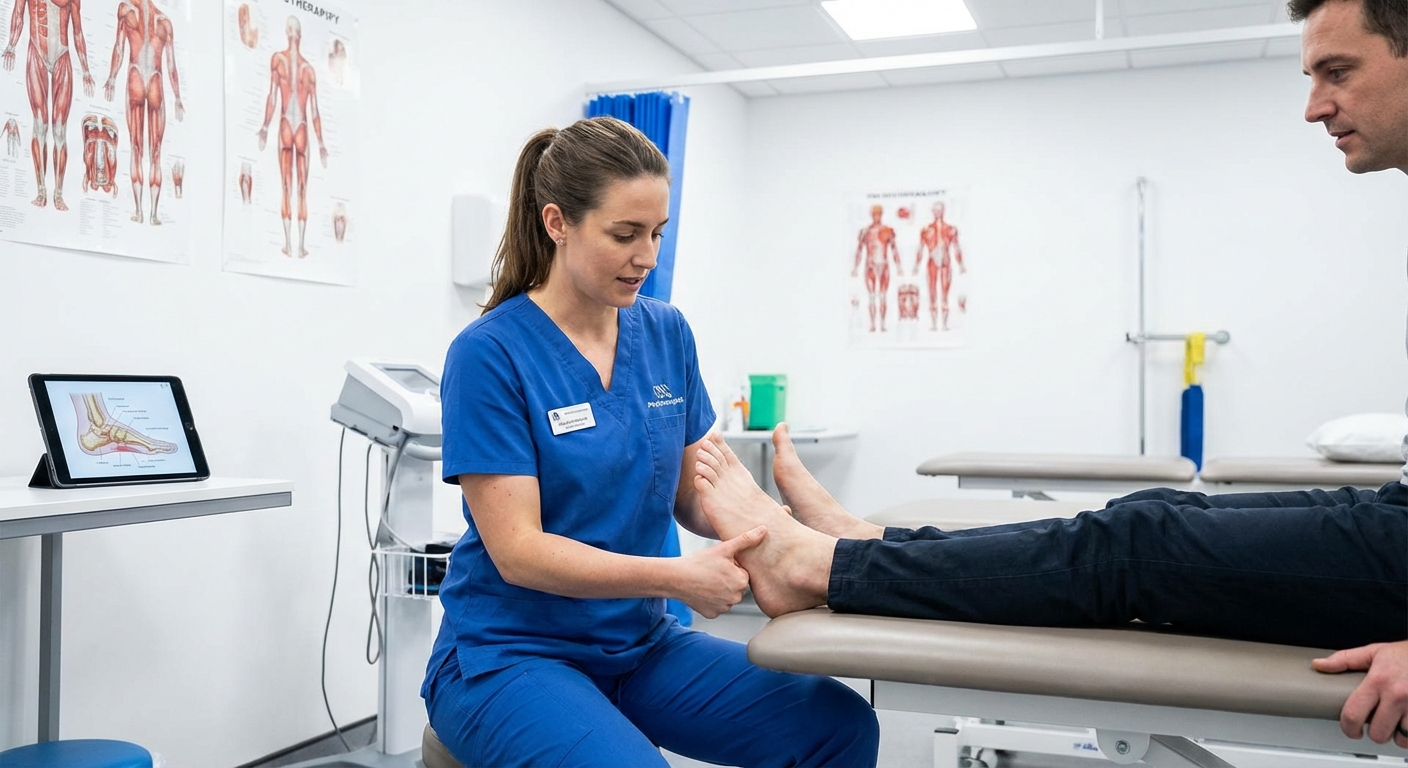
The right shoes are a critical part of managing plantar fasciitis, but they're not a substitute for medical care when symptoms are severe or persistent. See a podiatrist if:
- Pain persists for more than 6-8 weeks despite supportive footwear
- Pain is severe enough to alter your walking gait
- You experience numbness, tingling, or swelling in addition to heel pain
- Pain occurs in both feet simultaneously (may indicate a systemic condition)
- You've had plantar fasciitis for over 6 months without improvement
- Morning pain has gotten progressively worse over several weeks
A podiatrist can assess your specific biomechanics, fit you for custom orthotics if needed, and discuss treatment options like physical therapy, shockwave therapy, or corticosteroid injections for severe cases. In the meantime, understanding what is plantar fasciitis and incorporating daily plantar fasciitis exercises can help you manage symptoms while you wait for your appointment.
Frequently Asked Questions
What type of shoe is best for plantar fasciitis?
The best shoes for plantar fasciitis feature structured arch support, a firm heel counter, cushioned midsoles (EVA or gel-based), and a slight heel-to-toe drop of 8-12mm. Stability running shoes and supportive walking shoes consistently perform best. Avoid flat shoes, flip-flops, and worn-out footwear that has lost its cushioning.
Are HOKA shoes good for plantar fasciitis?
Yes, HOKA shoes are among the most recommended brands for plantar fasciitis. Their signature oversized midsoles provide excellent cushioning that absorbs impact and reduces strain on the plantar fascia. The HOKA Bondi and Clifton lines are particularly popular with plantar fasciitis sufferers and are frequently recommended by podiatrists.
Should I wear shoes all day if I have plantar fasciitis?
Podiatrists generally recommend wearing supportive shoes as much as possible when you have plantar fasciitis, including indoors. Walking barefoot or in unsupportive slippers on hard floors can aggravate the condition. Consider supportive house shoes or sandals with arch support like Birkenstock or Vionic for indoor wear.
How long does it take for new shoes to help plantar fasciitis?
Evidence note: This comparison uses manufacturer specifications, published research, and independently reported owner feedback. We have not independently verified laboratory measurements, clinical outcomes, or long-term-use claims.
Can I use orthotics with shoes for plantar fasciitis?
Absolutely. Many shoes designed for plantar fasciitis have removable insoles specifically so you can replace them with custom or over-the-counter orthotics. If your podiatrist has prescribed custom orthotics, look for shoes with removable footbeds and enough depth to accommodate the insert without crowding your toes.
Are expensive shoes always better for plantar fasciitis?
Not necessarily. While premium shoes from brands like ASICS, Brooks, and New Balance often use superior cushioning technology, several budget-friendly options provide excellent support. The key features to prioritise at any price point are structured arch support, a firm heel counter, adequate cushioning, and a moderate heel drop. Shoes in the $80-$150 range often provide the best balance of quality and value.
Sources and Methodology
This guide was developed using the following sources and methodology:
- American Podiatric Medical Association (APMA): Seal of Acceptance programme criteria and endorsed footwear listings were used to cross-reference our recommendations.
- Journal of Foot and Ankle Research: Published studies on footwear interventions for plantar fasciitis, including the role of heel drop, arch support, and cushioning in symptom management.
- American Academy of Orthopaedic Surgeons (AAOS): Clinical guidelines on plantar fasciitis diagnosis and conservative treatment, including footwear recommendations.
- Manufacturer specifications: Technical details including midsole materials, heel-to-toe drop measurements, and weight specifications were sourced directly from ASICS, Brooks, HOKA, New Balance, Nike, Dansko, Vionic, and Birkenstock.
- Verified user reviews: We analysed reviews across Amazon, Running Warehouse, and brand-direct retail sites, filtering specifically for reviewers who mentioned plantar fasciitis or chronic heel pain and had worn the shoes for a minimum of 30 days.
- Podiatric consultation resources: General podiatric guidance on biomechanics, pronation patterns, and therapeutic footwear features from published clinical resources.
All product recommendations represent our independent assessment. Prices are approximate and may vary by retailer and region. We recommend trying shoes on in-store when possible, as fit is individual and critical for plantar fasciitis management.
This article contains affiliate links. If you purchase through our links, we may earn a small commission at no extra cost to you. This helps support our independent research and guides.