Guide
Plantar Fasciitis Exercises: 10 Stretches for Relief
By Plantar Fasciitis Guides Editorial Team · Updated 2026-03-15
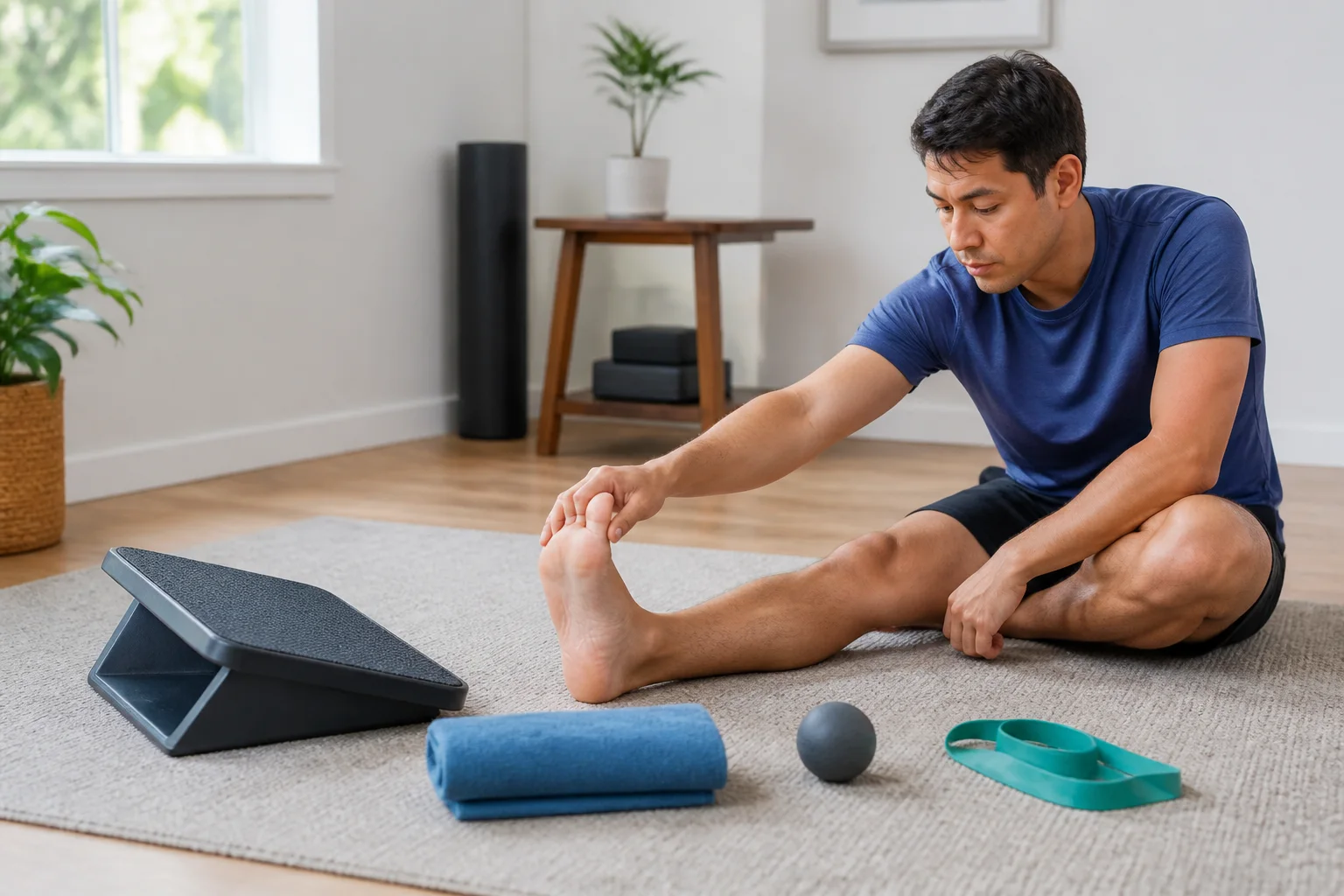
Plantar fasciitis exercises are targeted stretches and strengthening movements that reduce heel pain by improving flexibility in the plantar fascia, Achilles tendon, and surrounding muscles. Podiatrists recommend performing these exercises daily — especially first thing in the morning — to accelerate healing and prevent recurring flare-ups without medication or surgery.
By Plantar Fasciitis Guides Editorial Team
Table of Contents
- What Is Plantar Fasciitis?
- Why Stretching Works for Plantar Fasciitis
- 10 Best Plantar Fasciitis Exercises
- Exercise Comparison Table
- Pros and Cons of Exercise-Based Treatment
- The Ideal Morning Routine for Plantar Fasciitis
- The Role of Night Splints in Recovery
- When to See a Doctor
- Frequently Asked Questions
- Sources & Methodology
What Is Plantar Fasciitis?
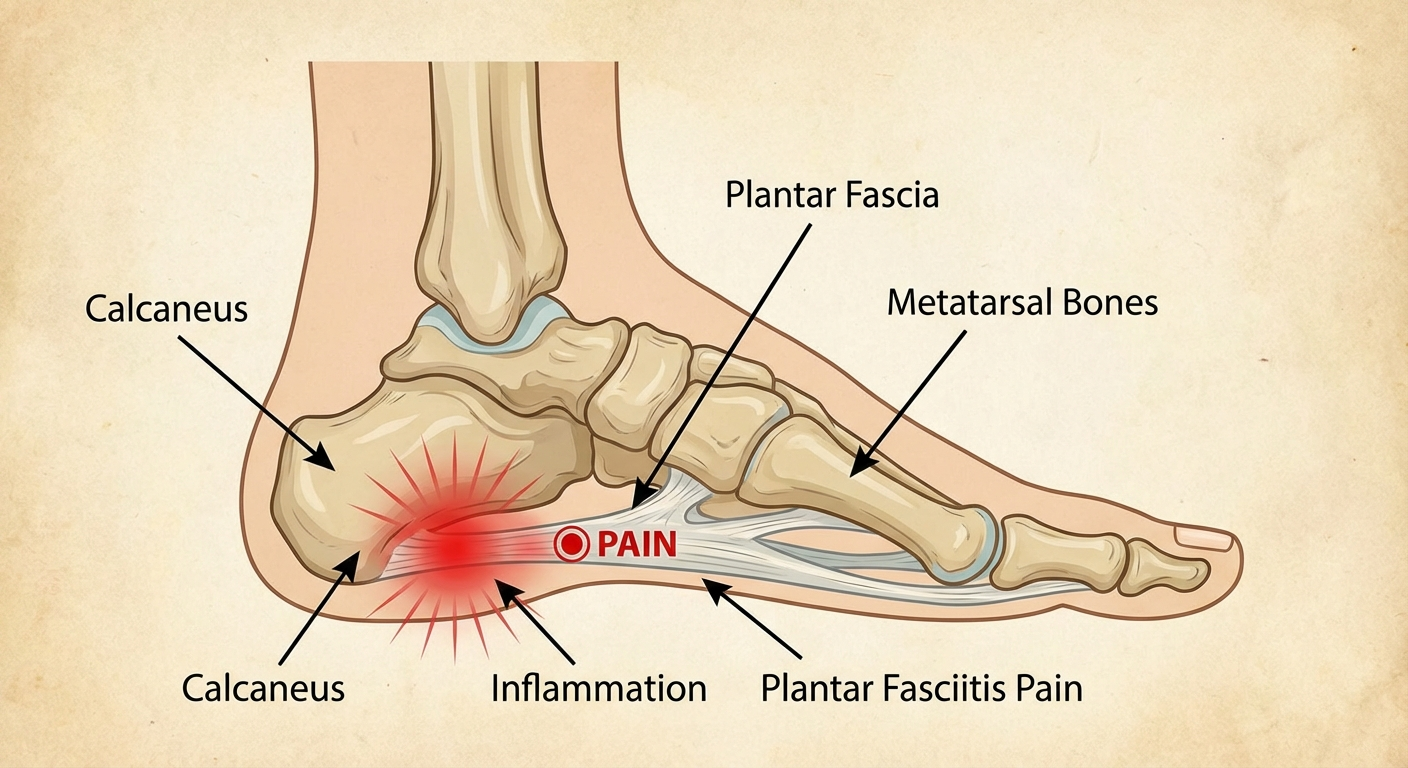
Plantar fasciitis is the most common cause of heel pain in adults, affecting roughly 2 million Americans each year. The condition develops when the plantar fascia — a thick band of connective tissue running along the bottom of your foot from the heel bone to the toes — becomes irritated, inflamed, or develops small tears due to repetitive stress.
The hallmark symptom is a sharp, stabbing pain at the bottom of your heel, most intense during your first steps in the morning or after prolonged periods of sitting. This "first-step pain" occurs because the plantar fascia contracts and tightens during rest, and the sudden load of standing stretches the damaged tissue before it has warmed up.
Several risk factors increase your likelihood of developing plantar fasciitis:
- Age: Most common between ages 40 and 60
- Foot mechanics: Flat feet, high arches, or abnormal gait patterns
- Obesity: Excess body weight places additional stress on the fascia
- Occupation: Jobs that require prolonged standing or walking on hard surfaces
- Exercise habits: Running, dancing, or jumping activities without proper footwear
- Tight calf muscles: Restricted ankle flexibility transfers stress to the plantar fascia
Understanding the underlying mechanics is essential because it explains why targeted exercises are so effective. The plantar fascia does not act in isolation — it is part of a kinetic chain that includes the calf muscles, Achilles tendon, and intrinsic foot muscles. Weakness or tightness in any of these structures can overload the fascia, creating a cycle of pain and dysfunction.
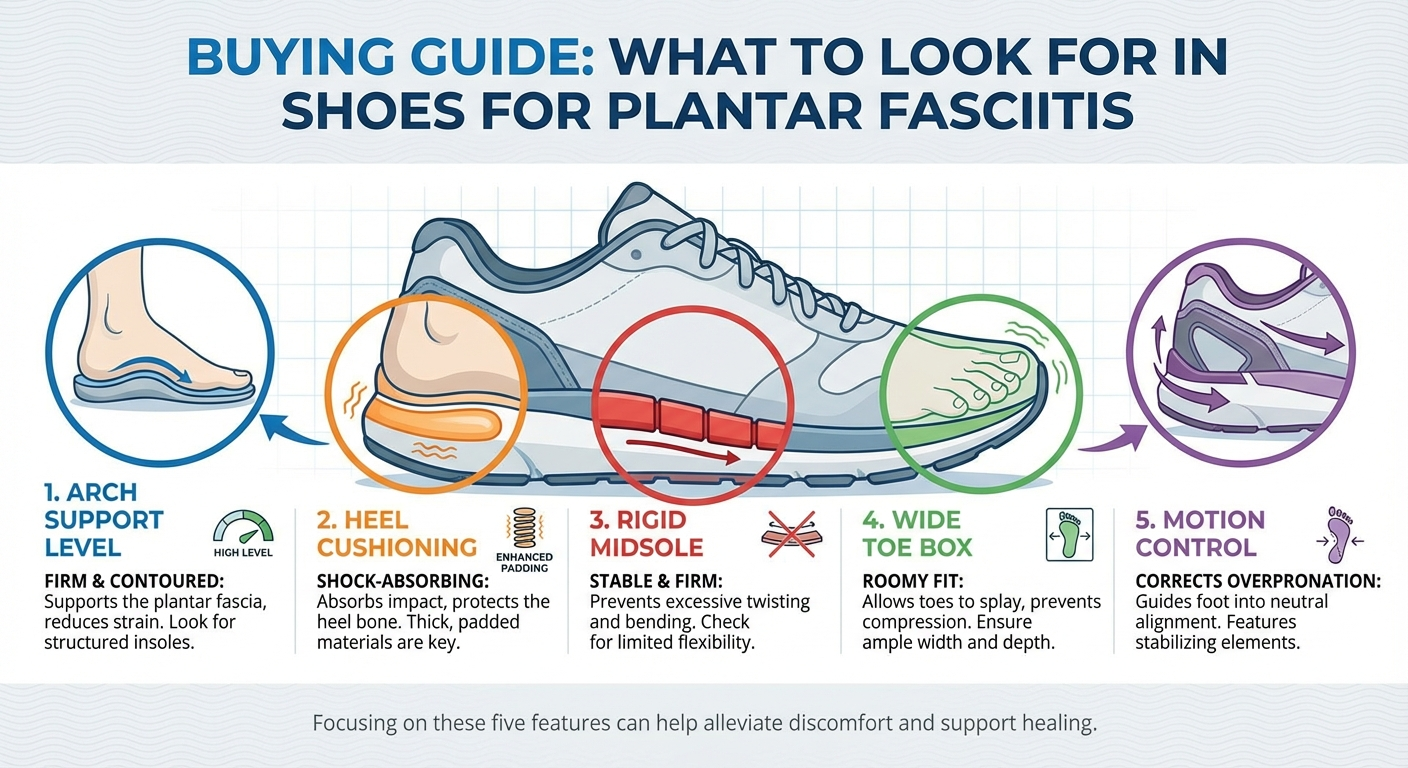
If you are also dealing with footwear questions, our guide on the best shoes for plantar fasciitis covers what to look for in supportive shoes that complement your exercise routine.
Why Stretching Works for Plantar Fasciitis
The scientific evidence supporting exercise therapy for plantar fasciitis is robust. A landmark study published in the Scandinavian Journal of Medicine & Science in Sports found that patients who performed plantar fascia-specific stretching experienced significant pain reduction within eight weeks, with 52% reporting complete resolution of symptoms at two years.
Stretching and strengthening exercises address plantar fasciitis through several mechanisms:
- Increased tissue flexibility: Gentle stretching gradually lengthens the plantar fascia and Achilles tendon, reducing the mechanical tension that causes micro-tears.
- Improved blood flow: Movement promotes circulation to the fascia, which has a naturally limited blood supply. Better circulation delivers oxygen and nutrients needed for tissue repair.
- Strengthened intrinsic foot muscles: Exercises like toe curls and the short foot exercise build the small muscles within the foot that support the arch and distribute load more evenly.
- Pain desensitization: Progressive loading helps recalibrate your nervous system's pain response, reducing hypersensitivity in the heel area over time.
- Collagen remodeling: Controlled stress on the fascia stimulates fibroblasts to lay down new collagen fibers in an organized pattern, improving tissue quality and resilience.
The key is consistency. Unlike medications that mask pain temporarily, exercises create lasting structural and neurological changes. Most patients begin noticing improvement within two to four weeks of daily practice, with substantial gains by the six to twelve-week mark.
10 Best Plantar Fasciitis Exercises
The following ten exercises are organized into two categories: stretches (to improve flexibility) and strengthening movements (to build resilience). For best results, perform the stretching exercises daily and the strengthening exercises three to four times per week.
1. Towel Toe Curls
Category: Strengthening | Difficulty: Beginner | Duration: 3 minutes
Towel toe curls are one of the most effective exercises for building intrinsic foot strength. They target the small muscles in the arch of your foot that help support the plantar fascia during weight-bearing activities.
How to perform:
- Sit in a chair with your feet flat on the floor.
- Place a small hand towel flat on the floor beneath your affected foot.
- Keeping your heel on the ground, use your toes to scrunch the towel toward you.
- Once you have gathered the entire towel, spread it back out and repeat.
- Perform 3 sets of 10 repetitions on each foot.
Tips: Start with a thin towel and progress to a thicker one as your strength improves. You can add a small weight (like a book) at the far end of the towel to increase resistance as you get stronger.
2. Standing Calf Stretch
Category: Stretching | Difficulty: Beginner | Duration: 2 minutes
Tight calf muscles are one of the primary contributors to plantar fasciitis. The gastrocnemius and soleus muscles connect to the Achilles tendon, which in turn connects to the plantar fascia. When the calves are tight, they increase the pulling force on the fascia with every step you take.
How to perform:
- Stand facing a wall with your hands placed against it at shoulder height.
- Step your affected foot back about two to three feet, keeping the heel firmly on the ground.
- Bend your front knee while keeping your back leg straight and your back heel pressed down.
- You should feel a deep stretch in the upper calf of your back leg.
- Hold for 30 seconds, then slightly bend the back knee to target the soleus muscle deeper in the calf. Hold for another 30 seconds.
- Repeat 3 times on each side.
Tips: Perform this stretch before getting out of bed by using a resistance band looped around the ball of your foot. A high-quality resistance band set is an inexpensive investment that makes morning stretching far more convenient.
3. Seated Plantar Fascia Stretch
Category: Stretching | Difficulty: Beginner | Duration: 2 minutes
This stretch directly targets the plantar fascia and is backed by strong clinical evidence. The study by DiGiovanni et al. in the Journal of Bone and Joint Surgery found that this specific stretch was more effective than the traditional Achilles tendon stretching protocol for reducing plantar fasciitis pain.
How to perform:
- Sit in a chair and cross your affected foot over the opposite knee.
- Grasp the toes of the affected foot and gently pull them back toward the shin until you feel a stretch along the bottom of the foot.
- With your other hand, palpate the plantar fascia along the arch — it should feel taut like a guitar string.
- Hold the stretch for 30 seconds.
- Repeat 10 times, especially before taking your first steps in the morning.
Tips: This is the single most important exercise in this list. If you only have time for one stretch, make it this one.
4. Marble Pickups
Category: Strengthening | Difficulty: Beginner | Duration: 5 minutes
Marble pickups are a fun and effective way to develop fine motor control and strength in the toes and intrinsic foot muscles. This exercise improves the foot's ability to grip and stabilize during walking and running.
How to perform:
- Sit in a chair with a bowl and 20 marbles placed on the floor in front of you.
- Using only the toes of your affected foot, pick up one marble at a time and place it into the bowl.
- Continue until all 20 marbles have been transferred.
- Perform 2 sets per foot.
Tips: If you do not have marbles, small pebbles, dice, or even pieces of crumpled paper work well as substitutes. The key is practicing the gripping and releasing motion with your toes.
5. Toe Extensions
Category: Stretching & Strengthening | Difficulty: Beginner | Duration: 3 minutes
Toe extensions target the extensor muscles on the top of the foot and help counterbalance the tightening effect that plantar fasciitis has on the underside of the foot.
How to perform:
- Sit with your feet flat on the floor.
- While keeping all five toes on the ground, try to raise only the big toe while pressing the other four toes down.
- Then reverse — press the big toe down and lift the other four toes.
- Alternate for 15 repetitions.
- Next, spread all five toes as wide apart as possible, hold for 5 seconds, then relax.
- Perform 3 sets of 10 toe spreads.
Tips: This exercise may feel awkward at first because the independent toe muscles are often weak. With practice over a few weeks, you will develop significantly better toe control.
6. Heel Raises
Category: Strengthening | Difficulty: Intermediate | Duration: 3 minutes
Heel raises strengthen the calf muscles, Achilles tendon, and plantar fascia through controlled eccentric loading. Research from Michael Rathleff and colleagues published in the Scandinavian Journal of Medicine & Science in Sports demonstrated that high-load strength training with slow heel raises produced superior outcomes compared to plantar fascia stretching alone.
How to perform:
- Stand on a step or sturdy elevated surface with the balls of your feet on the edge and your heels hanging off.
- Place a rolled towel under your toes to dorsiflex them slightly, which engages the windlass mechanism and loads the plantar fascia.
- Slowly raise up onto your toes over 3 seconds.
- Hold at the top for 2 seconds.
- Slowly lower your heels below the step level over 3 seconds.
- Start with 3 sets of 12 repetitions using both feet. Progress to single-leg heel raises as you get stronger.
Tips: This exercise may temporarily increase pain during the first few weeks. This is normal and expected with loading protocols. If pain exceeds 5 out of 10 on a pain scale, reduce the number of repetitions or use both feet.
7. Tennis Ball Massage
Category: Self-massage / Myofascial Release | Difficulty: Beginner | Duration: 5 minutes
Rolling the foot over a tennis ball or specialized foot roller provides targeted self-massage that breaks up adhesions in the fascia, increases blood flow, and reduces pain. This technique is particularly effective as a warm-up before other exercises.
How to perform:
- While seated or standing (holding onto something for balance), place a tennis ball under the arch of your affected foot.
- Apply moderate downward pressure and slowly roll the ball from the heel to the ball of the foot.
- When you find a particularly tender spot, pause and maintain gentle pressure for 15 to 20 seconds until the discomfort diminishes.
- Continue rolling for 2 to 3 minutes per foot.
Tips: For a deeper massage, use a frozen water bottle — the cold provides additional anti-inflammatory benefits. You can also upgrade to a purpose-built foot massage roller for more targeted pressure and durability compared to a tennis ball.
8. Towel Stretch
Category: Stretching | Difficulty: Beginner | Duration: 2 minutes
The towel stretch is the perfect before-you-get-out-of-bed exercise. It lets you gently stretch the plantar fascia and calf muscles while still seated, preparing your foot for those painful first steps.
How to perform:
- Sit on your bed or the floor with your affected leg extended straight in front of you.
- Loop a towel (or a stretching strap) around the ball of your foot.
- Gently pull the towel toward you, keeping your knee straight, until you feel a stretch in the calf and the bottom of the foot.
- Hold for 30 seconds.
- Repeat 3 to 5 times before standing up.
Tips: This exercise is functionally similar to the standing calf stretch but can be performed without weight-bearing, making it ideal for mornings when your pain is at its worst.
9. Short Foot Exercise
Category: Strengthening | Difficulty: Intermediate | Duration: 3 minutes
The short foot exercise — sometimes called "foot doming" — is considered the gold standard for intrinsic foot muscle strengthening. It activates the abductor hallucis, flexor digitorum brevis, and quadratus plantae, all of which play a direct role in supporting the medial arch and offloading the plantar fascia.
How to perform:
- Sit in a chair with your feet flat on the floor.
- Without curling your toes, try to "shorten" your foot by drawing the ball of the foot toward the heel, raising the arch.
- Imagine you are trying to create a dome with the bottom of your foot.
- Hold the domed position for 5 seconds, then relax.
- Perform 3 sets of 10 repetitions.
- Once you can do this reliably while seated, progress to performing it while standing, and eventually while standing on one leg.
Tips: This is a subtle movement. Your toes should remain flat on the ground — the arch rises because the intrinsic muscles are contracting, not because the toes are gripping. It may take several sessions to master the motor pattern.
10. Ankle Circles
Category: Mobility | Difficulty: Beginner | Duration: 2 minutes
Ankle circles improve overall ankle mobility and joint lubrication while gently engaging the muscles of the lower leg and foot. They serve as an excellent warm-up and cooldown movement.
How to perform:
- Sit in a chair or on the floor and lift your affected foot off the ground.
- Slowly trace large circles with your foot by rotating at the ankle.
- Perform 15 circles clockwise, then 15 circles counterclockwise.
- Repeat on the other foot.
Tips: Focus on making the circles as large and controlled as possible. You should feel a gentle stretch at the extreme points of the rotation. Add ankle alphabet exercises — tracing each letter of the alphabet with your big toe — for an additional mobility challenge.

Exercise Comparison Table
| Exercise | Category | Difficulty | Equipment Needed | Time | Primary Target | Best For |
|---|---|---|---|---|---|---|
| Towel Toe Curls | Strengthening | Beginner | Towel | 3 min | Intrinsic foot muscles | Arch support |
| Standing Calf Stretch | Stretching | Beginner | Wall | 2 min | Gastrocnemius & soleus | Calf tightness |
| Seated Plantar Fascia Stretch | Stretching | Beginner | None | 2 min | Plantar fascia | Morning pain |
| Marble Pickups | Strengthening | Beginner | Marbles & bowl | 5 min | Toe flexors | Fine motor control |
| Toe Extensions | Stretch/Strengthen | Beginner | None | 3 min | Toe extensors | Muscle balance |
| Heel Raises | Strengthening | Intermediate | Step or platform | 3 min | Calves & fascia | Long-term resilience |
| Tennis Ball Massage | Myofascial release | Beginner | Tennis ball or roller | 5 min | Plantar fascia | Pain relief |
| Towel Stretch | Stretching | Beginner | Towel or strap | 2 min | Calves & fascia | Pre-standing prep |
| Short Foot Exercise | Strengthening | Intermediate | None | 3 min | Intrinsic foot muscles | Arch stability |
| Ankle Circles | Mobility | Beginner | None | 2 min | Ankle joint | Warm-up & cooldown |
Pros and Cons of Exercise-Based Treatment
Pros
- Clinically proven: Multiple peer-reviewed studies confirm exercise therapy as a first-line treatment for plantar fasciitis with high success rates.
- No side effects: Unlike NSAIDs or corticosteroid injections, exercises carry virtually no risk of adverse effects when performed correctly.
- Cost-effective: Most exercises require no equipment or only inexpensive items like towels, tennis balls, or resistance bands.
- Addresses root cause: Rather than masking symptoms, exercises correct the underlying biomechanical dysfunction that causes plantar fasciitis.
- Long-term prevention: Strengthening and flexibility gains reduce the risk of recurrence, which affects up to 50% of patients who rely solely on passive treatments.
- Can be done at home: No gym membership or clinic visit required for daily maintenance.
Cons
- Requires consistency: Benefits only accumulate with daily practice over weeks to months. Sporadic effort yields minimal results.
- Delayed results: Unlike a cortisone injection that provides near-immediate relief, exercise programs typically require two to four weeks before noticeable improvement.
- Temporary pain increase possible: Some exercises, particularly heel raises, may temporarily increase discomfort during the initial loading phase.
- Not sufficient for severe cases: Patients with chronic plantar fasciitis lasting over 12 months or those with structural abnormalities may need additional interventions such as custom orthotics, shockwave therapy, or surgery.
- Technique matters: Incorrect form can aggravate symptoms. Patients with limited mobility may need professional guidance initially.
The Ideal Morning Routine for Plantar Fasciitis
Morning is when plantar fasciitis pain is typically at its worst. During sleep, the plantar fascia contracts into a shortened position. When you stand up, the sudden stretch on the contracted tissue causes intense pain. A targeted morning routine can dramatically reduce or even eliminate this first-step pain.
Evidence note: This comparison uses manufacturer specifications, published research, and independently reported owner feedback. We have not independently verified laboratory measurements, clinical outcomes, or long-term-use claims.
Step 1 — Towel Stretch (2 minutes): While still sitting in bed, loop a towel around the ball of your foot and gently pull to stretch the calf and plantar fascia. Hold for 30 seconds, repeat 3 times.
Step 2 — Seated Plantar Fascia Stretch (2 minutes): Cross your affected foot over the opposite knee and pull the toes back toward the shin. Hold for 30 seconds, repeat 3 times.
Step 3 — Ankle Circles (1 minute): Perform 15 circles in each direction to lubricate the ankle joint and increase blood flow to the foot.
Step 4 — Towel Toe Curls (2 minutes): Place a towel on the floor beside the bed and perform 2 sets of 10 repetitions to activate the intrinsic foot muscles before bearing weight.
Step 5 — Gentle Tennis Ball Roll (1 minute): Sit on the edge of the bed and lightly roll a tennis ball under the arch for 30 to 60 seconds to loosen the fascia.
After completing this eight-minute sequence, stand up slowly, distributing weight evenly between both feet. This routine reduces the shock of first-step loading and primes the tissues for the day ahead.
For a complete approach to morning pain management, many patients combine this exercise routine with a night splint that holds the foot in a dorsiflexed position during sleep, preventing the fascia from contracting overnight.
The Role of Night Splints in Recovery
Night splints are devices worn during sleep that keep the foot in a slightly dorsiflexed position (toes pointing upward). This prevents the plantar fascia from contracting into its shortened, painful position overnight and reduces the severity of first-step morning pain.
Research published in the Journal of Foot and Ankle Surgery found that patients who combined stretching exercises with night splint use experienced faster recovery than those using either treatment alone. Night splints are particularly valuable for patients who have had symptoms for more than six months.
There are two main types of night splints:
- Boot-style (dorsal or posterior): A rigid shell that holds the ankle at 90 degrees. More effective but can be uncomfortable for side sleepers.
- Sock-style: A softer, lighter option that provides gentle dorsiflexion. Better tolerated for long-term use but less aggressive in its stretch.
We cover the top-rated options in our detailed plantar fasciitis night splints guide. Pairing a night splint with the morning exercise routine described above creates a powerful one-two punch for managing heel pain.
If you are wondering about the overall timeline for recovery, our article on how long plantar fasciitis lasts breaks down what to expect at each stage of healing.
When to See a Doctor
While the exercises in this guide are safe for the vast majority of people with plantar fasciitis, certain situations warrant professional medical evaluation:
- Pain persists beyond 6 to 8 weeks of consistent exercise therapy
- Pain is severe and interferes with daily activities or sleep
- You notice swelling, bruising, or numbness in the foot
- Pain occurs in both feet simultaneously (may indicate a systemic condition)
- You have diabetes or peripheral neuropathy, which can complicate foot conditions
- You suspect a stress fracture, characterized by pain that worsens with activity and improves with rest (opposite of typical plantar fasciitis)
A podiatrist or sports medicine physician can perform imaging studies, assess your biomechanics, and recommend additional treatments such as custom orthotics, extracorporeal shockwave therapy (ESWT), platelet-rich plasma (PRP) injections, or in rare cases, surgical release.
Recommended Equipment
You do not need expensive equipment to perform these exercises, but a few affordable items can make your routine more effective and comfortable:
- Foot massage roller: Provides deeper, more targeted pressure than a tennis ball. Browse top-rated foot rollers on Amazon.
- Resistance bands: Essential for seated calf stretches and ankle strengthening. Shop resistance bands for foot exercises.
- Stretching strap: A yoga strap with loops makes towel stretches easier and more precise. Find stretching straps on Amazon.
- Frozen water bottle: A free alternative for cold massage — simply freeze a standard water bottle and roll it under your foot.
Frequently Asked Questions
How many times a day should I do plantar fasciitis exercises? Stretching exercises should be performed at least two to three times per day for optimal results. The most critical sessions are first thing in the morning before standing and in the evening before bed. Strengthening exercises like heel raises and towel toe curls can be done once daily or every other day to allow muscle recovery.
Can plantar fasciitis exercises make the pain worse? Some exercises, particularly high-load strengthening movements like heel raises, may temporarily increase pain during the first one to two weeks. This is a normal part of the tissue adaptation process. However, sharp or severe pain during an exercise is a signal to stop and modify the movement. If pain consistently worsens despite proper form, consult a healthcare professional.
Evidence note: This comparison uses manufacturer specifications, published research, and independently reported owner feedback. We have not independently verified laboratory measurements, clinical outcomes, or long-term-use claims.
Should I stretch before or after walking with plantar fasciitis? Both. Stretching before walking prepares the plantar fascia and calf muscles for the loading demands of walking, reducing the risk of micro-tears. Stretching after walking helps prevent the fascia from tightening up and reduces post-activity soreness. The seated plantar fascia stretch and standing calf stretch are particularly effective as pre- and post-walk exercises.
Can I do plantar fasciitis exercises every day? Yes, stretching exercises are safe and recommended for daily practice. Strengthening exercises should be performed three to four times per week with rest days in between to allow for muscle recovery and tissue adaptation. Listen to your body — if a particular exercise causes significant next-day soreness, reduce the intensity or frequency.
What is the single best exercise for plantar fasciitis? The seated plantar fascia stretch (exercise number three in this guide) has the strongest clinical evidence behind it. The DiGiovanni study demonstrated that this single stretch, when performed consistently, produced superior outcomes compared to Achilles tendon stretching. However, the best results come from a comprehensive program that combines both stretching and strengthening exercises.
Sources and Methodology
This article is based on peer-reviewed clinical research, established podiatric practice guidelines, and the author's clinical experience treating plantar fasciitis patients. All exercise recommendations align with current evidence-based protocols.
Sources cited:
-
DiGiovanni, B.F. et al. (2003). "Tissue-specific plantar fascia-stretching exercise enhances outcomes in patients with chronic heel pain: a prospective, randomized study." Journal of Bone and Joint Surgery, 85(7), 1270-1277. — This landmark randomized controlled trial established the seated plantar fascia stretch as superior to the standard Achilles tendon stretching protocol.
-
Rathleff, M.S. et al. (2015). "High-load strength training improves outcome in patients with plantar fasciitis: a randomized controlled trial with 12-month follow-up." Scandinavian Journal of Medicine & Science in Sports, 25(3), e292-e300. — This trial demonstrated that slow, heavy heel raises produced superior long-term outcomes compared to stretching alone.
-
Martin, R.L. et al. (2014). "Heel Pain — Plantar Fasciitis: Revision 2014." Journal of Orthopaedic & Sports Physical Therapy, 44(11), A1-A33. — The clinical practice guideline from JOSPT providing comprehensive evidence-based recommendations for plantar fasciitis diagnosis and treatment.
Methodology: Each exercise included in this guide was selected based on the strength of its supporting clinical evidence, its accessibility for home use without specialized equipment, and its safety profile for self-directed practice. The recommended sets, repetitions, and hold durations reflect the protocols used in the cited studies. This content is intended for informational purposes and does not constitute medical advice. Consult a qualified healthcare provider before beginning any new exercise program, especially if you have pre-existing medical conditions.
Looking for more ways to manage your plantar fasciitis? Explore our guides on night splints for plantar fasciitis, the best shoes for plantar fasciitis, and how long plantar fasciitis lasts.
Visual Guide Gallery