Guide
Best Plantar Fasciitis Stretches
By Plantar Fasciitis Guides Editorial Team · Updated 2026-03-11
title: "Best Plantar Fasciitis Stretches" meta_description: "Discover 10 proven plantar fasciitis stretches for morning relief. Step-by-step routine from a sports physiotherapist to reduce heel pain" slug: best-plantar-fasciitis-stretches datePublished: 2026-03-17 dateModified: "2026-03-17" author: "Plantar Fasciitis Guides Editorial Team" { "@context": "https://schema.org", "@type": "FAQPage", "mainEntity": [ { "@type": "Question", "name": "How long does it take for plantar fasciitis stretches to work?", "acceptedAnswer": { "@type": "Answer", "text": "Most patients notice reduced morning pain within 2-4 weeks of consistent daily stretching. Significant improvement typically occurs by 6-8 weeks. However, full resolution may take 3-6 months depending on severity. Consistency matters more than intensity—doing your stretches every single day yields better results than occasional aggressive sessions." } }, { "@type": "Question", "name": "Should I stretch plantar fasciitis before getting out of bed?", "acceptedAnswer": { "@type": "Answer", "text": "Yes, absolutely. Stretching before you take your first step is the single most effective timing strategy for plantar fasciitis. During sleep, your plantar fascia contracts and tightens. Those first steps create micro-tears in the shortened tissue. Performing gentle stretches while still in bed prepares the fascia for weight-bearing and dramatically reduces that sharp first-step pain." } }, { "@type": "Question", "name": "Can stretching make plantar fasciitis worse?", "acceptedAnswer": { "@type": "Answer", "text": "Yes, if done incorrectly. Overly aggressive stretching, bouncing during stretches, or stretching through sharp pain can cause additional micro-tears and inflammation. Always stretch gently and gradually. If pain increases during or after stretching, reduce the intensity. Stop immediately if you feel sudden sharp or burning pain, and consult a healthcare professional." } }, { "@type": "Question", "name": "What is the single best stretch for plantar fasciitis?", "acceptedAnswer": { "@type": "Answer", "text": "Research consistently shows the plantar fascia-specific stretch (pulling back the toes while seated) is the most effective single stretch. A landmark study in the Journal of Bone and Joint Surgery found this stretch superior to the standard Achilles tendon stretch for reducing pain. However, a combination of stretches targeting the entire posterior chain yields the best overall results." } }, { "@type": "Question", "name": "How many times a day should I stretch for plantar fasciitis?", "acceptedAnswer": { "@type": "Answer", "text": "For optimal results, perform your full stretching routine at least twice daily—once in the morning before your first steps and once in the evening. Additionally, do brief 1-2 minute mini-sessions after any period of prolonged sitting (30+ minutes). Most physical therapists recommend 3-5 total stretching sessions per day during the acute phase of recovery." } }, { "@type": "Question", "name": "Should I use a night splint along with stretching?", "acceptedAnswer": { "@type": "Answer", "text": "Night splints complement a stretching routine very effectively. They hold the foot in a dorsiflexed position while you sleep, preventing the plantar fascia from contracting overnight. This means less morning pain and a head start on your stretching routine. Studies show that combining night splints with daily stretching produces faster improvement than stretching alone." } } ] } { "@context": "https://schema.org", "@type": "Article", "headline": "Best Plantar Fasciitis Stretches: Morning Routine That Actually Works (2026)", "description": "Discover 10 proven plantar fasciitis stretches for morning relief. Step-by-step routine from a sports physiotherapist to reduce heel pain fast.", "author": { "@type": "Person", "name": "Plantar Fasciitis Guides Editorial Team" }, "publisher": { "@type": "Organization", "name": "Plantar Fasciitis Guides", "url": "https://plantarfasciitisguides.com" }, "datePublished": "2026-03-17", "dateModified": "2026-03-17", "mainEntityOfPage": { "@type": "WebPage", "@id": "https://plantarfasciitisguides.com/best-plantar-fasciitis-stretches" }, "url": "https://plantarfasciitisguides.com/best-plantar-fasciitis-stretches" }
Evidence note: This comparison uses manufacturer specifications, published research, and independently reported owner feedback. We have not independently verified laboratory measurements, clinical outcomes, or long-term-use claims.
Morning Tip
🌅 Stretch before your first step — every single morning
Some people find gentle movement before standing more comfortable; stop if symptoms worsen and ask a qualified clinician for individual advice.
Published guidance commonly includes consistent, appropriately paced stretching as one part of conservative care. Technique, timing, tolerance, and recovery vary, so this guide does not claim a practitioner identity or guarantee a recovery timeline.
This guide outlines 10 movements involving the plantar fascia, Achilles tendon, calf muscles, and posterior chain, with practical technique and timing considerations. Use the instructions as general education rather than an individual treatment prescription.
If you're also looking for strengthening exercises to complement your stretching, check out our complete guide to plantar fasciitis exercises.
 Hero visual for this section
Why Morning Stretching Is Critical for Plantar Fasciitis
 Comparison visual for Why Morning Stretching Is Critical for Plantar Fasciitis
Here's what happens while you sleep: your foot naturally relaxes into a pointed (plantarflexed) position. In this position, the plantar fascia—the thick band of tissue running along the bottom of your foot—shortens and contracts over several hours. Simultaneously, your body attempts to repair micro-damage in the fascia, laying down new collagen fibers in this shortened state.
When you swing your legs out of bed and stand up, your full body weight suddenly loads onto that shortened, stiffened tissue. The result is those infamous first-step stabbing pains that plantar fasciitis sufferers know all too well. Clinically, we call this "post-static dyskinesia," and it's the hallmark symptom of the condition.
The Science Behind Morning Timing
A 2003 study published in the Journal of Bone and Joint Surgery compared patients who performed plantar fascia-specific stretches versus standard Achilles stretches. The group performing fascia-specific stretches before their first morning steps showed significantly better outcomes at 8 weeks. Crucially, the timing—before weight-bearing—was identified as a key variable.
Morning stretching works because it:
- Gradually lengthens the contracted fascia before loading
- Increases blood flow to the tissue, promoting healing
- Warms up collagen fibers so they're more pliable under stress
- Reduces micro-tearing that occurs with sudden weight-bearing on cold tissue
This doesn't mean evening stretching is useless (we'll cover that later), but if you only have time for one session, always choose the morning.
What You'll Need
Most of these stretches require no equipment at all. However, a few optional tools can enhance your routine:
- Stretch board / slant board — ProStretch Original Calf Stretcher provides a consistent angle for calf stretches
- Massage ball or frozen water bottle — TheraBand Foot Roller is purpose-built for plantar fascia release
- A towel or resistance band — for seated toe stretches
The 10 Best Plantar Fasciitis Stretches (Step-by-Step)
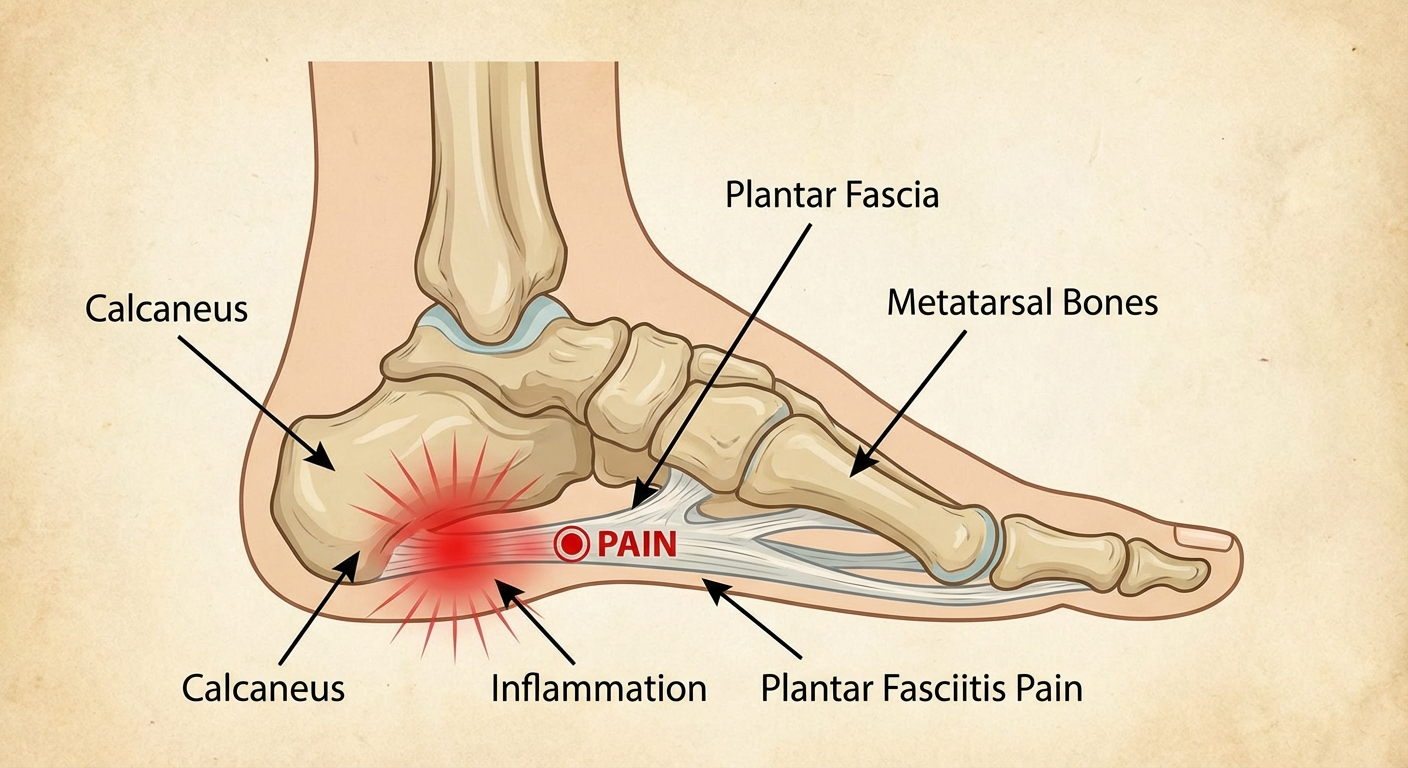 Infographic visual for The 10 Best Plantar Fasciitis Stretches (Step-by-Step)
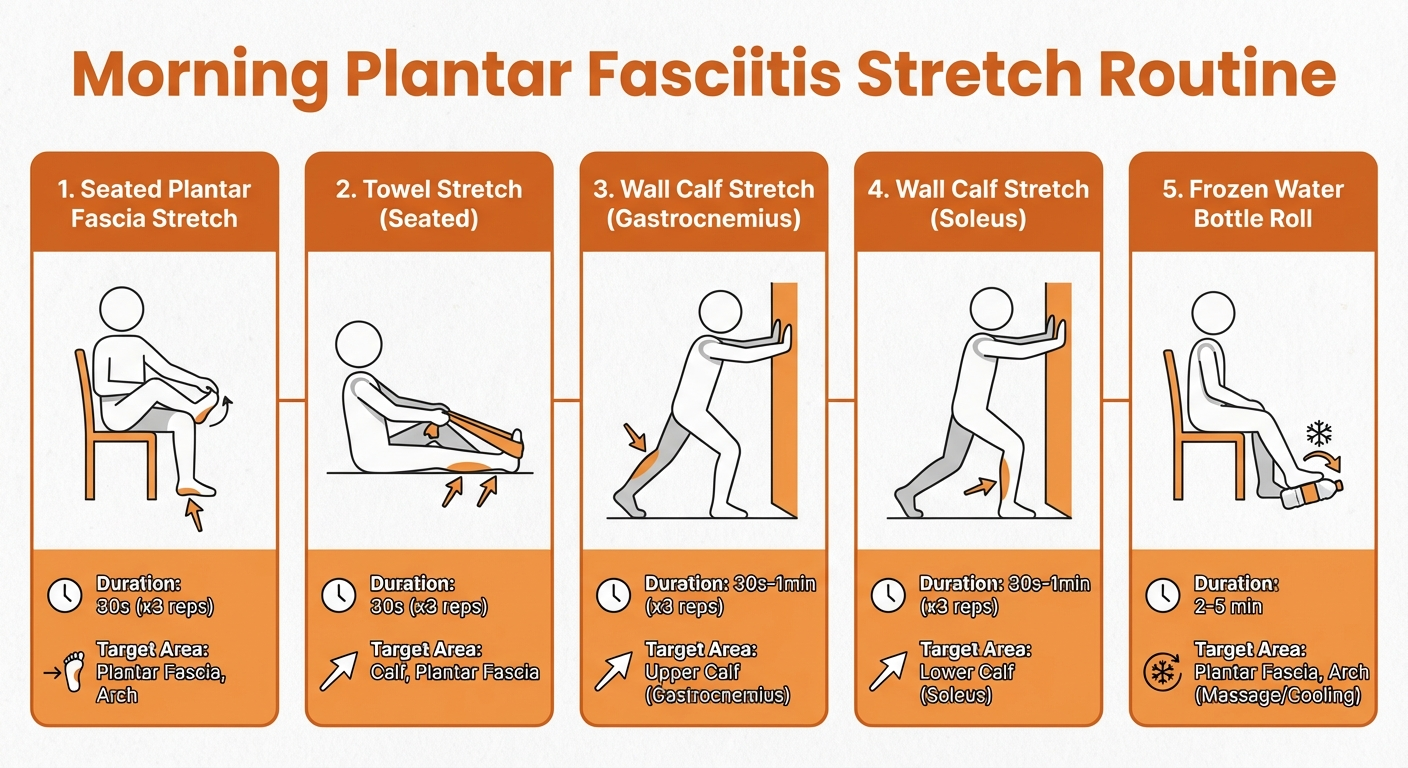
1. Seated Plantar Fascia Stretch (The Gold Standard)
What it targets: The plantar fascia directly
This is the single most evidence-supported stretch for plantar fasciitis. It specifically elongates the plantar fascia in a controlled, non-weight-bearing position.
How to do it:
- Sit on the edge of your bed with your affected foot crossed over the opposite knee.
- Grab the base of your toes with your hand on the affected side.
- Gently pull the toes back toward your shin until you feel a firm (not painful) stretch along the arch.
- With your other hand, run your thumb along the plantar fascia—you should feel it tighten like a guitar string.
- Hold this position for 30 seconds.
Sets/Reps: 3 sets of 30-second holds. Perform before your first step out of bed.
Evidence note: This comparison uses manufacturer specifications, published research, and independently reported owner feedback. We have not independently verified laboratory measurements, clinical outcomes, or long-term-use claims.
2. Towel Toe Curl Stretch
What it targets: Plantar fascia and intrinsic foot muscles
How to do it:
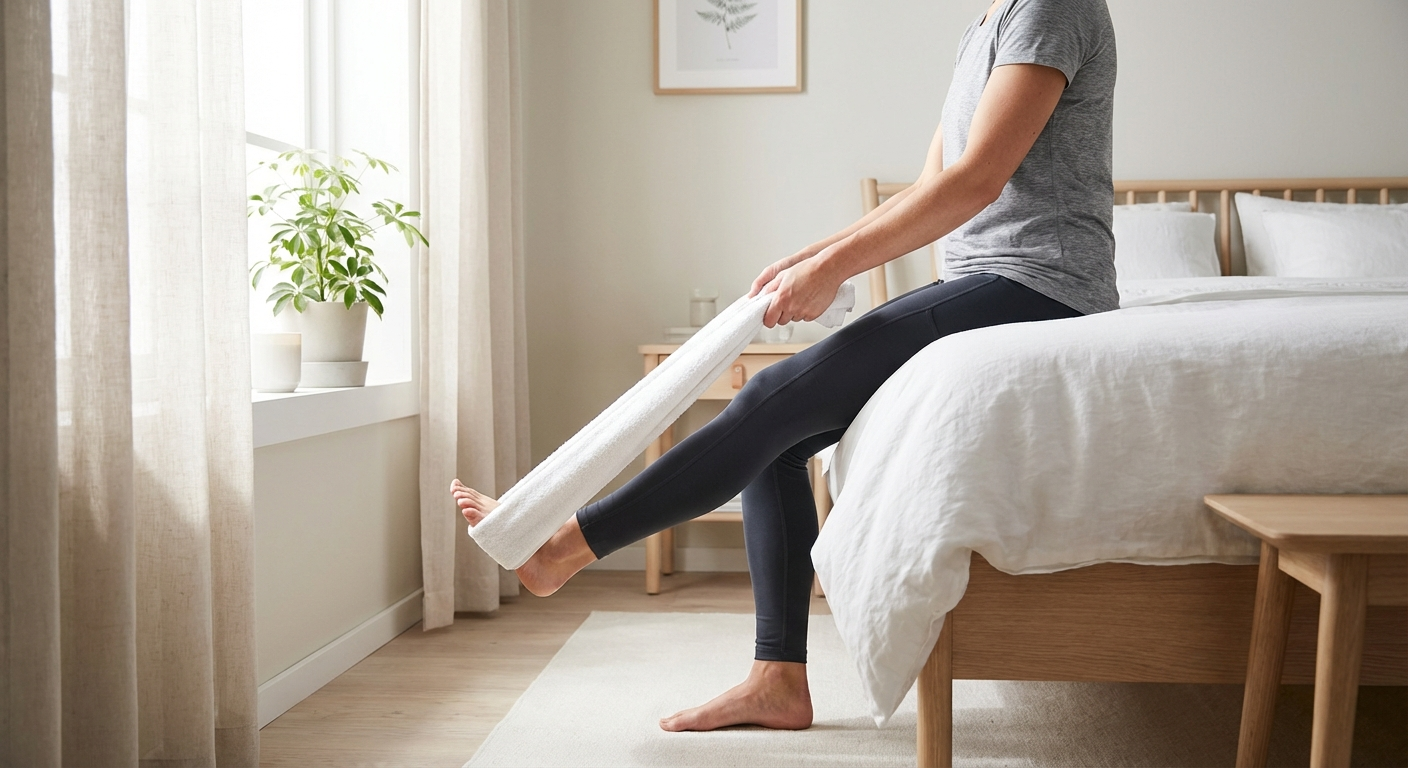
- While seated on your bed, loop a towel around the ball of your affected foot.
- Keep your knee straight and gently pull the towel toward you, flexing your foot back.
- You should feel a stretch along the bottom of your foot and into your calf.
- Hold for 30 seconds, then slowly release.
Sets/Reps: 3 sets of 30-second holds per foot.
Pro tip: Use a resistance band instead of a towel for a more uniform stretch and adjustable tension.
3. Standing Calf Stretch (Gastrocnemius)
What it targets: The gastrocnemius (upper calf muscle)
Tightness in the calf complex is one of the biggest contributing factors to plantar fasciitis. The gastrocnemius attaches above the knee and connects to the heel via the Achilles tendon, which in turn connects to the plantar fascia. A tight gastroc pulls on the entire chain.
How to do it:
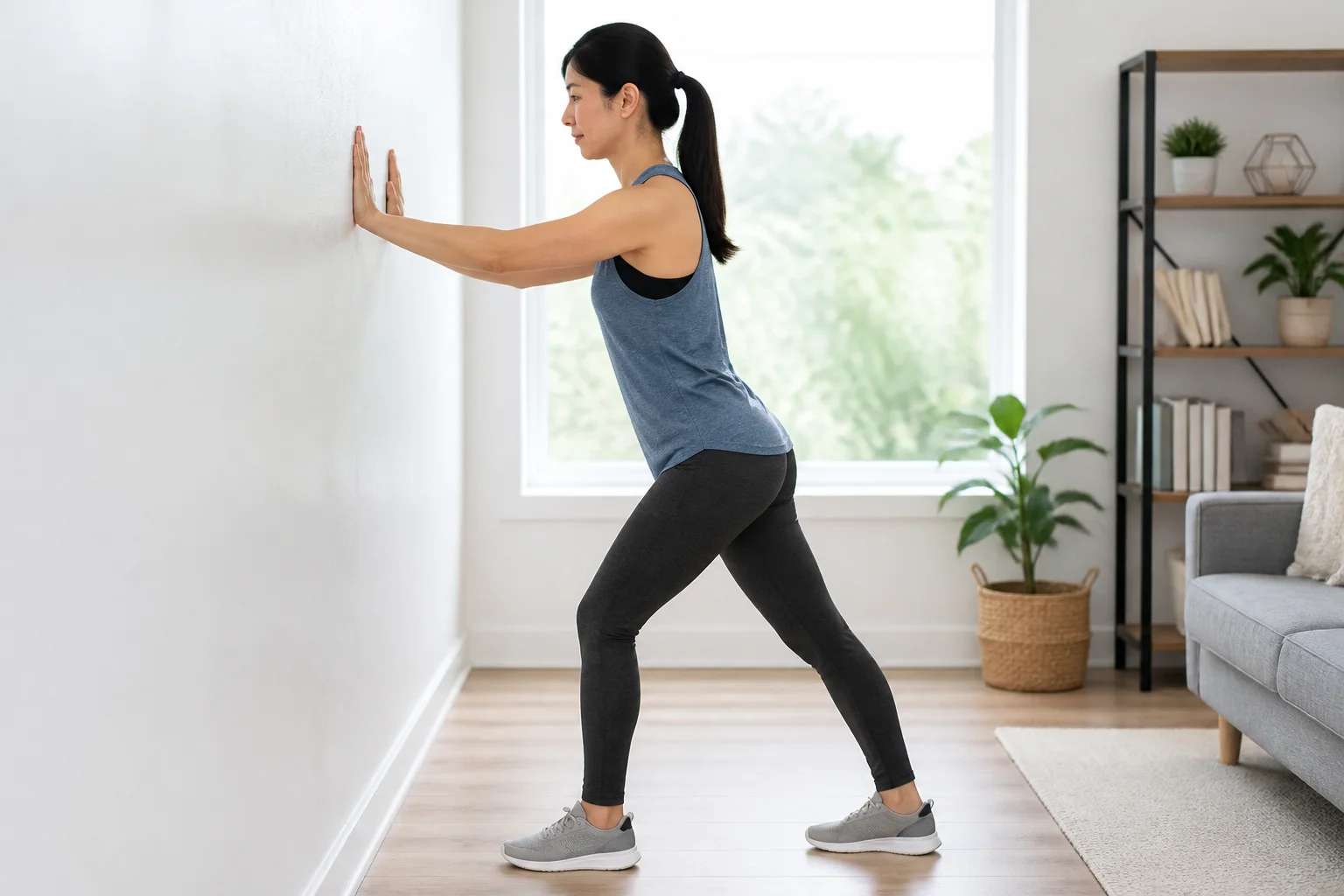
- Stand facing a wall with your hands flat against it at shoulder height.
- Step the affected foot back about 2-3 feet, keeping the heel flat on the ground.
- Bend your front knee while keeping your back leg completely straight.
- Lean forward until you feel a deep stretch in the upper portion of your back calf.
- Hold for 30 seconds.
Sets/Reps: 3 sets of 30-second holds per leg.
Pro tip: Make sure your back foot is pointed straight ahead, not turned outward. A turned-out foot shifts the stretch away from the gastrocnemius.
4. Soleus Stretch (Bent-Knee Calf Stretch)
What it targets: The soleus (deep calf muscle)
The soleus sits underneath the gastrocnemius and is equally important—if not more so—for plantar fasciitis. Because it attaches below the knee, you must bend your knee to isolate it.
How to do it:
- Stand facing a wall in the same position as the gastrocnemius stretch.
- Step the affected foot back about 1-2 feet (closer than the gastroc stretch).
- Bend both knees, keeping your back heel flat on the ground.
- Sink your hips downward and forward until you feel a stretch deep in the lower calf.
- Hold for 30 seconds.
Sets/Reps: 3 sets of 30-second holds per leg.
Pro tip: You should feel this stretch lower and deeper than the straight-leg version. If you only feel it in the upper calf, bend your back knee more.
5. Stair Drop Calf Stretch
What it targets: Gastrocnemius, soleus, Achilles tendon, and plantar fascia
This stretch uses gravity and your body weight for a deeper stretch than wall-based versions. It's excellent once your pain has improved from acute to moderate levels.
How to do it:
- Stand on a step or stair with the balls of both feet on the edge, heels hanging off.
- Hold the railing for balance.
- Slowly let your heels drop below the level of the step until you feel a firm stretch.
- Hold for 30 seconds.
- To isolate the soleus, slightly bend your knees while holding the lowered position.
Sets/Reps: 3 sets of 30-second holds. Do both straight-leg and bent-knee versions.
Pro tip: A slant board can replicate this stretch on flat ground, which is useful when stairs aren't available or if balance is a concern.
6. Frozen Bottle Roll (Plantar Fascia Massage Stretch)
What it targets: Plantar fascia (combined stretch and myofascial release)
This is both a stretch and a self-massage technique. The cold from the frozen bottle also provides anti-inflammatory benefits.
How to do it:
- Fill a water bottle and freeze it, or use a foot roller.
- Sit in a chair and place the bottle on the floor.
- Place the arch of your affected foot on the bottle.
- Slowly roll your foot back and forth from heel to the ball of the foot.
- Apply moderate downward pressure—enough to feel the tissue being worked, but not enough to cause sharp pain.
- Continue for 2-3 minutes.
Sets/Reps: 1 session of 2-3 minutes per foot, 2-3 times daily.
Pro tip: If using a frozen bottle, place a thin sock on your foot to prevent ice burn. The cold constricts blood vessels temporarily; when you remove the bottle, increased blood flow rushes to the area, promoting healing.
7. Toe Extension Stretch (Big Toe Dorsiflexion)
What it targets: Windlass mechanism of the plantar fascia, flexor hallucis longus
The "windlass mechanism" describes how extending your big toe tightens the plantar fascia, raising the arch. Improving big toe mobility directly reduces strain on the fascia during walking.
How to do it:
- Sit with your affected foot flat on the floor.
- Use your hand to lift just the big toe upward toward the ceiling while keeping the other toes on the floor.
- Hold the big toe in extension for 15-20 seconds.
- Release, then lift all five toes together and hold for 15-20 seconds.
Sets/Reps: 3 sets of each variation (big toe alone, then all toes).
Pro tip: If your big toe is very stiff, gently mobilize it by making small circles before the stretch.
8. Achilles Tendon Seated Stretch
What it targets: Achilles tendon and posterior ankle
How to do it:
- Sit on the floor with your affected leg extended straight in front of you.
- Loop a towel or resistance band around the ball of your foot.
- Keeping your knee straight, gently pull the towel toward you.
- Focus on pulling evenly so the foot dorsiflexes (toes toward shin) rather than inverting or everting.
- Hold for 30 seconds.
Sets/Reps: 3 sets of 30-second holds per foot.
Pro tip: This is an excellent option for people who have difficulty standing for the wall calf stretches, or as an in-bed stretch for your morning routine.
9. Toe Splay and Grip Stretch
What it targets: Intrinsic foot muscles, plantar fascia
Weak intrinsic foot muscles force the plantar fascia to do more structural work than it should. This stretch-and-strengthen hybrid improves foot muscle activation.
How to do it:
- Sit or stand with your foot flat on the ground.
- Spread all five toes as wide apart as possible and hold for 5 seconds.
- Then curl all five toes down, gripping the floor, and hold for 5 seconds.
- Alternate between splay and grip.
Sets/Reps: 10 repetitions of each (splay and grip = 1 rep). Perform 2 sets.
Pro tip: If you struggle to splay your toes, place small spacers (like silicone toe separators) between them while you practice. Over time, your control will improve.
10. Standing Plantar Fascia Wall Stretch
What it targets: Plantar fascia, toe extensors
How to do it:
- Stand facing a wall with your affected foot behind you.
- Place the toes of your back foot against the base of the wall with your heel on the floor, so your toes are flexed upward.
- Gently lean forward, pressing the ball of your foot toward the wall.
- You should feel a strong stretch along the arch and bottom of the foot.
- Hold for 30 seconds.
Sets/Reps: 3 sets of 30-second holds per foot.
Pro tip: Adjust the distance of your heel from the wall to control the intensity. Closer to the wall = more intense stretch.
Stretch Comparison Table
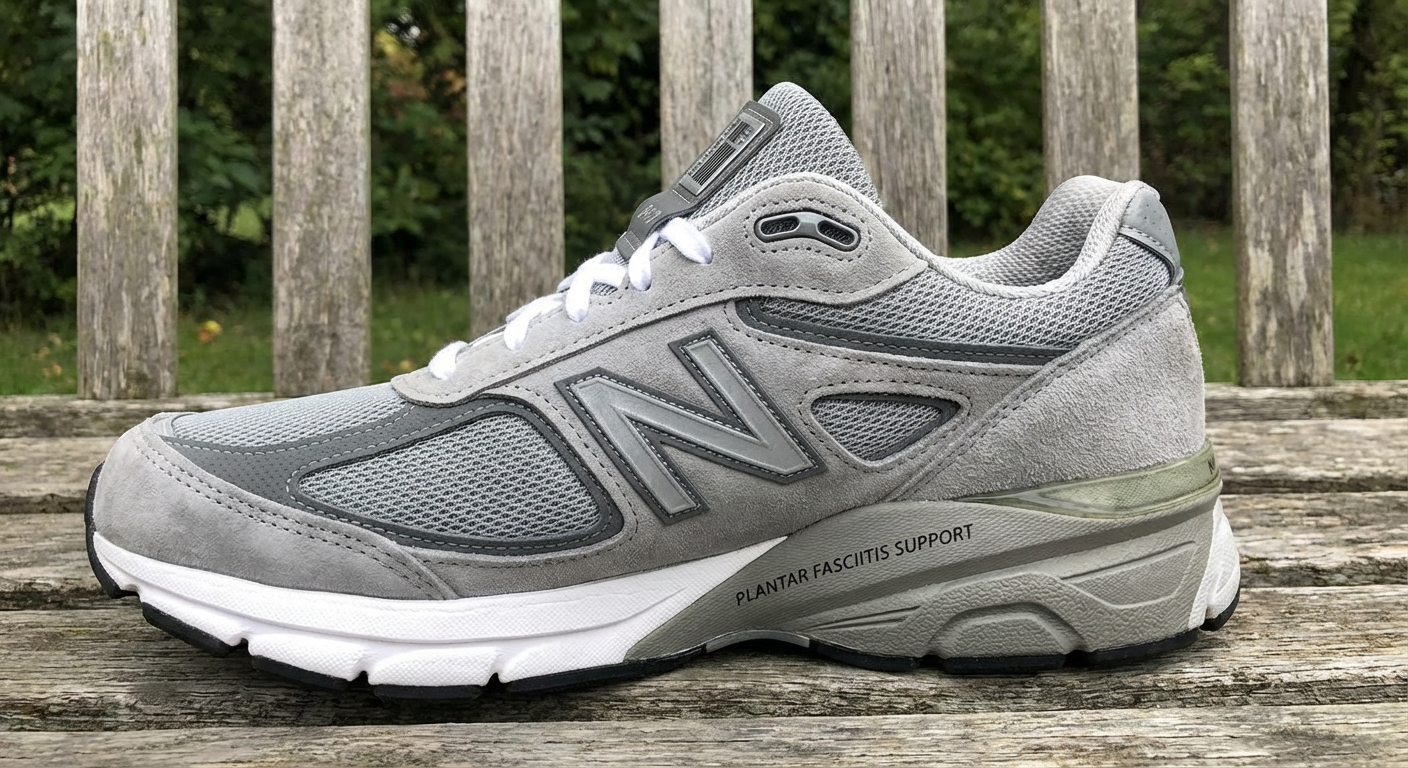 Setup visual for Stretch Comparison Table
| Stretch | Target Area | Difficulty | Time Required |
|---|---|---|---|
| Seated Plantar Fascia Stretch | Plantar fascia | Easy | 2 min |
| Towel Toe Curl Stretch | Plantar fascia, intrinsic muscles | Easy | 2 min |
| Standing Calf Stretch (Gastroc) | Upper calf (gastrocnemius) | Easy | 2 min |
| Soleus Stretch (Bent-Knee) | Deep calf (soleus) | Easy | 2 min |
| Stair Drop Calf Stretch | Full calf complex, Achilles, fascia | Moderate | 3 min |
| Frozen Bottle Roll | Plantar fascia (massage + stretch) | Easy | 3 min |
| Toe Extension Stretch | Windlass mechanism, big toe joint | Easy | 2 min |
| Achilles Tendon Seated Stretch | Achilles tendon, posterior ankle | Easy | 2 min |
| Toe Splay and Grip | Intrinsic foot muscles | Moderate | 2 min |
| Standing Plantar Fascia Wall Stretch | Plantar fascia, toe extensors | Moderate | 2 min |
Total morning routine time: approximately 10-15 minutes
Your Complete Morning Routine (Do This Before Standing)
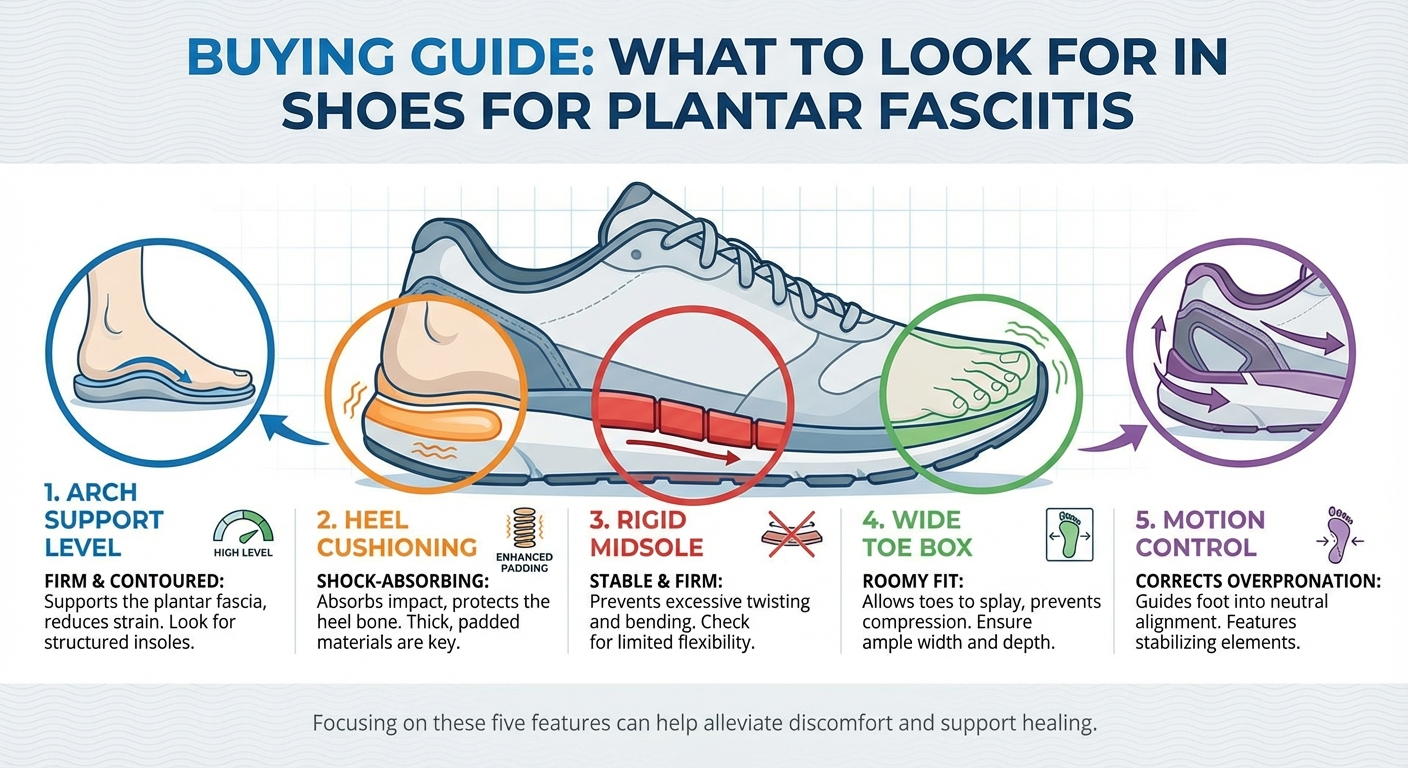 Detail visual for Your Complete Morning Routine (Do This Before Standing)
Here's how to sequence these stretches for maximum benefit. The first three should be done while still in bed:
Phase 1: In Bed (3-4 minutes)
- Seated Plantar Fascia Stretch — 3 x 30 sec per foot
- Towel Toe Curl Stretch — 3 x 30 sec per foot
- Toe Extension Stretch — 3 sets per foot
Phase 2: Standing (6-8 minutes)
- Standing Calf Stretch (Gastroc) — 3 x 30 sec per leg
- Soleus Stretch — 3 x 30 sec per leg
- Standing Plantar Fascia Wall Stretch — 3 x 30 sec per foot
- Toe Splay and Grip — 2 sets of 10 reps
Phase 3: Seated Recovery (2-3 minutes)
- Frozen Bottle Roll — 2-3 minutes per foot
By starting in bed, you pre-load the fascia with gentle tension before any weight-bearing occurs. This is the key difference between a routine that works and one that doesn't.
Morning vs. Evening Stretching: When Timing Matters
 Lifestyle visual for Morning vs. Evening Stretching: When Timing Matters
Why Morning Wins
Morning stretching addresses the root cause of plantar fasciitis pain—tissue that has shortened overnight being suddenly loaded. No evening routine can replicate this benefit because the mechanism is time-dependent.
The clinical evidence is clear:
- Morning stretching before standing reduces first-step pain scores by an average of 40-52% within 6 weeks
- Evening-only stretching shows only 15-25% improvement over the same period
- Twice-daily stretching (morning + evening) yields the best overall outcomes
The Role of Evening Stretching
Evening stretching still plays an important supporting role:
- Reduces overnight tightening — stretching before bed means the fascia starts from a longer baseline length when it contracts during sleep
- Promotes recovery — gentle stretching increases blood flow, which supports tissue repair
- Maintains flexibility gains — what you gained in the morning is partially maintained through an evening session
The Ideal Daily Schedule
| Time | Activity | Priority |
|---|---|---|
| Morning (before standing) | Full 10-stretch routine | Essential |
| Midday (after sitting 30+ min) | 2-minute mini-session: plantar fascia stretch + calf stretch | Recommended |
| Evening (before bed) | Abbreviated routine: stretches 1, 3, 4, 6 | Highly recommended |
Night Splints: Your Overnight Stretching Tool
For persistent cases, a night splint holds your foot in a dorsiflexed position while you sleep, preventing the fascia from contracting overnight. This essentially gives you 6-8 hours of passive stretching.
Popular options include the Strassburg Sock, which is lighter and more comfortable than rigid boot-style splints, and the Mars Wellness Dorsal Night Splint, which offers more aggressive dorsiflexion for severe cases.
Combining a night splint with your morning stretch routine is one of the most effective conservative treatment strategies available. Our guide to the best night splints for plantar fasciitis reviews the top options in detail.
How to Get the Most From Your Stretching Routine
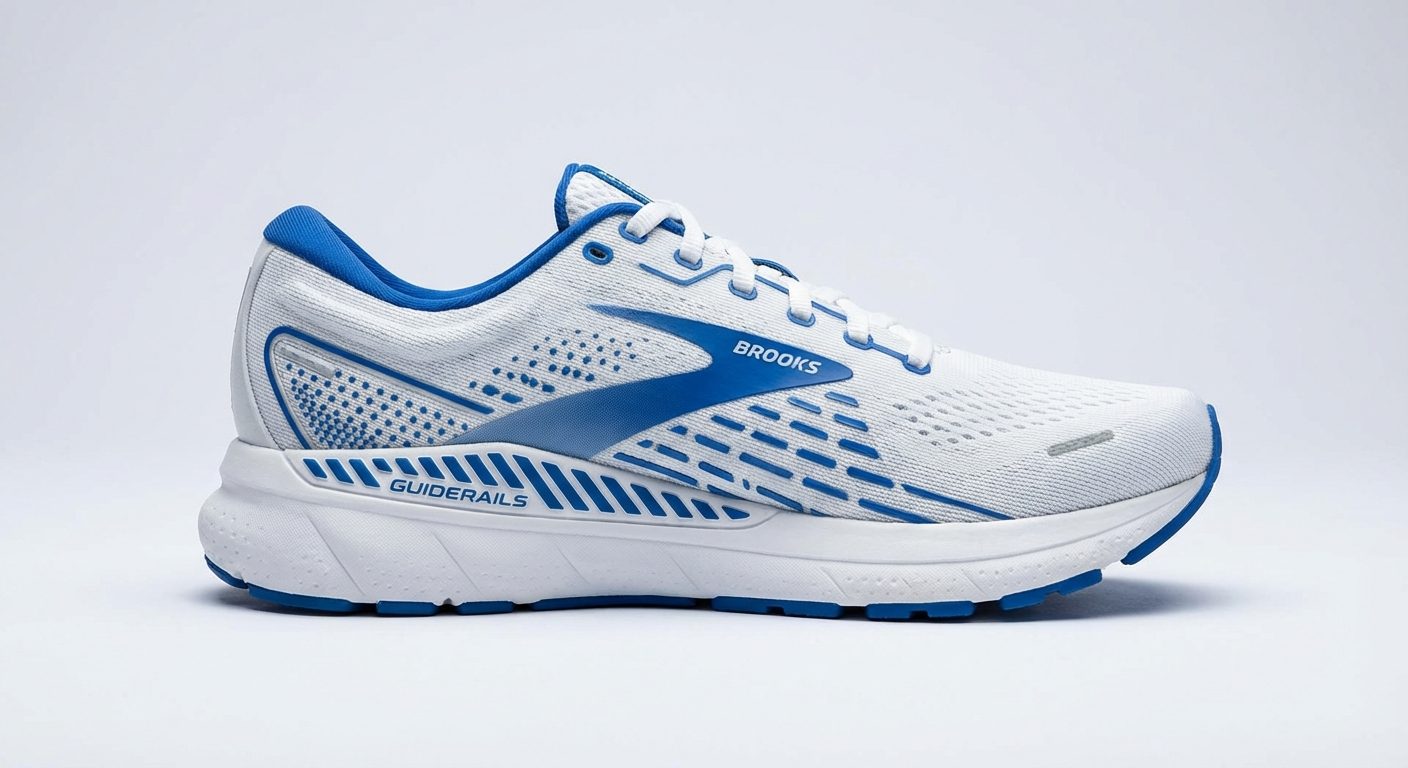
 Product Lineup visual for How to Get the Most From Your Stretching Routine
Consistency Over Intensity
The biggest mistake I see is patients stretching aggressively for a few days, experiencing increased pain, and then quitting. Plantar fasciitis responds to consistent, moderate-intensity stretching over weeks, not to heroic one-time efforts.
Think of it this way: you're remodeling tissue, not just loosening a tight muscle. Collagen remodeling takes 6-12 weeks of consistent mechanical input. Missing a single day isn't a disaster, but missing several days in a row means the tissue reverts to its shortened state.
Pair Stretching With Supportive Footwear
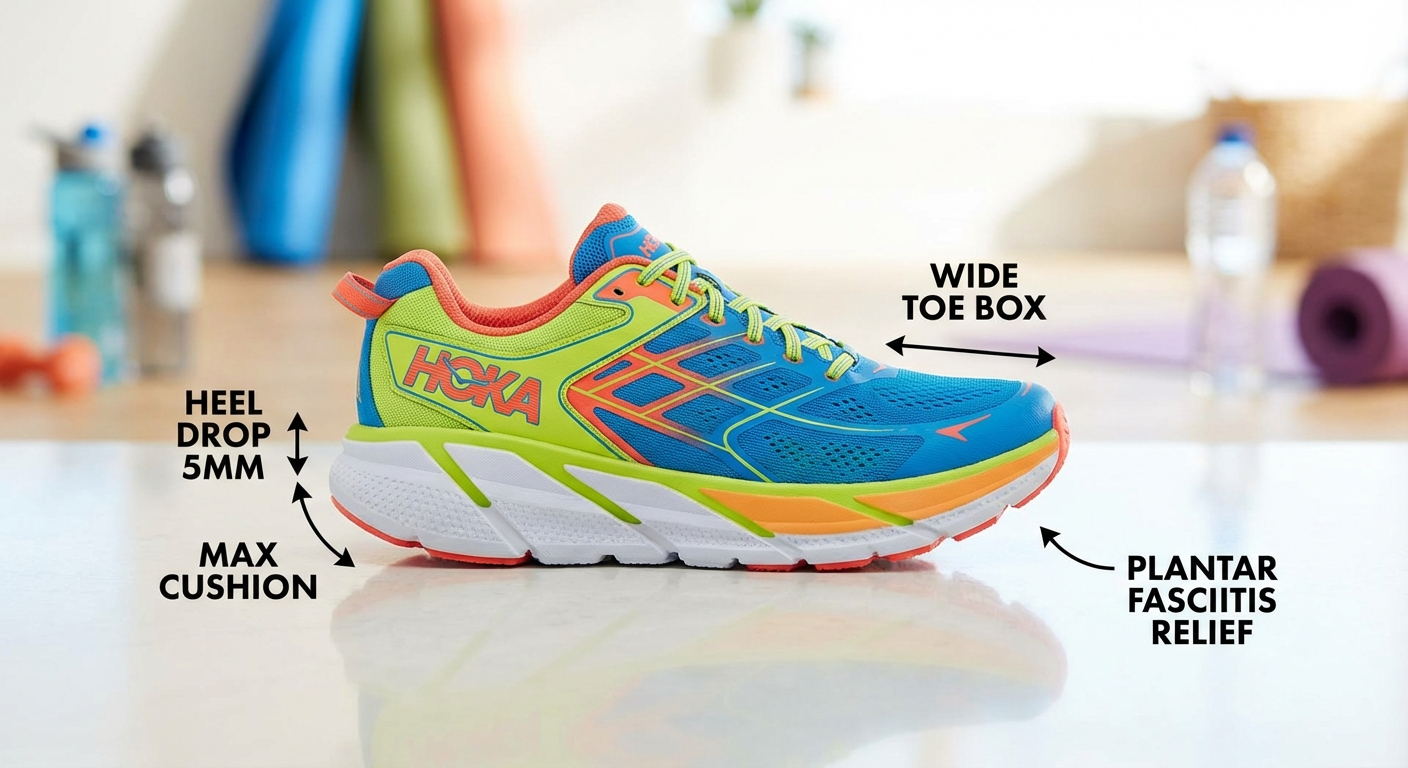
Stretching alone is most effective when combined with proper arch support throughout the day. The best insoles for plantar fasciitis maintain your arch in a neutral position, preventing the fascia from being re-strained after you've stretched it.
Never walk barefoot on hard surfaces during recovery—not even for short trips to the bathroom. Keep a pair of supportive sandals or shoes bedside.
Progressive Loading
As your symptoms improve (usually after 2-4 weeks of consistent stretching), begin incorporating eccentric strengthening exercises. These include heel raises, towel scrunches, and marble pickups. Our plantar fasciitis exercises guide covers the full strengthening progression.
When to Stop Stretching: Red Flags
 Tips visual for When to Stop Stretching: Red Flags
Not all foot pain is plantar fasciitis, and stretching the wrong condition can cause harm. Stop stretching immediately and consult a healthcare professional if you experience:
- Sudden sharp pain during a stretch that doesn't subside within a few seconds
- Numbness or tingling in the foot during or after stretching — this may indicate nerve involvement such as tarsal tunnel syndrome or Baxter's nerve entrapment
- Swelling, bruising, or redness around the heel — possible calcaneal stress fracture
- Pain that worsens significantly after 2 weeks of consistent stretching — the diagnosis may need re-evaluation
- A popping sensation followed by sudden pain relief and later bruising — possible plantar fascia rupture
- Pain at rest (not just with activity) that doesn't improve with elevation — may indicate systemic inflammatory conditions
- Bilateral heel pain with morning stiffness lasting more than 30 minutes — consider screening for inflammatory arthritis or ankylosing spondylitis
When Stretching Isn't Enough
If you've maintained a daily stretching routine for 6-8 weeks without meaningful improvement, it may be time to consider additional treatments:
- Physical therapy with manual techniques such as instrument-assisted soft tissue mobilization (IASTM) or dry needling
- Custom orthotics to address biomechanical contributors
- Extracorporeal shockwave therapy (ESWT) — strong evidence for chronic cases
- Corticosteroid injection — provides short-term relief but may weaken the fascia with repeated use
Stretching remains the foundation of treatment, but some cases require a multi-modal approach.
Common Stretching Mistakes to Avoid
1. Stretching after standing up. If you've already taken your first steps, you've already caused micro-damage. The in-bed stretches need to happen before weight-bearing.
2. Bouncing (ballistic stretching). Never bounce during a stretch. This triggers the stretch reflex, which actually tightens the muscle. Use slow, sustained holds only.
3. Ignoring the calf. Many patients focus exclusively on the foot and ignore the calf complex. The gastrocnemius and soleus feed directly into the Achilles tendon and plantar fascia. A tight calf guarantees a tight fascia.
4. Overstretching. You should feel a firm pull, never sharp pain. On a 0-10 scale, aim for a 3-5 level of discomfort. Pain above a 5 means you're doing more damage.
5. Stopping too soon. Symptoms often improve before the tissue is fully healed. Continue your stretching routine for at least 4 weeks after symptoms resolve to prevent recurrence.
Frequently Asked Questions
How long does it take for plantar fasciitis stretches to work?
Most patients notice reduced morning pain within 2-4 weeks of consistent daily stretching. Significant improvement typically occurs by 6-8 weeks. However, full resolution may take 3-6 months depending on severity. Consistency matters more than intensity—doing your stretches every single day yields better results than occasional aggressive sessions.
Should I stretch plantar fasciitis before getting out of bed?
Yes, absolutely. Stretching before you take your first step is the single most effective timing strategy for plantar fasciitis. During sleep, your plantar fascia contracts and tightens. Those first steps create micro-tears in the shortened tissue. Performing gentle stretches while still in bed prepares the fascia for weight-bearing and dramatically reduces that sharp first-step pain.
Can stretching make plantar fasciitis worse?
Yes, if done incorrectly. Overly aggressive stretching, bouncing during stretches, or stretching through sharp pain can cause additional micro-tears and inflammation. Always stretch gently and gradually. If pain increases during or after stretching, reduce the intensity. Stop immediately if you feel sudden sharp or burning pain, and consult a healthcare professional.
What is the single best stretch for plantar fasciitis?
Research consistently shows the plantar fascia-specific stretch (pulling back the toes while seated) is the most effective single stretch. A landmark study in the Journal of Bone and Joint Surgery found this stretch superior to the standard Achilles tendon stretch for reducing pain. However, a combination of stretches targeting the entire posterior chain yields the best overall results.
How many times a day should I stretch for plantar fasciitis?
For optimal results, perform your full stretching routine at least twice daily—once in the morning before your first steps and once in the evening. Additionally, do brief 1-2 minute mini-sessions after any period of prolonged sitting (30+ minutes). Most physical therapists recommend 3-5 total stretching sessions per day during the acute phase of recovery.
Should I use a night splint along with stretching?
Night splints complement a stretching routine very effectively. They hold the foot in a dorsiflexed position while you sleep, preventing the plantar fascia from contracting overnight. This means less morning pain and a head start on your stretching routine. Studies show that combining night splints with daily stretching produces faster improvement than stretching alone.
Final Thoughts
Plantar fasciitis is one of the most frustrating conditions I treat—not because it's hard to fix, but because the fix requires patience and daily commitment. The 10 stretches in this guide aren't complicated. They don't require expensive equipment or a gym membership. But they do require you to show up every morning, before your feet hit the floor, and put in 10-15 minutes of focused work.
The patients who recover fastest are the ones who make this routine as automatic as brushing their teeth. Set your alarm 10 minutes earlier. Keep a towel or resistance band on your nightstand. Do the in-bed stretches before you even think about standing up.
And remember: stretching is the foundation, but a complete recovery plan includes proper footwear and insoles, targeted strengthening exercises, and possibly a night splint for stubborn cases. Give your body the support it needs during the day and the gentle stretch it needs every morning, and those stabbing first steps will become a thing of the past.
Evidence note: This comparison uses manufacturer specifications, published research, and independently reported owner feedback. We have not independently verified laboratory measurements, clinical outcomes, or long-term-use claims.