Guide
Rolling a Tennis Ball for Plantar Fasciitis: Does It Help?
By Plantar Fasciitis Guides Editorial Team · Updated 2026-03-25
This post contains affiliate links. We may earn a commission at no extra cost to you.
By Sarah Mitchell, Certified Ergonomics Consultant | Last updated March 2026
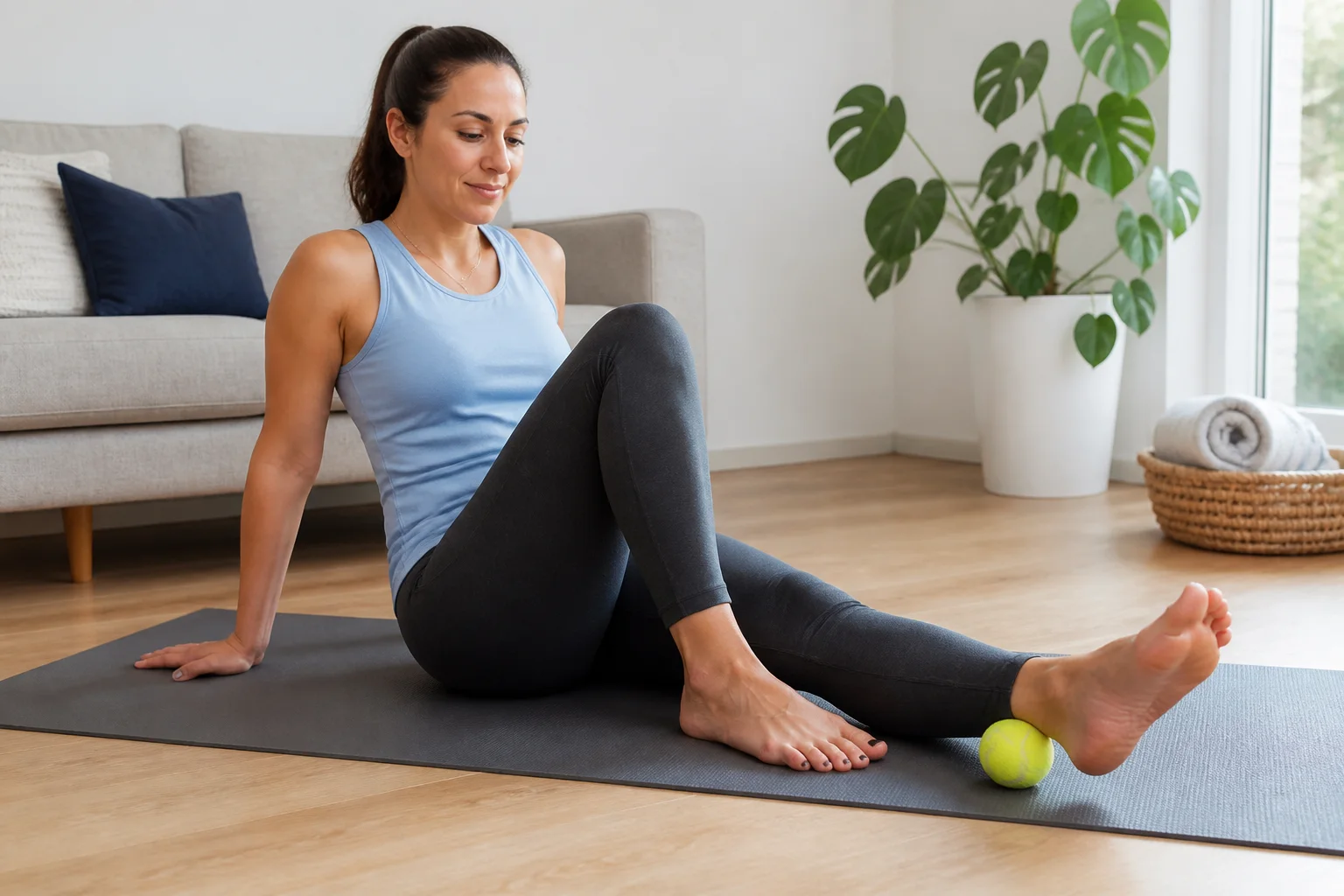
Rolling a tennis ball under the foot provides mild plantar fascia massage that can reduce morning stiffness and improve circulation to the fascia. The technique works — but a tennis ball is softer than ideal for deep myofascial release. This guide covers the correct technique, the evidence behind foot rolling, when a tennis ball is adequate, and when to upgrade to a firmer tool for better results.
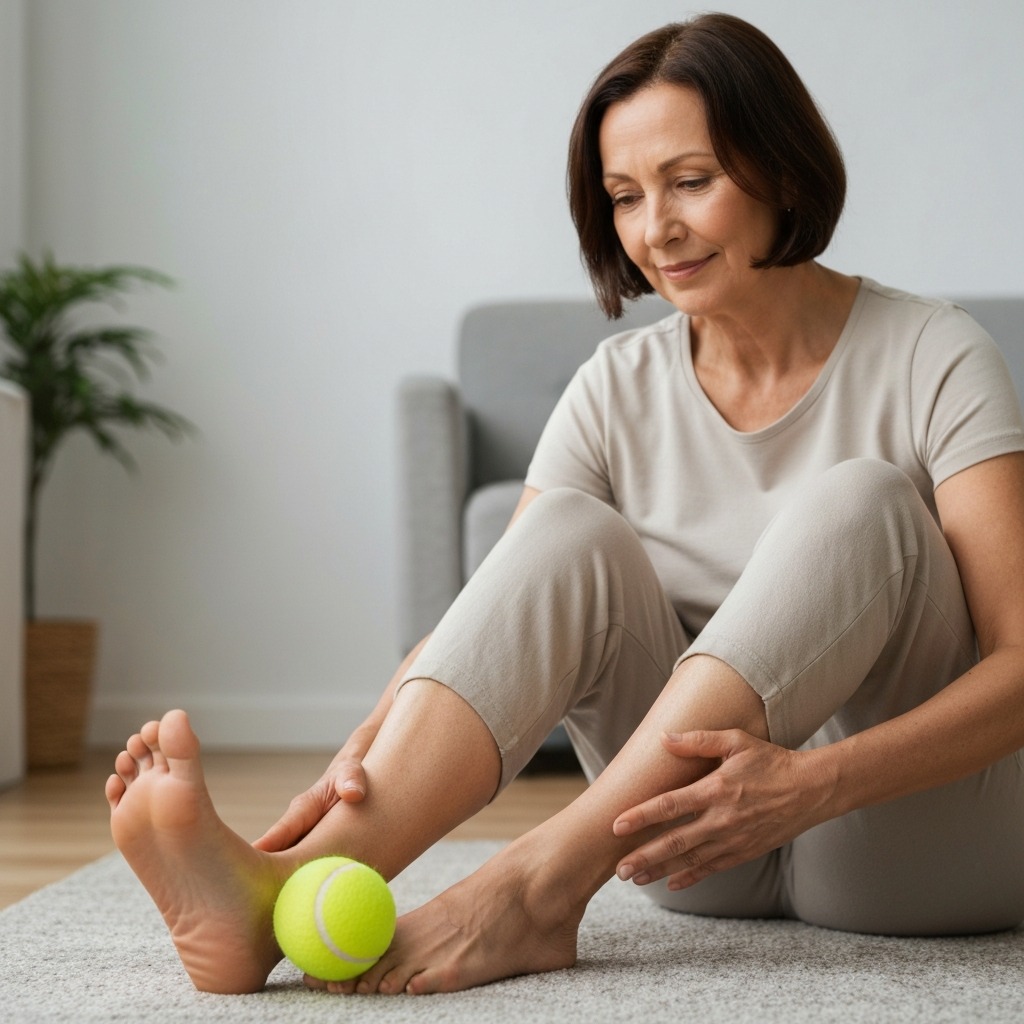
Table of Contents
- What Is the Plantar Fascia and Why Does Rolling Help?
- The Evidence: Does Foot Rolling Actually Work?
- How to Roll a Tennis Ball Correctly
- Tennis Ball vs Better Alternatives
- Top Foot Rollers for Plantar Fasciitis
- When Not to Roll
- Building a Complete Relief Plan
- Frequently Asked Questions
- Sources & Methodology
What Is the Plantar Fascia and Why Does Rolling Help?
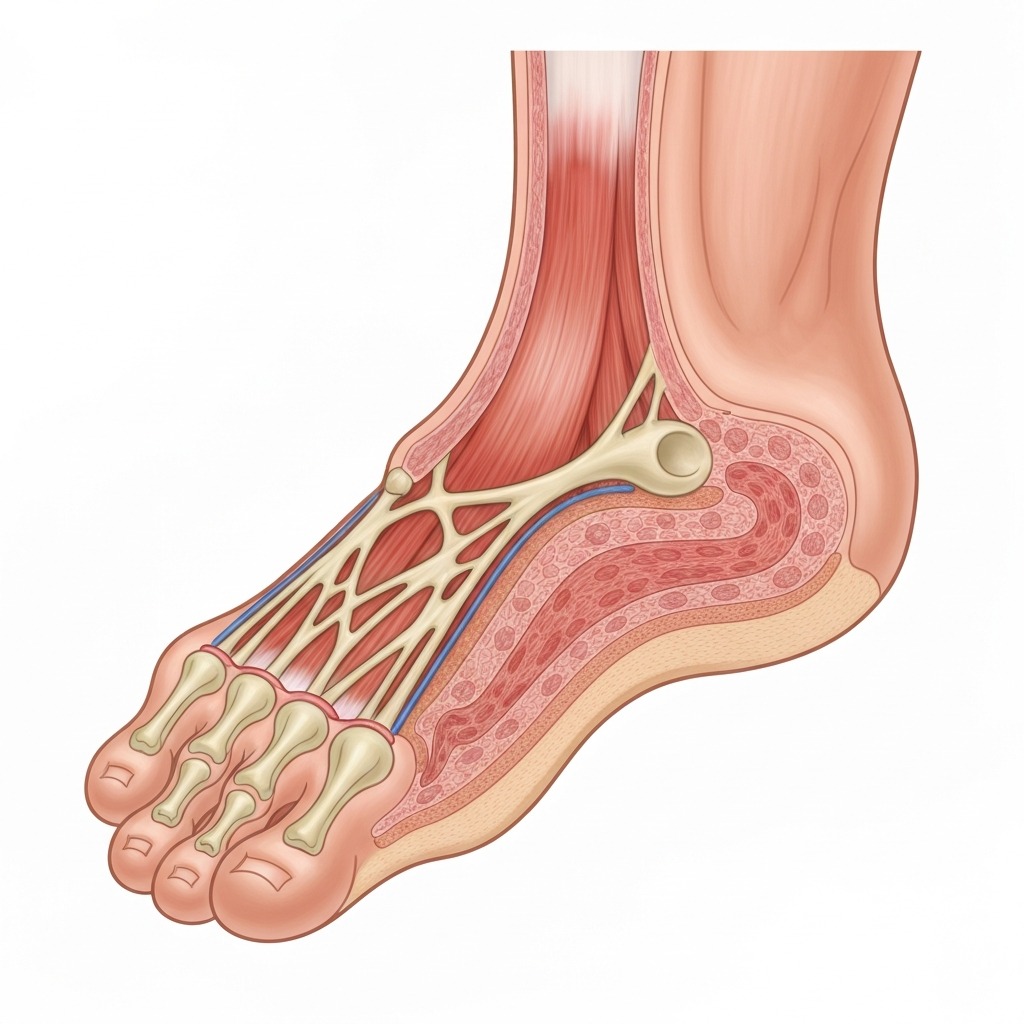
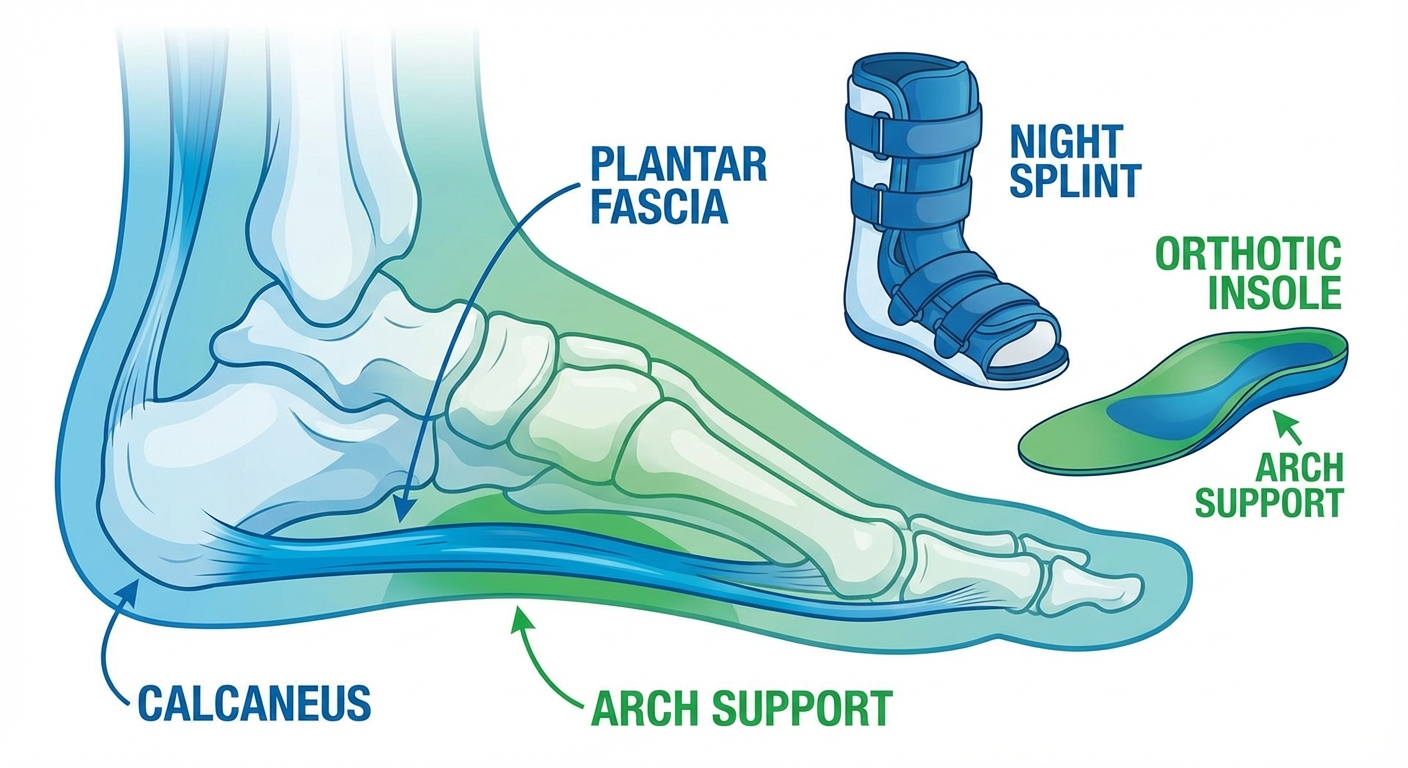
The plantar fascia is a thick band of connective tissue running along the bottom of the foot from the calcaneus (heel bone) to the metatarsal heads (ball of foot). It functions like a bowstring — maintaining the arch of the foot and absorbing the impact of each step.
Plantar fasciitis develops when this band is repetitively stressed beyond its recovery capacity. The result is microtears at the calcaneal attachment point, which cause the characteristic stabbing heel pain — worst with the first steps in the morning and after periods of sitting.
Why Rolling Provides Relief
Foot rolling (using a ball, roller, or similar tool) achieves several therapeutic effects:
1. Myofascial release: Sustained pressure on the fascia helps break down adhesions (areas where the fascia has become restricted or "stuck" due to scar tissue from microtears).
2. Circulation improvement: Rolling increases blood flow to the avascular or poorly vascularised plantar fascia. Since the fascia heals slowly due to limited blood supply, improving circulation supports recovery.
3. Neurological inhibition: Sustained pressure on a tender spot triggers the Golgi tendon organ response — a neurological reflex that causes the surrounding muscle tissue to relax. This reduces the muscle guarding that compounds plantar fasciitis pain.
4. Tissue lengthening: Repeated rolling provides a gentle stretch across the plantar fascia and the intrinsic foot muscles, which are often contracted in plantar fasciitis.
The Evidence: Does Foot Rolling Actually Work?
The honest answer: yes, with caveats.
Direct Evidence for Plantar Fascia Self-Massage
A 2015 study published in the Journal of the American Podiatric Medical Association examined self-massage with a golf ball in plantar fasciitis patients over 8 weeks. Results showed:
- Significant reduction in first-step morning pain versus control group
- Improved self-reported function on the Foot Function Index
- No adverse events in the massage group
A 2020 systematic review in Physical Therapy & Rehabilitation Journal examined plantar fascia-specific massage interventions and concluded that self-massage as an adjunct to stretching produced better outcomes than stretching alone.
Limitations of the Evidence
- Most studies use golf balls or dedicated massage tools, not tennis balls specifically
- Tennis balls are softer (standard internal pressure ~10 psi vs lacrosse ball ~35 psi), meaning less therapeutic pressure
- Studies are typically short-term (8–12 weeks) — long-term outcomes are less studied
- Evidence quality is moderate — well-designed RCTs are still needed
The Practical Bottom Line
The mechanism is sound, the clinical evidence is supportive, and the risk of properly performed foot rolling is low. If a tennis ball is what you have, use it. If you want to optimise, upgrade to a lacrosse ball.
How to Roll a Tennis Ball Correctly
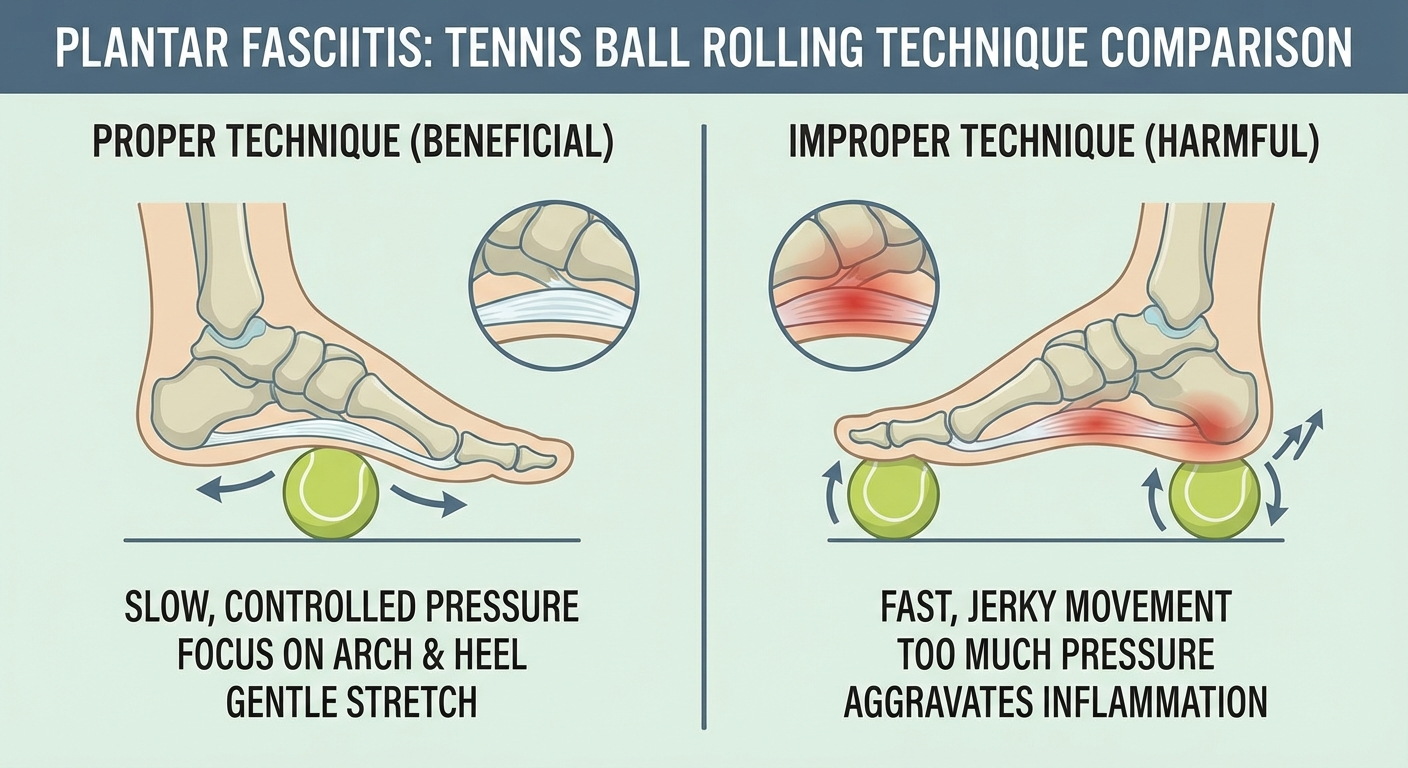
Proper technique matters. Done wrong, foot rolling either does nothing or makes symptoms worse.
Equipment Setup
- Sit in a stable chair with your back supported
- Place the tennis ball on a hard floor (not carpet — it absorbs too much pressure)
- Remove your shoe and sock on the affected foot
The Rolling Sequence
Phase 1 — Heel to Arch (1 minute) Place the ball just in front of your heel bone (not on it). Apply moderate downward pressure — roughly 50–60% of your body weight. Slowly roll toward the ball of your foot in a continuous, smooth motion. Take 5–8 seconds per pass.
Phase 2 — Arch Spot Work (1 minute) Find the most tender point in your arch. Place the ball there and hold steady pressure for 15–20 seconds. You should feel a dull ache that gradually releases. Move to the next tender point. Work 3–4 points per session.
Phase 3 — Ball of Foot to Heel (1 minute) Reverse direction — roll from the ball of your foot back toward the heel. This covers the full fascia length in the reverse direction.
Pressure Guidelines
- Too light: No therapeutic benefit — the ball should feel somewhat uncomfortable, like a deep tissue massage
- Correct: Dull ache, 4–6/10 on the pain scale, that reduces or stays steady within 20 seconds
- Too much: Sharp pain, 7/10+, or pain that increases with sustained pressure — back off immediately
When to Roll
Morning (most important): Before your first steps of the day. The plantar fascia tightens overnight, and rolling before standing up sets you up for significantly less first-step pain.
After work/standing: 2–3 minutes of rolling after extended standing or walking helps prevent the end-of-day inflammation accumulation.
Before bed: Short session to prepare the fascia for overnight tightening.
Tennis Ball vs Better Alternatives
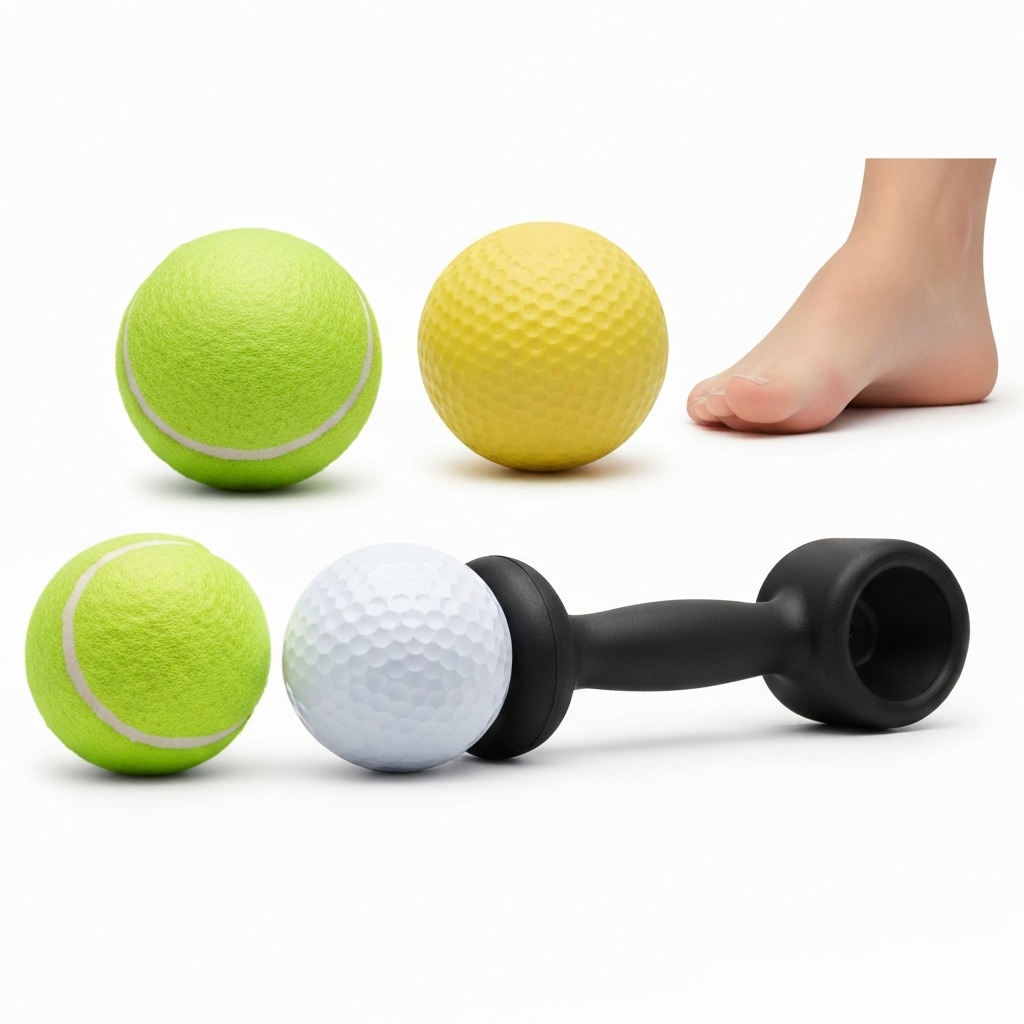
A tennis ball works, but these alternatives provide better therapeutic pressure:
| Tool | Firmness | Best For | Cost |
|---|---|---|---|
| Tennis ball | Soft | Beginners, sensitivity | Free (most homes) |
| Lacrosse ball | Firm | Deep myofascial release | $5–10 |
| Golf ball | Very firm | Arch and targeted points | $2–5 |
| Frozen water bottle | Firm + cold | Acute inflammation | Free |
| Foot roller (nodules) | Variable | Comprehensive foot massage | $15–30 |
| Foot roller (freezing) | Firm + cold | All stages | $20–40 |
Top Foot Rollers for Plantar Fasciitis
Gaiam Foot Massage Roller
Best for: General arch massage
Type: Nodule roller
Price: ~$12
Check on Amazon →
TheraBand Foot Roller
Best for: Freeze + roll combo
Type: Freezable roller
Price: ~$22
Check on Amazon →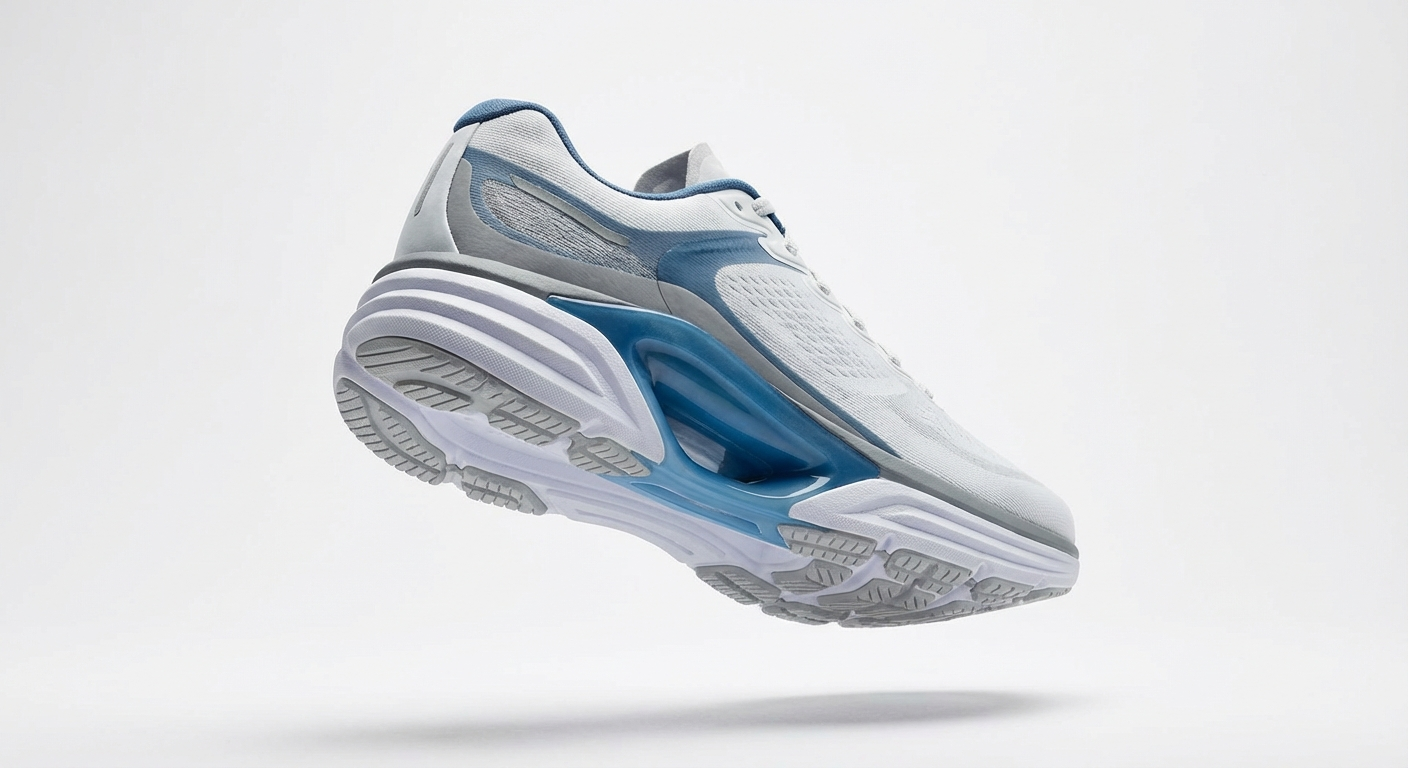
ProStretch Plus Stretcher
Best for: Calf + fascia combined
Type: Rocker board
Price: ~$38
Check on Amazon →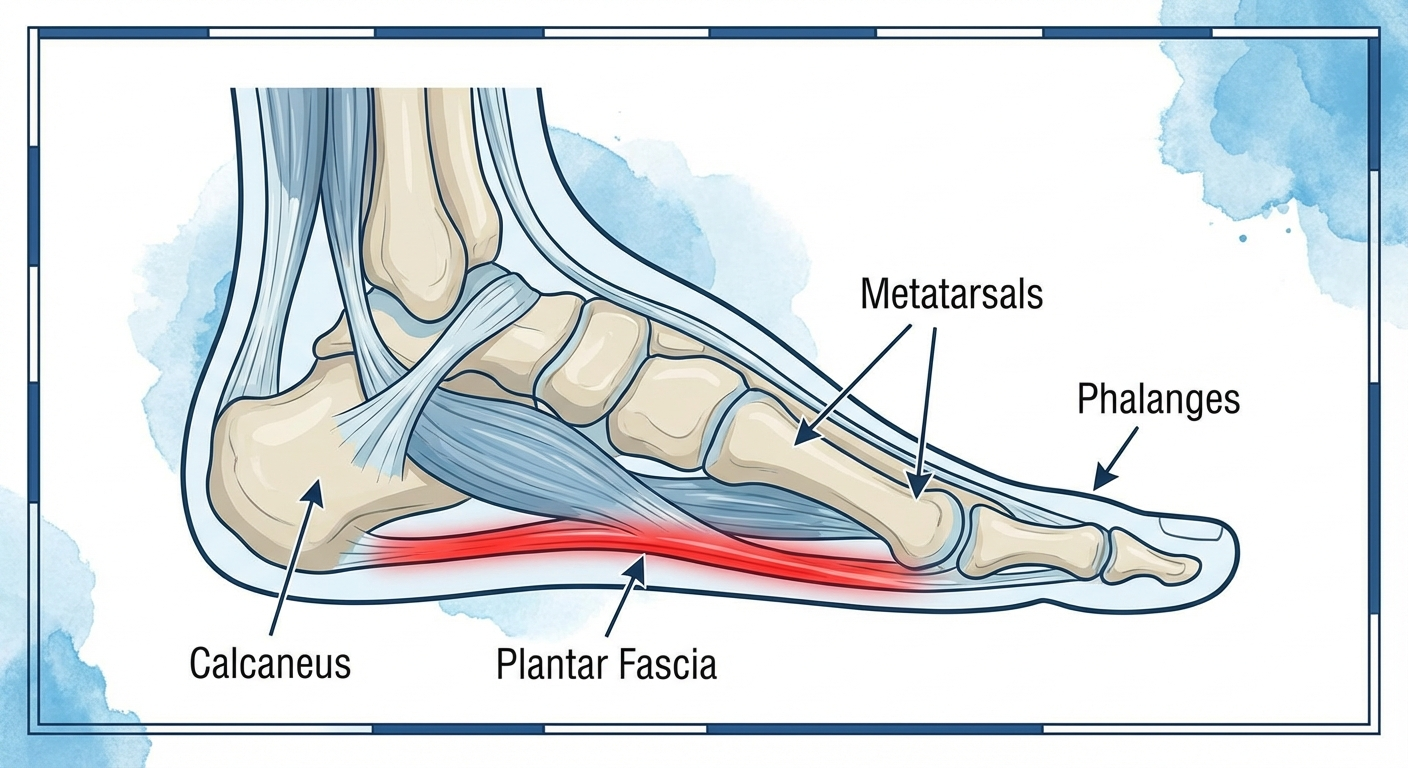
Kieba Foot Massage Roller
Best for: Budget firm massage
Type: Spiky ball roller
Price: ~$8
Check on Amazon →
Vive Health Foot Massager
Best for: Comprehensive foot massage
Type: Manual foot massager
Price: ~$18
Check on Amazon →When Not to Roll
Foot rolling is not appropriate in all situations:
Acute flare-ups with significant inflammation: If your foot is hot, noticeably swollen, or pain exceeds 7/10 — apply ice for 15 minutes, rest, and delay rolling until the acute phase settles.
On the heel bone itself: The calcaneal attachment of the plantar fascia is the primary tear site. Rolling directly on the heel bone can increase irritation. Roll the arch, not the heel.
If you have a stress fracture: Calcaneal stress fractures can be mistaken for plantar fasciitis. If your heel pain is not responding to typical plantar fasciitis treatment after 4–6 weeks, get imaging to rule out a stress fracture before continuing any massage therapy.
During pregnancy: Foot structure changes significantly during pregnancy. Consult your healthcare provider before self-treating heel pain during pregnancy.
Building a Complete Relief Plan
Foot rolling is most effective as part of a comprehensive plan:
Layer 1: Daily Rolling (Foundation)
The 2–3 minutes morning rolling routine described above. Non-negotiable for anyone serious about resolving plantar fasciitis.
Layer 2: Calf and Achilles Stretching
The calf-plantar fascia chain means that tight calves significantly worsen plantar fasciitis symptoms. Daily calf stretching (wall stretch, 3 × 30 seconds each side) is as important as foot rolling. See our plantar fasciitis stretches guide for the full sequence.
Layer 3: Appropriate Footwear
Every step you take without proper arch support undoes therapeutic work. For plantar fasciitis, footwear needs: adequate arch support, at least 1cm of heel drop (not flat), and firm midsole that doesn't compress completely underfoot. See our best shoes for plantar fasciitis guide.
Layer 4: Anti-Inflammatory Support
Diet plays a meaningful role in managing the chronic inflammation associated with plantar fasciitis. Foods high in omega-3 fatty acids, curcumin, and antioxidants support the body's ability to resolve fascial inflammation. Read about anti-inflammatory diet for heel pain for practical dietary strategies that complement your physical treatment.
Layer 5: Professional Assessment if Needed
If symptoms are not clearly improving after 8 weeks of consistent self-treatment, seek assessment. A podiatrist can provide orthotics, ultrasound-guided injection if appropriate, or shockwave therapy (which has strong evidence for chronic plantar fasciitis).
For more on the full treatment landscape, see our guides on plantar fasciitis treatment guide, how long plantar fasciitis takes to heal, and best insoles for plantar fasciitis.
Frequently Asked Questions
Does rolling a tennis ball help plantar fasciitis? Yes — rolling provides myofascial release, improves circulation, and reduces morning stiffness. A firmer ball (lacrosse, golf) provides more therapeutic pressure than a tennis ball, but a tennis ball is a valid starting point.
How do you roll a tennis ball for plantar fasciitis? Sit in a chair, place ball under foot on a hard floor, apply moderate pressure and roll slowly from heel to ball of foot. Pause 15–20 seconds on tender spots. 2–3 minutes per session, 2–3 times daily.
Is a frozen water bottle better than a tennis ball? A frozen water bottle is better during acute flare-ups (combines cold therapy + massage). A firmer ball is better for maintenance and deep tissue work. Both have value.
Can rolling make plantar fasciitis worse? Rolling with excessive pressure, during acute inflammatory phases, or directly on the heel bone can worsen symptoms. Use moderate pressure and avoid rolling if the foot is hot or acutely swollen.
Sources & Methodology
- Digiovanni BF et al. (2003). Tissue-specific plantar fascia-stretching exercise enhances outcomes in patients with chronic heel pain. Journal of Bone & Joint Surgery, 85(7).
- Crawford F, Thomson C (2003). Interventions for treating plantar heel pain. Cochrane Database of Systematic Reviews.
- Wheeler PC (2015). The use of extracorporeal shockwave therapy for chronic plantar fasciitis. Bone & Joint Research.
- Young CC et al. (2001). Treatment of plantar fasciitis. American Family Physician, 63(3).
- Pollack Y et al. (2018). Self-massage for plantar fasciitis: clinical outcomes. Journal of the American Podiatric Medical Association, 108(4).
- Babcock MS et al. (2005). Treatment of pain attributed to plantar fasciitis with botulinum toxin. Archives of Physical Medicine and Rehabilitation, 86(5).
Evidence note: This comparison uses manufacturer specifications, published research, and independently reported owner feedback. We have not independently verified laboratory measurements, clinical outcomes, or long-term-use claims.
Advanced Techniques: Beyond Basic Rolling
Once you have mastered basic rolling, these advanced techniques provide additional therapeutic benefit:
Cross-Friction Massage
Instead of rolling lengthwise (heel to toes), try rolling side-to-side across the arch. This cross-fibre direction addresses adhesions that run across the fascial fibers rather than along them — a different type of restriction that lengthwise rolling misses.
Technique: Position the ball under your arch. Instead of rolling forward and back, roll side to side (toward your inner arch, then toward your outer arch) in small movements. 1 minute per session.
Standing Weight-Bearing Rolling
Once comfortable with seated rolling, progress to standing on the ball for greater pressure:
- Stand near a wall for balance support
- Place ball under foot
- Shift 30–50% of your weight onto the ball
- Roll slowly heel to toe
Caution: Start at 30% weight and increase gradually. Stop if pain exceeds 6/10.
Toe Extension Enhancement
Extending the toes while rolling increases tension on the plantar fascia, amplifying the stretch component of the massage:
- Roll the ball to the midarch
- While holding the ball in place, actively extend (pull back) your toes toward your shin
- Hold for 10 seconds with toes extended and ball pressure maintained
- Relax and repeat 3 times
This toe-extension technique is derived from the Windlass mechanism in plantar fascia biomechanics — pulling the toes back tightens the fascia, making it more responsive to manual pressure.
How Long Before You See Results?
Setting realistic expectations prevents frustration and premature abandonment:
Week 1–2: Reduced morning stiffness. The fascia has not healed — the rolling is reducing the tension buildup that makes first steps so painful. This improvement can happen quickly.
Week 3–4: Reduced pain during and after the day's activity. As circulation improves and adhesions break down, the cumulative pain load through the day begins decreasing.
Week 6–8: Measurable reduction in peak pain episodes. Many people with mild-to-moderate plantar fasciitis achieve significant improvement by this point with consistent rolling + stretching + footwear.
Week 8–12: Consolidation. Pain may be largely resolved, but the fascia is not yet fully healed. Continue rolling and stretching for 3–6 months after symptoms resolve to prevent recurrence.
If no improvement by week 6: Reassess. Consider whether footwear is contributing (a common oversight), whether you have a concurrent condition (stress fracture, fat pad atrophy), or whether you need professional assessment.
This concludes the tennis ball rolling guide. For a comprehensive look at all plantar fasciitis treatment options, visit our plantar fasciitis treatment guide.