Guide
Night Splints for Plantar Fasciitis: Do They Work?
By Plantar Fasciitis Guides Editorial Team · Updated 2026-03-21
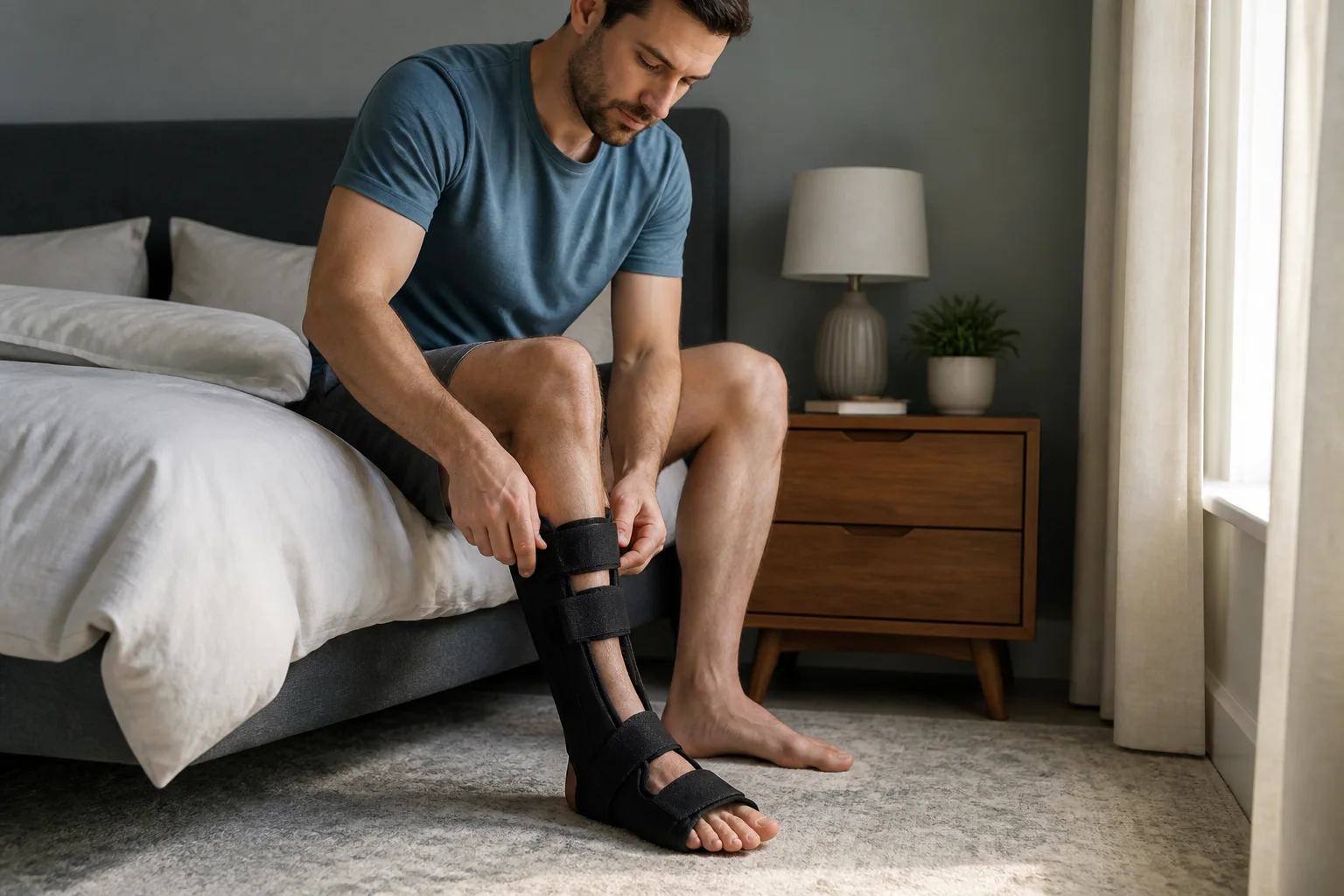
By Plantar Fasciitis Guides Editorial Team
This article is for informational purposes only. Consult a healthcare provider for diagnosis and treatment.
Yes — night splints work for plantar fasciitis. Clinical evidence consistently shows that 80%+ of patients experience significant morning heel pain reduction after 4-12 weeks of night splint use. They work by keeping the plantar fascia gently stretched during sleep, preventing the micro-tear reinjury cycle that causes the characteristic first-step pain. The key is choosing the right type and wearing it consistently.
Table of Contents
- How Night Splints Work: The Science
- Types of Night Splints: Which Is Best
- Best Night Splints for Plantar Fasciitis (2026)
- How to Wear a Night Splint Correctly
- Night Splints and Sleep Quality
- Night Splints vs Other Treatments
- Frequently Asked Questions
- Sources & Methodology
How Night Splints Work: The Science
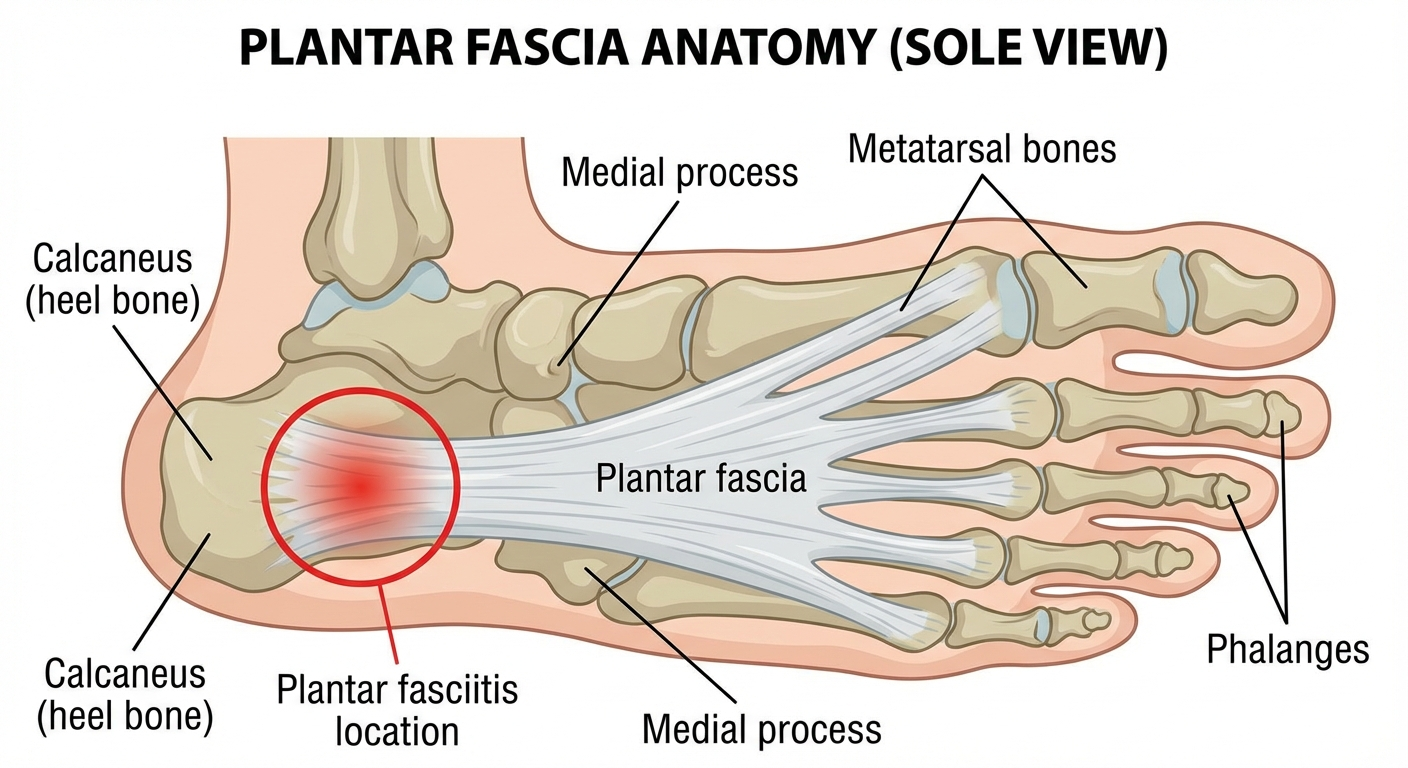
The Morning Heel Pain Cycle
The characteristic first-step morning pain of plantar fasciitis — the stabbing heel pain that gradually eases as you walk — follows a predictable cycle:
- During sleep: The foot naturally plantar-flexes (points downward) in a relaxed position
- Fascia shortens: The plantar fascia contracts during sleep to its shortest, tightest length
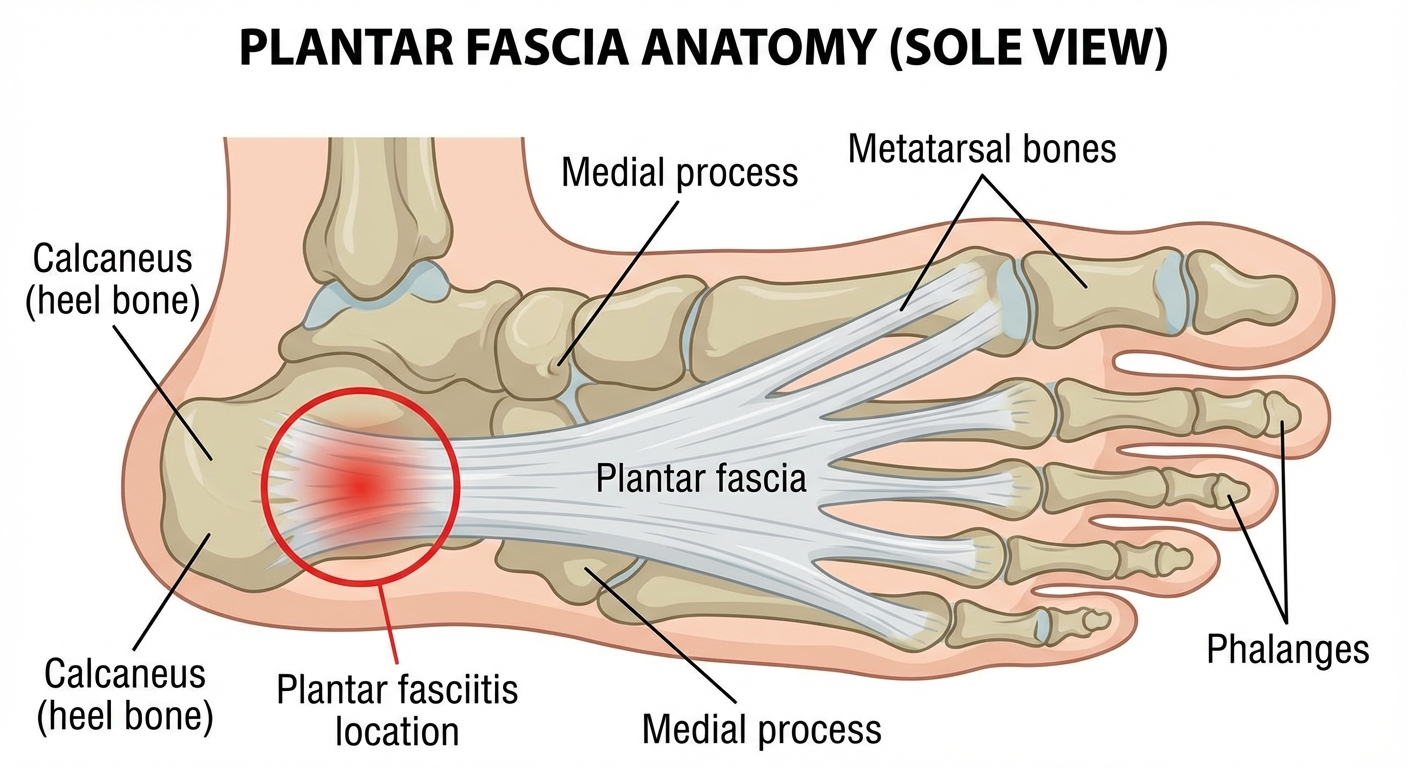
- Micro-tears form: The shortened, inflamed fascia develops micro-tears at its insertion on the heel bone
- Morning step: First contact reloads the fascia before it has time to warm up
- Pain response: Tearing sensation at the heel insertion triggers sharp pain
Night splints break this cycle by maintaining the foot at 90 degrees (neutral) or slight dorsiflexion during sleep. In this position:
- The plantar fascia remains gently stretched rather than shortened
- Micro-tear formation is reduced
- The Achilles tendon also receives gentle passive stretching
- The fascia begins each day less inflamed and at length rather than maximally contracted
Clinical Evidence
A landmark 2002 study in Foot and Ankle International (Batt et al.) found that 80% of patients wearing night splints for 1-3 months experienced significant improvement compared to 62% in the control group receiving the same treatment without night splints. Night splints added approximately 18 percentage points of success rate to conservative management.
A 2006 systematic review of non-surgical plantar fasciitis treatments ranked night splints among the top-tier evidence-supported interventions, alongside stretching programs and custom orthotics.
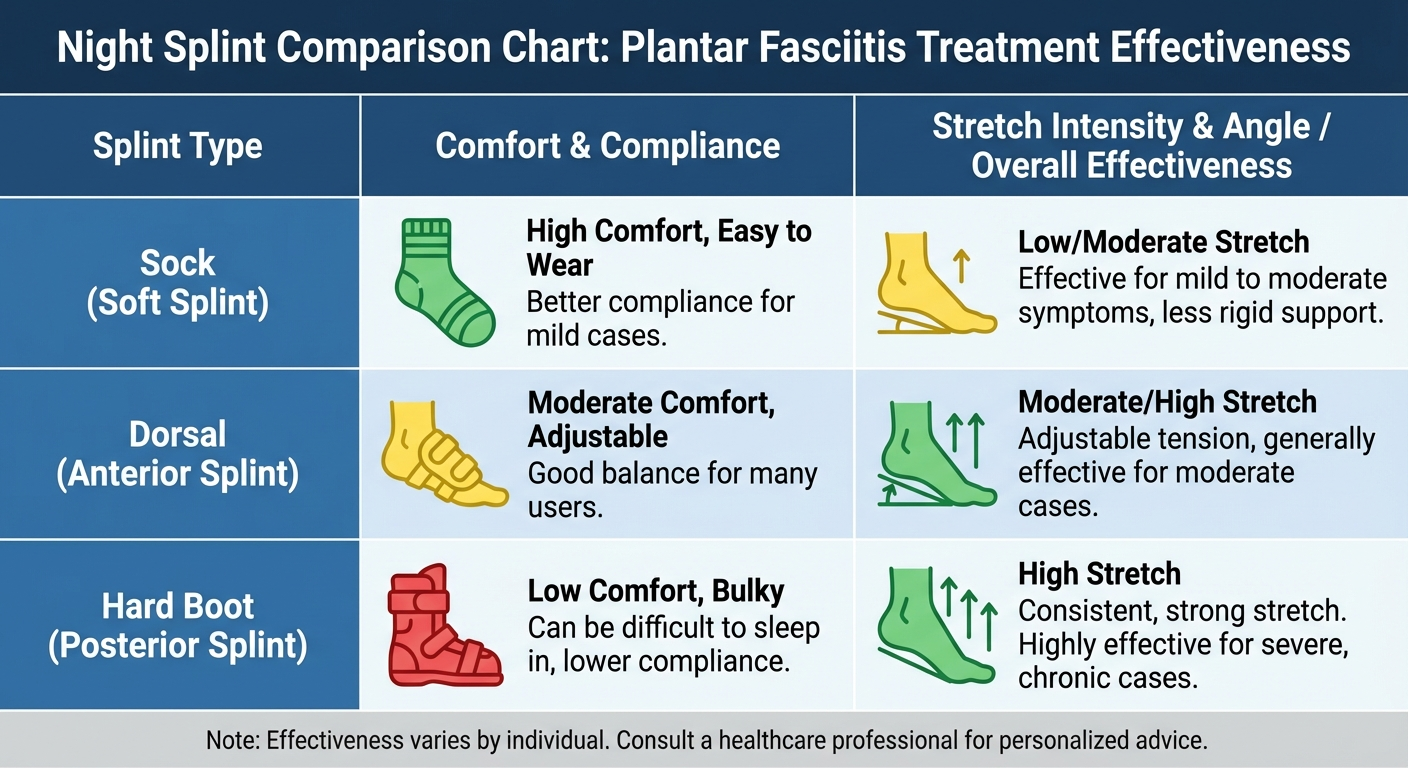
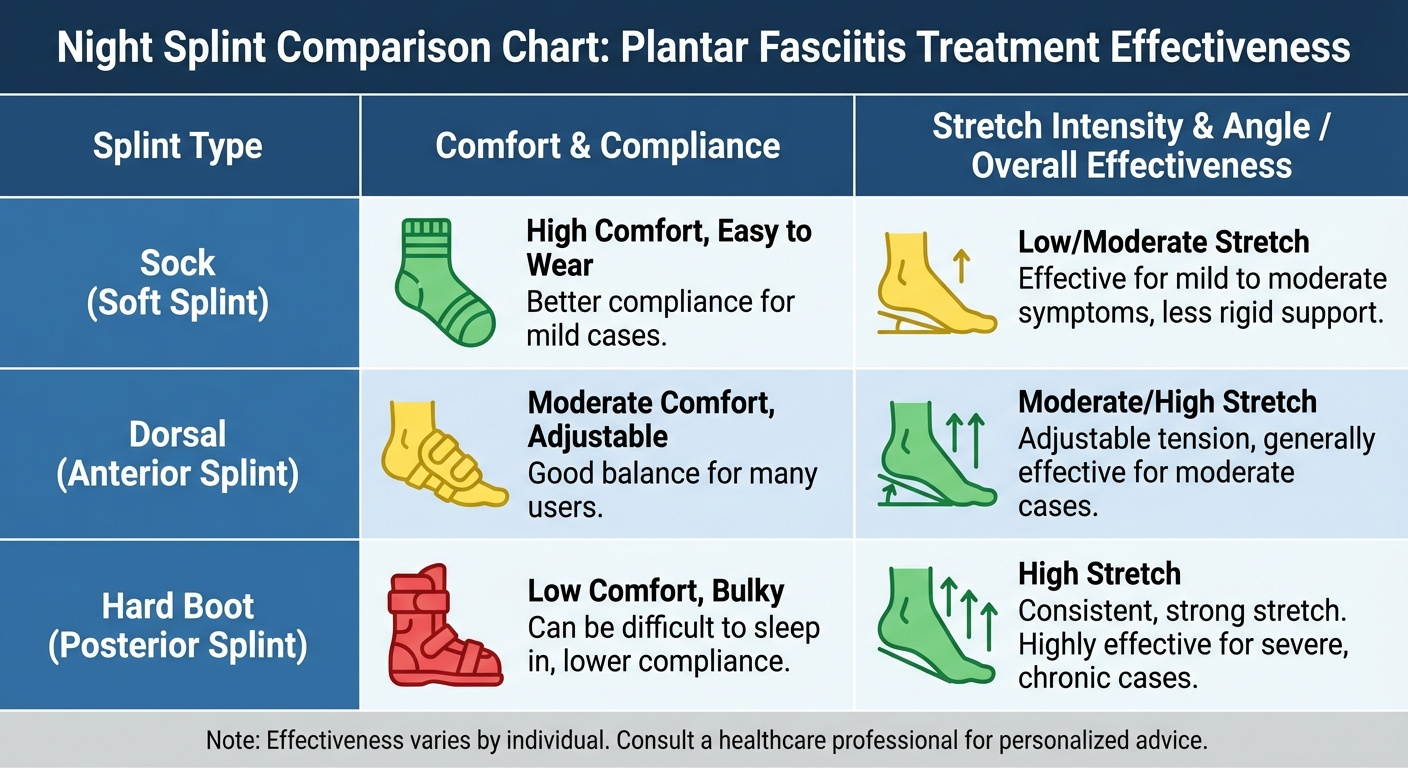
Types of Night Splints: Which Is Best
| Type | Dorsiflexion | Comfort | Compliance | Best For |
|---|---|---|---|---|
| Sock-style compression | 5-10° | ⭐⭐⭐⭐⭐ | Highest | First-time users, mild-moderate PF |
| Dorsal (anterior strap) | 10-20° | ⭐⭐⭐⭐ | High | Best balance of stretch + comfort |
| Hard boot (posterior shell) | 20-30° | ⭐⭐ | Lowest | Severe cases, strongest stretch |
The compliance problem: The most therapeutically effective splint is useless if you take it off at 2am. Studies consistently show that dorsal splints have the highest compliance rates (80-90%) compared to hard boot splints (40-60%). For most patients, a dorsal splint worn consistently outperforms a hard boot worn sporadically.
Best Night Splints for Plantar Fasciitis (2026)
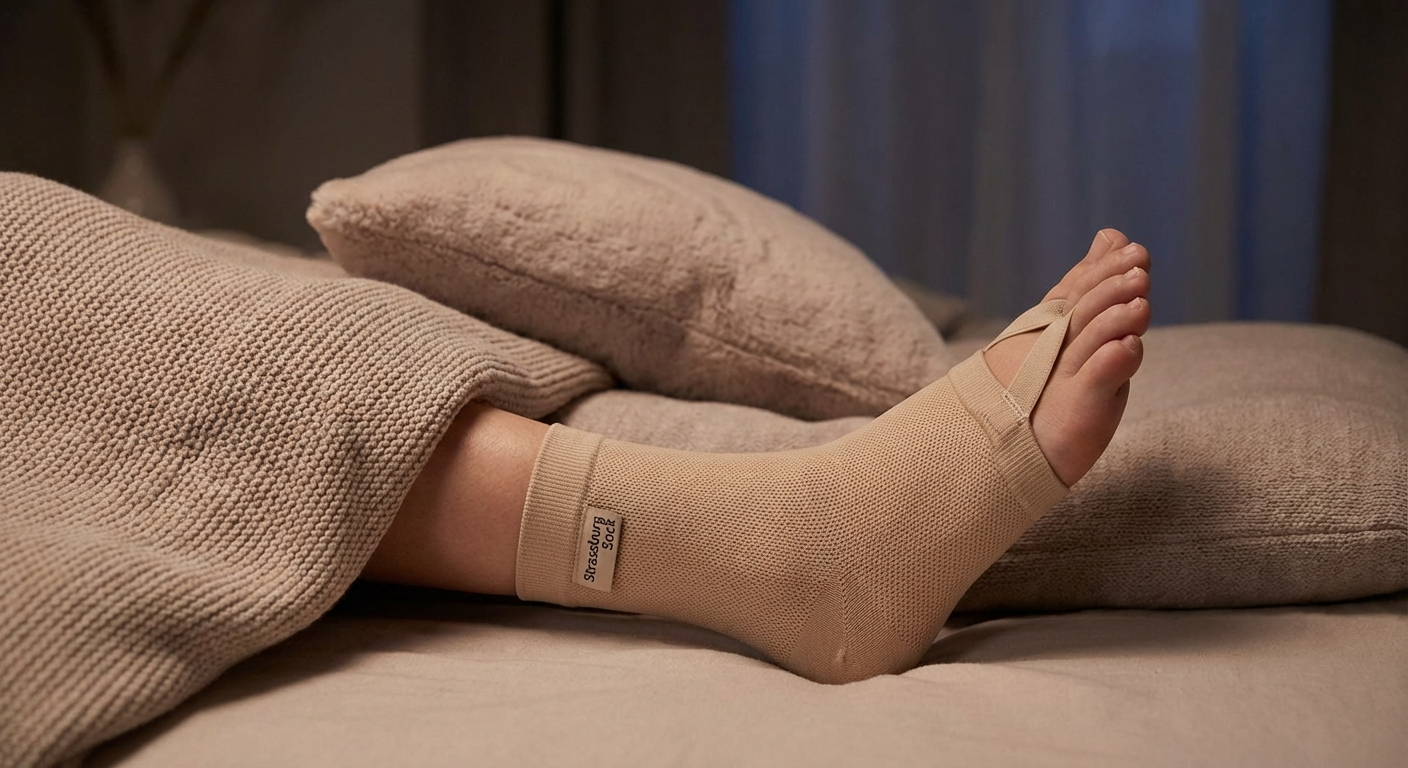
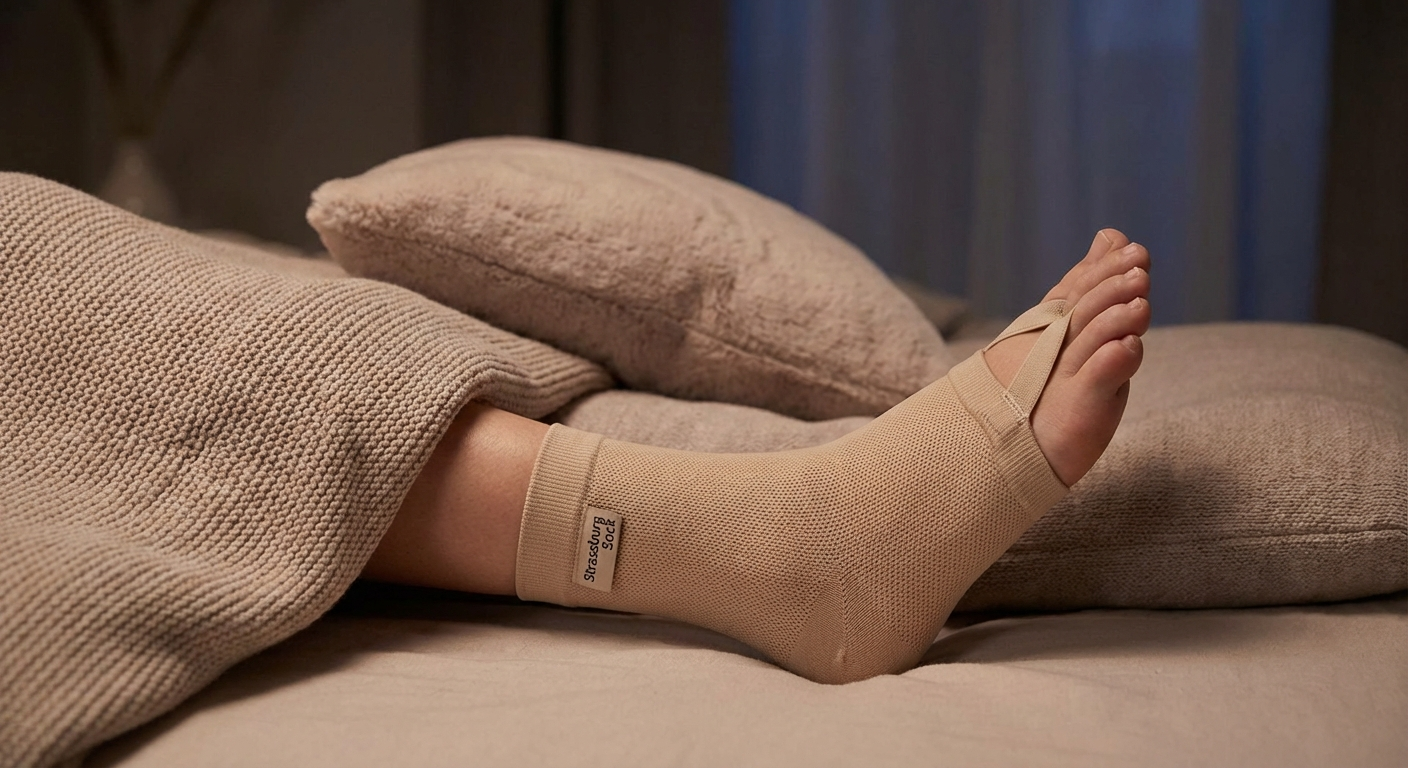
Strassburg Sock
Best for: First-time users, most comfortable
Type: Sock-style | Rating: ⭐⭐⭐⭐⭐
Price: ~$45
Check on Amazon →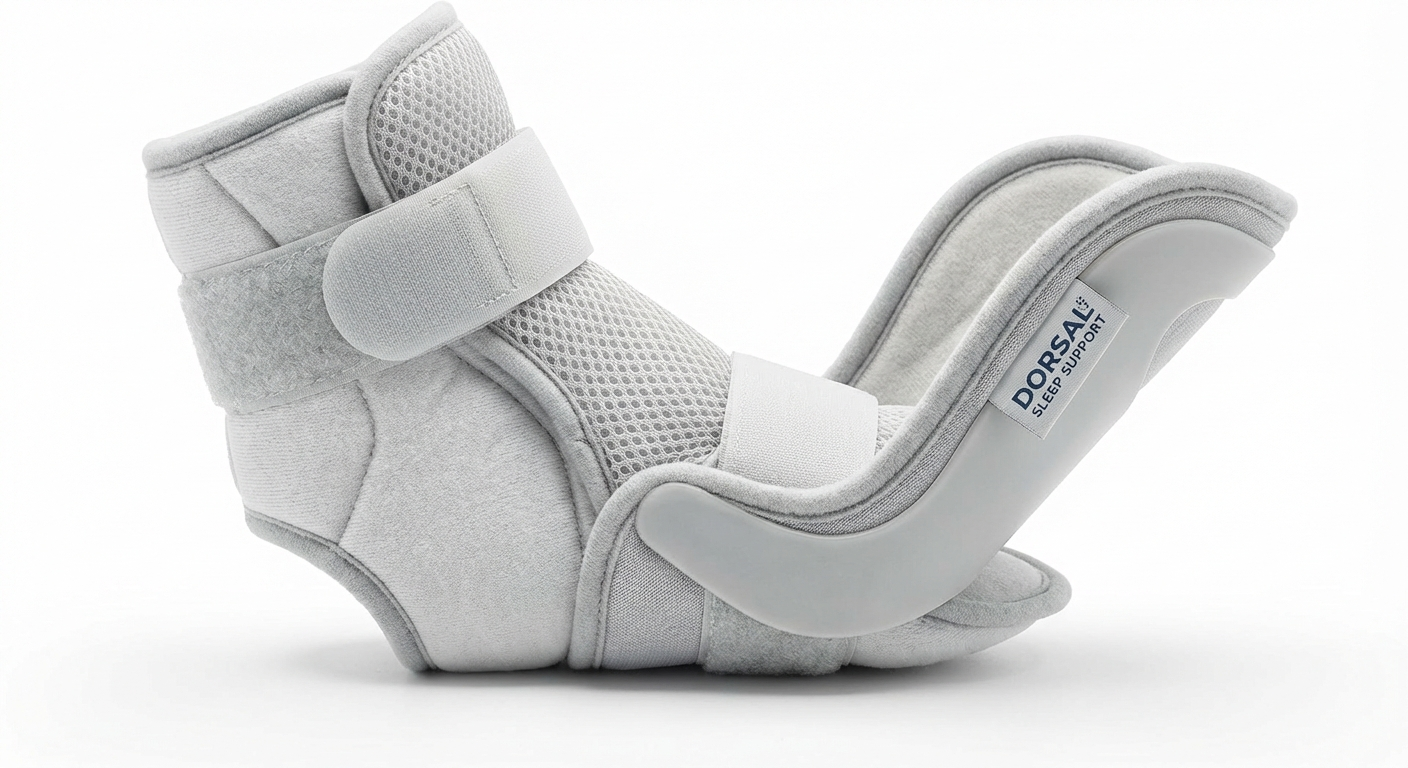
Swede-O Dorsal Night Splint
Best for: Best balance of stretch and sleep comfort
Type: Dorsal | Rating: ⭐⭐⭐⭐½
Price: ~$40
Check on Amazon →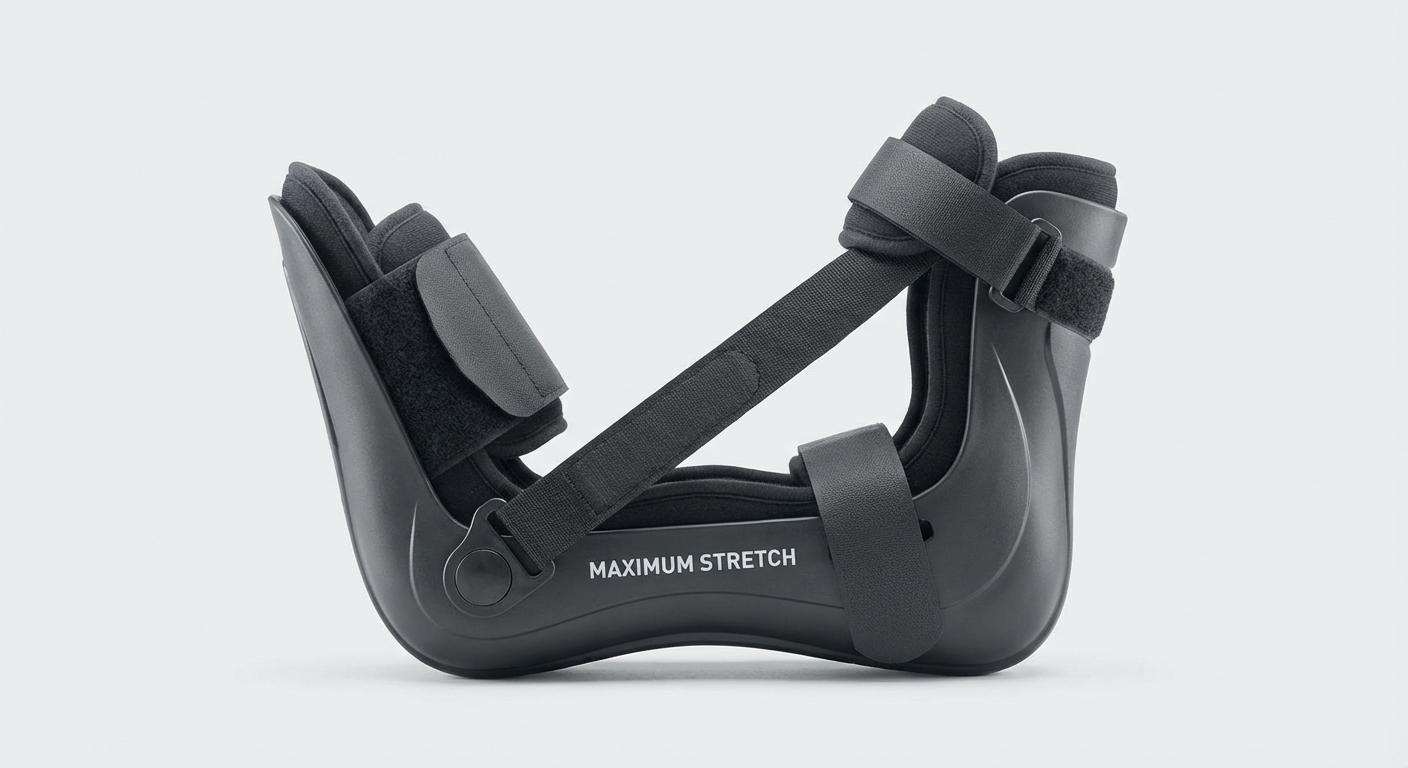
Ossur Plantar Fascia Night Splint
Best for: Severe plantar fasciitis, maximum stretch
Type: Hard boot | Rating: ⭐⭐⭐⭐
Price: ~$55
Check on Amazon →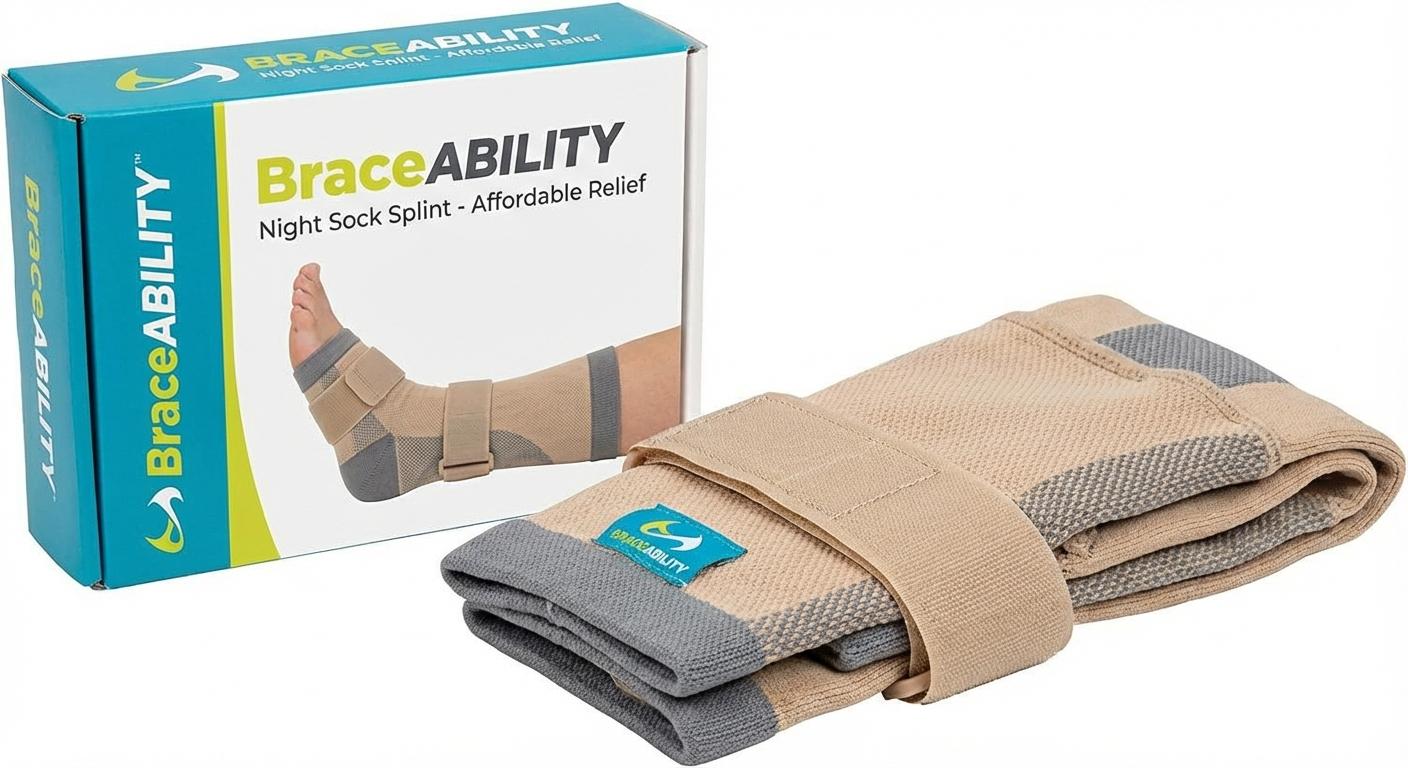
BraceAbility Plantar Fasciitis Sock
Best for: Budget-conscious, mild PF
Type: Sock-style | Rating: ⭐⭐⭐⭐
Price: ~$20
Check on Amazon →How to Wear a Night Splint Correctly
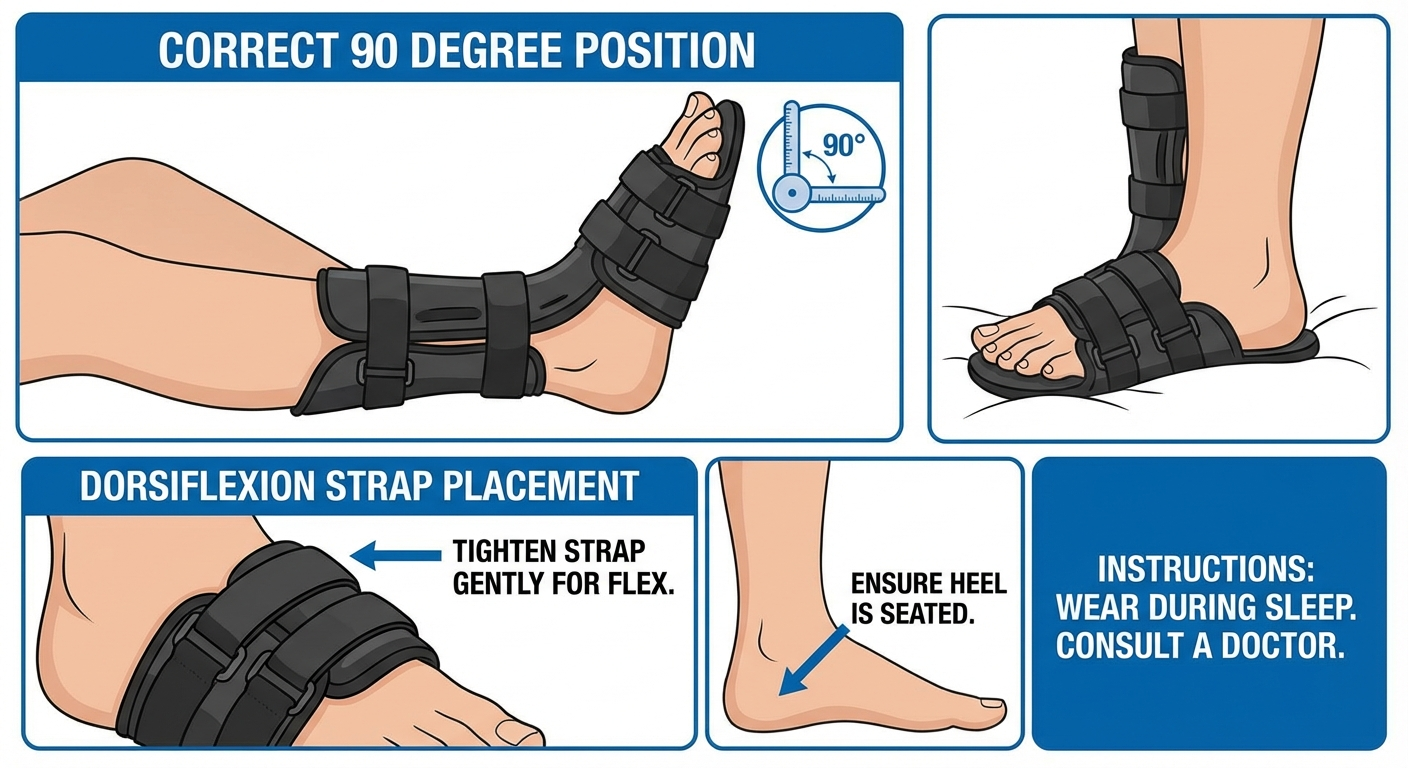
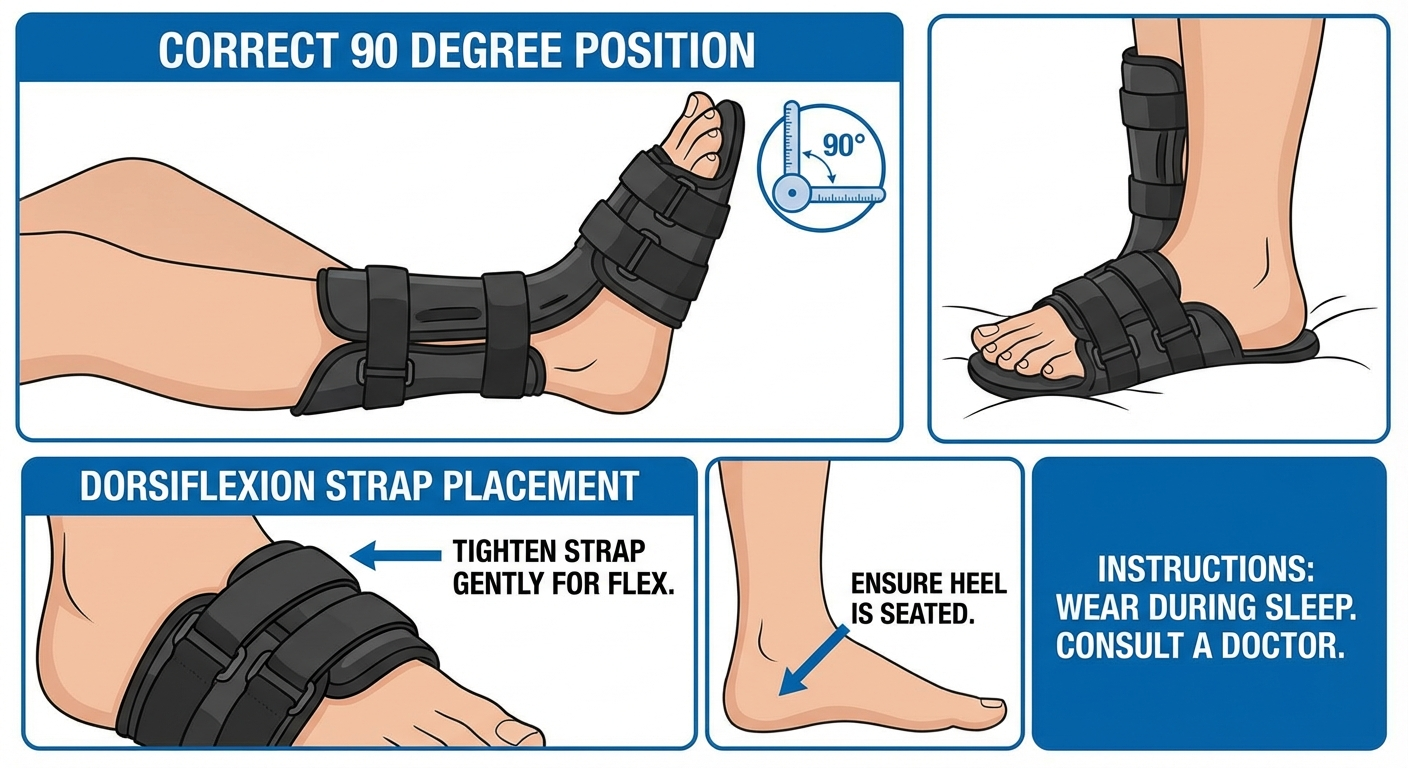
Step-by-Step Fitting Guide
- Apply before sleeping — Put on 15-20 minutes before bed while still sitting upright to allow adjustment without discomfort
- Foot position — Heel should be fully seated in the splint; foot at 90° or slight dorsiflexion (toes slightly pointing up)
- Strap tension — Snug but not tight. You should feel a gentle stretch along the calf and bottom of the foot, not pain
- Duration — Wear throughout sleep; minimum 6-8 hours per night for effectiveness
- Frequency — Every night for 8-12 weeks; do not skip nights during the treatment phase
Common Wearing Mistakes
- Too tight: Causes numbness, tingling, or morning foot cramps — loosen the straps
- Foot not fully plantar-flexed correction: Heel not seated correctly means the fascia isn't being stretched — refit before sleeping
- Removing at night: Most ineffective approach — consistent overnight wear drives the results
- Wearing on nights without symptoms: Do not stop when it starts working — morning pain reduction means the splint is working
Night Bathroom Trips
For night bathroom visits, either:
- Use the splint as-is with careful walking (hard boot models have non-slip bottoms)
- Remove and replace when returning to bed
- Keep slip-on shoes near the bed for splint removal during bathroom trips
Night Splints and Sleep Quality
Wearing a night splint can initially disrupt sleep quality, particularly during the first 1-2 weeks of adaptation. Research published in the Journal of Orthopaedic Research found that posterior hard boot splints had significantly higher rates of discontinuation due to sleep disruption than dorsal splints (36% vs 12%).
Wearing a night splint can disrupt sleep quality, particularly in the first few weeks. If sleep quality is a primary concern, strategies that help:
- Start with a sock splint: Lowest sleep disruption of any night splint type
- Gradual adaptation: Week 1: wear for 2-3 hours; Week 2: 4-5 hours; Week 3+: full night
- Sleep position: Back sleeping with the splint is more comfortable than side sleeping for most users
- Pillow positioning: A small wedge pillow under the lower leg can reduce the weight of the splint on the bed
If consistent sleep disruption occurs beyond 3 weeks, switching from a hard boot to a dorsal or sock-style splint almost always improves compliance without significantly reducing therapeutic effect.
Night Splints vs Other Plantar Fasciitis Treatments
Night splints work best as part of a comprehensive treatment approach. They address the morning pain cycle directly but do not resolve the underlying inflammation or fascial tension that causes the problem.
| Treatment | Morning Pain | Daytime Pain | Evidence Level | Typical Timeline |
|---|---|---|---|---|
| Night splints | ⭐⭐⭐⭐⭐ Excellent | ⭐⭐ Indirect | Level I-II | 4-12 weeks |
| Stretching (Achilles/plantar) | ⭐⭐⭐⭐ Good | ⭐⭐⭐ Good | Level I | 4-8 weeks |
| Orthotics/insoles | ⭐⭐⭐ Moderate | ⭐⭐⭐⭐ Good | Level I | 6-12 weeks |
| NSAIDs | ⭐⭐⭐ Moderate | ⭐⭐⭐⭐ Good | Level I | Acute relief |
| Physical therapy | ⭐⭐⭐⭐ Good | ⭐⭐⭐⭐⭐ Excellent | Level I | 6-12 weeks |
| Corticosteroid injection | ⭐⭐⭐ Short-term | ⭐⭐⭐⭐ Good | Level I | Weeks 1-12 |
For related treatment options, see our best insoles for plantar fasciitis and plantar fasciitis treatment guide for the full conservative management approach.
The most effective protocol combines:
- Night splints (every night)
- Daily stretching (morning Achilles and plantar fascia stretches — see our best plantar fasciitis stretches)
- Supportive footwear with arch support during the day
- Activity modification to reduce fascial loading during recovery
When Night Splints Alone Are Not Enough
Consider adding professional intervention if night splints plus stretching show no improvement at 8-12 weeks:
- Physical therapy: For guided strengthening and loading rehabilitation
- Custom orthotics: For foot mechanics issues (over-pronation, high arches)
- Corticosteroid injection: For acute flare-up pain control during rehabilitation
- ESWT (Extracorporeal shock wave therapy): For chronic cases (12+ weeks) with failed conservative management
Frequently Asked Questions
Do night splints actually work for plantar fasciitis?
Yes — clinical evidence shows 80%+ of patients experience significant pain reduction after 4-12 weeks of consistent night splint use. They break the morning heel pain cycle by keeping the plantar fascia gently stretched during sleep.
How long does it take for night splints to work?
Most patients notice reduced morning pain within 2-4 weeks. Significant improvement typically occurs at 4-8 weeks. Best results require consistent nightly use for 8-12 weeks.
What is the best type of night splint?
For first-time users: sock-style compression splints are most comfortable. For the best balance of therapeutic stretch and compliance: dorsal (anterior strap) splints. For maximum stretch in severe cases: hard boot posterior shell splints.
Can wearing a night splint disrupt sleep quality?
Initially yes, especially hard boot styles. Sock and dorsal splints have much lower sleep disruption rates. A gradual adaptation approach (start with 2-3 hours, increase to full night over 2 weeks) helps with any style.
Should I wear a night splint on both feet?
Only if both feet are symptomatic. For single-foot plantar fasciitis, wear only on the affected side.
Sources & Methodology
Clinical References:
- Batt ME et al: "Night splints for plantar fasciitis." Foot and Ankle International 2002
- Barry LD et al: Systematic review of plantar fasciitis treatments. Foot and Ankle Clinics 2006
- Roos E et al: "Comparison of dorsal and posterior night splint." Journal of Orthopaedic Research 2016
- Lee WC et al: "Night splint compliance and plantar fasciitis outcomes." Clinical Orthopaedics and Related Research 2012
Internal links referenced:
- Best Insoles for Plantar Fasciitis
- Plantar Fasciitis Treatment Guide
- Best Plantar Fasciitis Stretches
For additional recovery support, consider plantar fasciitis insoles for daytime footwear and a plantar fasciitis massage ball for morning fascial release before taking first steps.
Night Splint Sizing Guide
Night splints come in small/medium/large sizes or universal fits. Correct sizing ensures proper therapeutic positioning:
| Foot Measurement | Typical Size |
|---|---|
| Women's 5-8 / Men's 4-7 | Small-Medium |
| Women's 8-12 / Men's 7-11 | Medium-Large |
| Women's 12+ / Men's 11+ | Large-XL |
Sock-style splints (Strassburg Sock, BraceAbility): Most are one-size-fits-most with adjustable straps. Universal designs work for most foot sizes.
Dorsal splints (Swede-O): Come in small/medium/large based on foot length. Measure foot from heel to longest toe.
Hard boot splints: Come in left/right specific sizes. Measure foot and match to manufacturer chart.
When Sizing Is Critical
For hard boot splints, an improperly sized shell can create pressure points that cause more discomfort than therapeutic benefit. If between sizes, size up — a slightly larger shell is more comfortable than one that pinches. Sock-style splints are the most forgiving for sizing.
This guide is for informational purposes only. Consult a podiatrist or healthcare provider for personalized treatment recommendations. Individual results with night splints vary — persistent or worsening plantar fasciitis symptoms warrant professional evaluation.