Guide
Best Running Shoes Plantar Fasciitis 2026
By Plantar Fasciitis Guides Editorial Team · Updated 2026-03-11

Evidence note: This comparison uses manufacturer specifications, published research, and independently reported owner feedback. We have not independently verified laboratory measurements, clinical outcomes, or long-term-use claims.
This post contains affiliate links. We may earn a commission at no extra cost to you.
By Sarah Mitchell, Certified Ergonomics Consultant | Last updated March 2026
The best running shoes for plantar fasciitis combine structured arch support, deep heel cushioning, and a moderate heel drop (8–12mm) to reduce strain on the plantar fascia during every stride. Our top pick for 2026 is the ASICS Gel-Kayano 31 for stability runners and the HOKA Bondi 8 for neutral runners who need maximum cushioning.
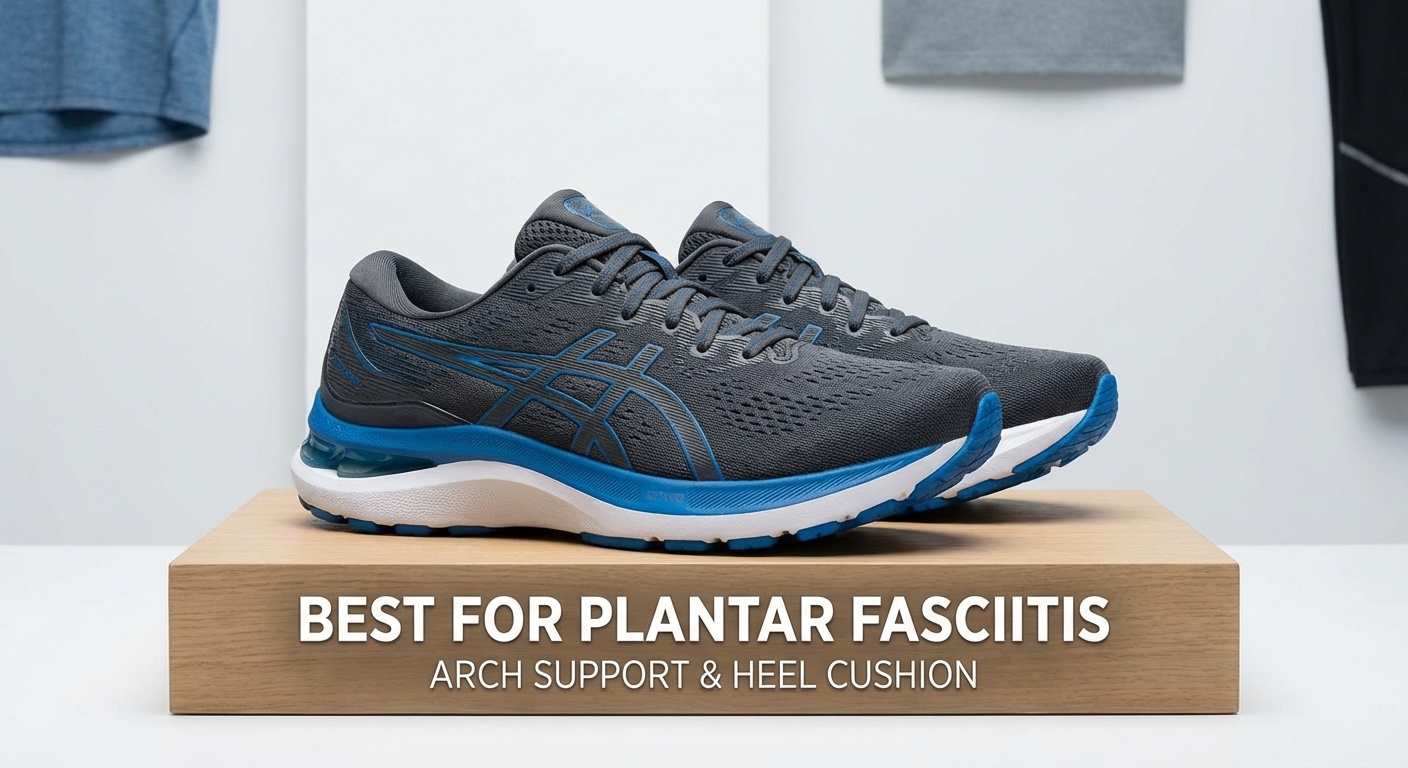
Table of Contents
- Why Running Shoes Matter for Plantar Fasciitis
- What to Look for in a Running Shoe
- Our Top 8 Running Shoes for Plantar Fasciitis (2026)
- Stability vs Neutral: Which Type Do You Need?
- How to Run Safely with Plantar Fasciitis
- Breaking In Your New Shoes
- When to See a Professional
- Frequently Asked Questions
- Sources & Methodology
Why Running Shoes Matter for Plantar Fasciitis
Running generates ground reaction forces of 2.5–3× your body weight with every step. For a 170-pound runner, that translates to over 500 pounds of impact force passing through the foot on each stride. Multiply that across a 3-mile run (roughly 5,000 steps), and you begin to see why footwear selection is not optional for runners with plantar fasciitis — it is the single most controllable variable in your recovery.

The plantar fascia is a thick fibrous band running from the calcaneus (heel bone) to the metatarsal heads (base of the toes). During the running gait cycle, the fascia stretches and recoils like a spring — a mechanism called the windlass effect. When the fascia is already inflamed or sustaining microtears, every stride without adequate support worsens the damage.
What Happens in the Wrong Shoes
Running in flat, worn-out, or unsupportive shoes does three harmful things:
Excessive pronation goes unchecked. Without medial support, the foot rolls inward excessively on landing. This places disproportionate tensile stress on the medial band of the plantar fascia — exactly where most runners feel pain.
The arch collapses under load. A shoe without structured arch support allows the midfoot to flatten on impact. This stretches the fascia beyond its comfortable range, aggravating microtears at the calcaneal attachment.
Heel shock transmits directly to the fascia. Without adequate cushioning in the heel, impact forces travel straight into the plantar fascia insertion point. This is why runners with plantar fasciitis often report that heel pain worsens on concrete and pavement.
The right running shoe addresses all three of these mechanisms. It provides structured arch support to limit midfoot collapse, medial stability to control pronation, and deep heel cushioning to absorb impact before it reaches the fascia.
What to Look for in a Running Shoe
Not every "cushioned" running shoe is appropriate for plantar fasciitis. Here are the five features that matter most, based on biomechanical research and podiatric recommendations.

1. Heel Drop: 8–12mm
Heel drop (also called heel-to-toe offset) is the height difference between the heel and forefoot of the shoe. A higher drop keeps the heel elevated relative to the toes, reducing the stretch on the plantar fascia and Achilles tendon during the gait cycle.
Most podiatrists recommend an 8–12mm drop for plantar fasciitis runners. Avoid zero-drop or minimalist shoes during active flares — they place maximum tension on the fascia with every stride.
2. Structured Arch Support
Look for shoes with a firm midsole contour that follows the natural arch of the foot. The arch support should be built into the shoe's midsole platform, not just the removable insole. A shoe that collapses when you press on the midfoot area does not have adequate arch support.
3. Deep Heel Cushioning
The heel cup should be deep and well-padded. Technologies like ASICS GEL, Brooks DNA LOFT, or HOKA's compression-moulded EVA provide the shock absorption needed to protect the calcaneal attachment point. Press your thumb into the heel of the shoe — it should compress and rebound slowly, not bottom out.
4. Removable Insole
If you wear custom orthotics or plan to add aftermarket arch supports, a removable insole is essential. The shoe should accommodate an orthotic insert without becoming too tight across the midfoot. Shoes with a straight or semi-curved last typically provide the most volume for orthotics.
5. Firm Heel Counter
Squeeze the back of the shoe. The heel counter (the rigid structure around the rear of the shoe) should feel firm and resist deformation. A solid heel counter prevents rearfoot instability and keeps the calcaneus centred — reducing the lateral forces that pull on the plantar fascia.
Our Top 8 Running Shoes for Plantar Fasciitis (2026)
Evidence note: This comparison uses manufacturer specifications, published research, and independently reported owner feedback. We have not independently verified laboratory measurements, clinical outcomes, or long-term-use claims.
1. ASICS Gel-Kayano 31
Best for: Stability + overpronation control
Heel drop: 10mm
Cushioning: FF BLAST PLUS ECO + PureGEL
Price: $160
Check Price on Amazon →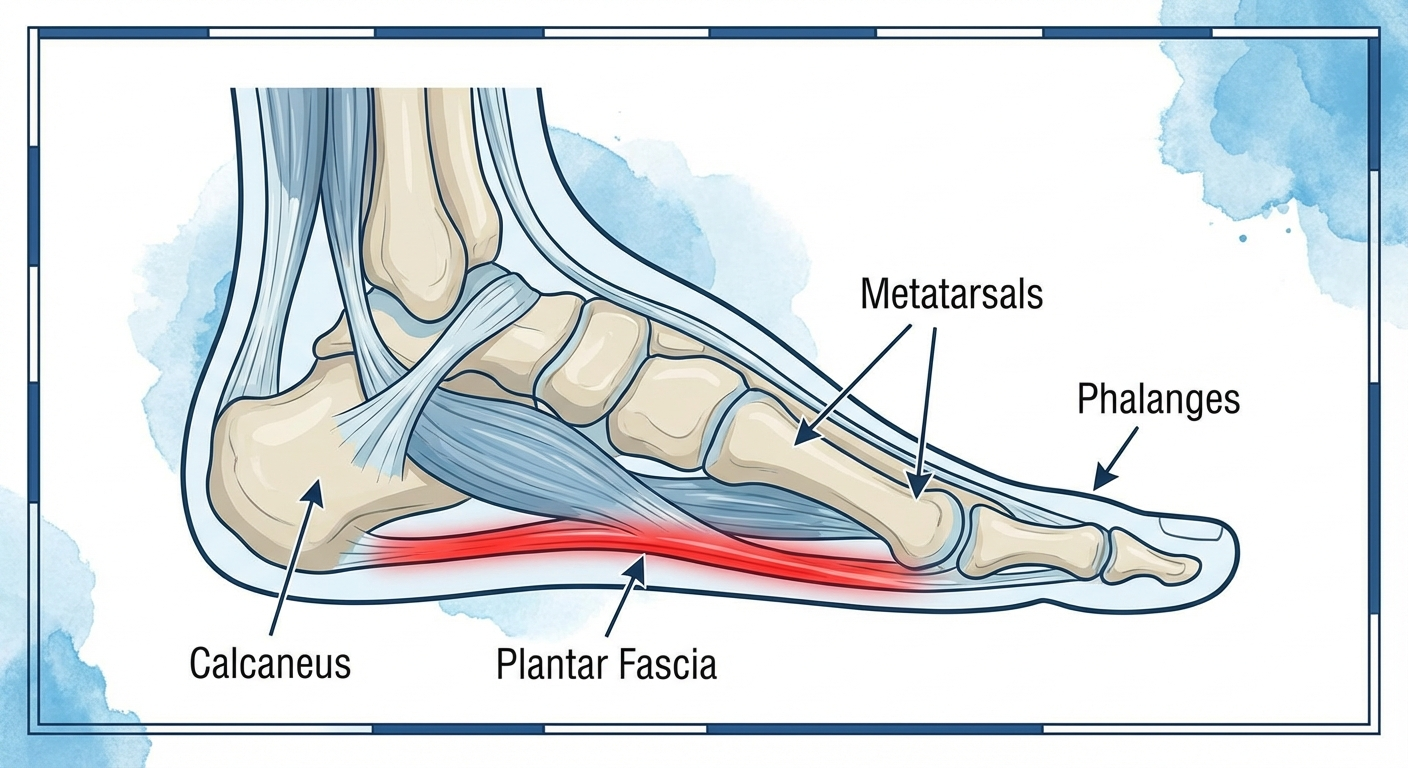
2. HOKA Bondi 8
Best for: Maximum cushioning + shock absorption
Heel drop: 4mm
Cushioning: Compression-moulded EVA
Price: $165
Check Price on Amazon →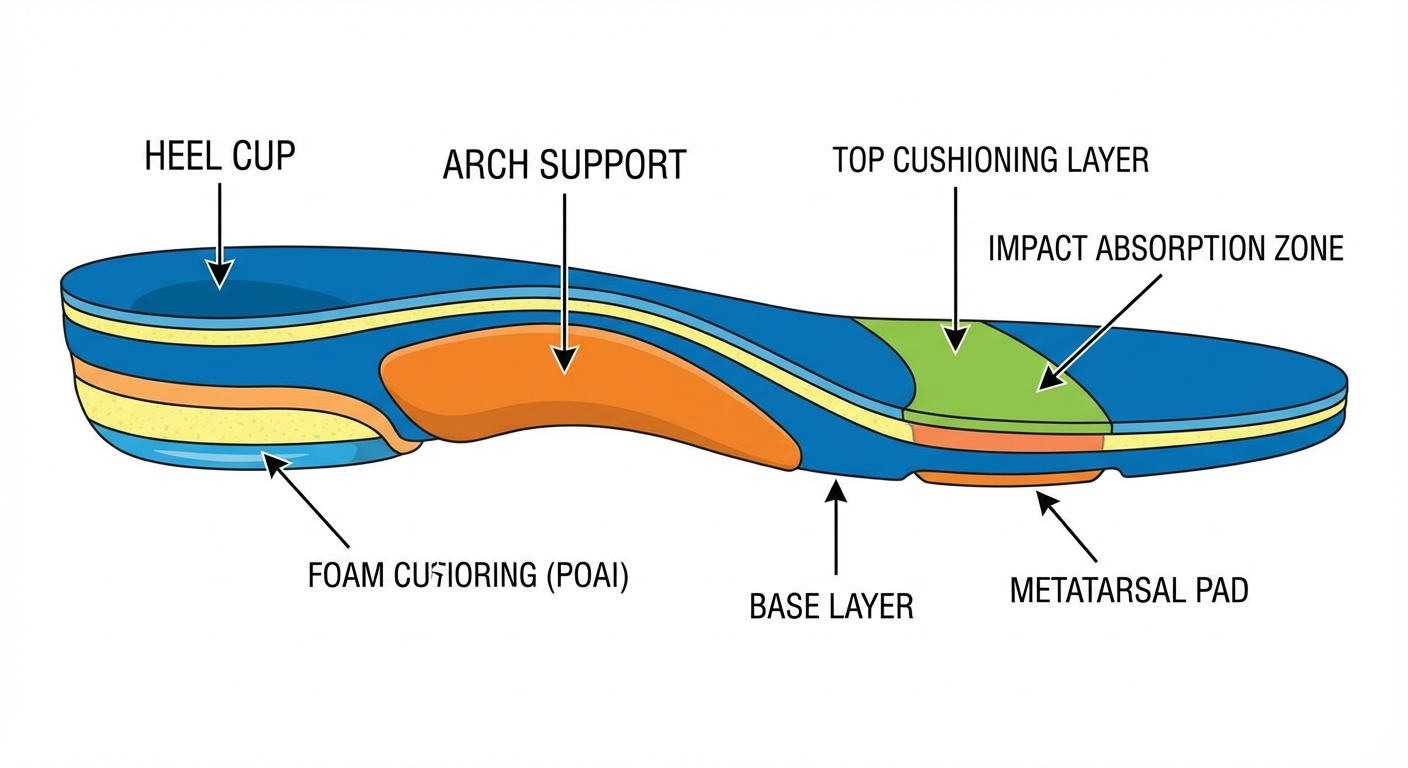
3. Brooks Adrenaline GTS 24
Best for: Mild to moderate overpronation
Heel drop: 12mm
Cushioning: DNA LOFT v2 + GuideRails
Price: $140
Check Price on Amazon →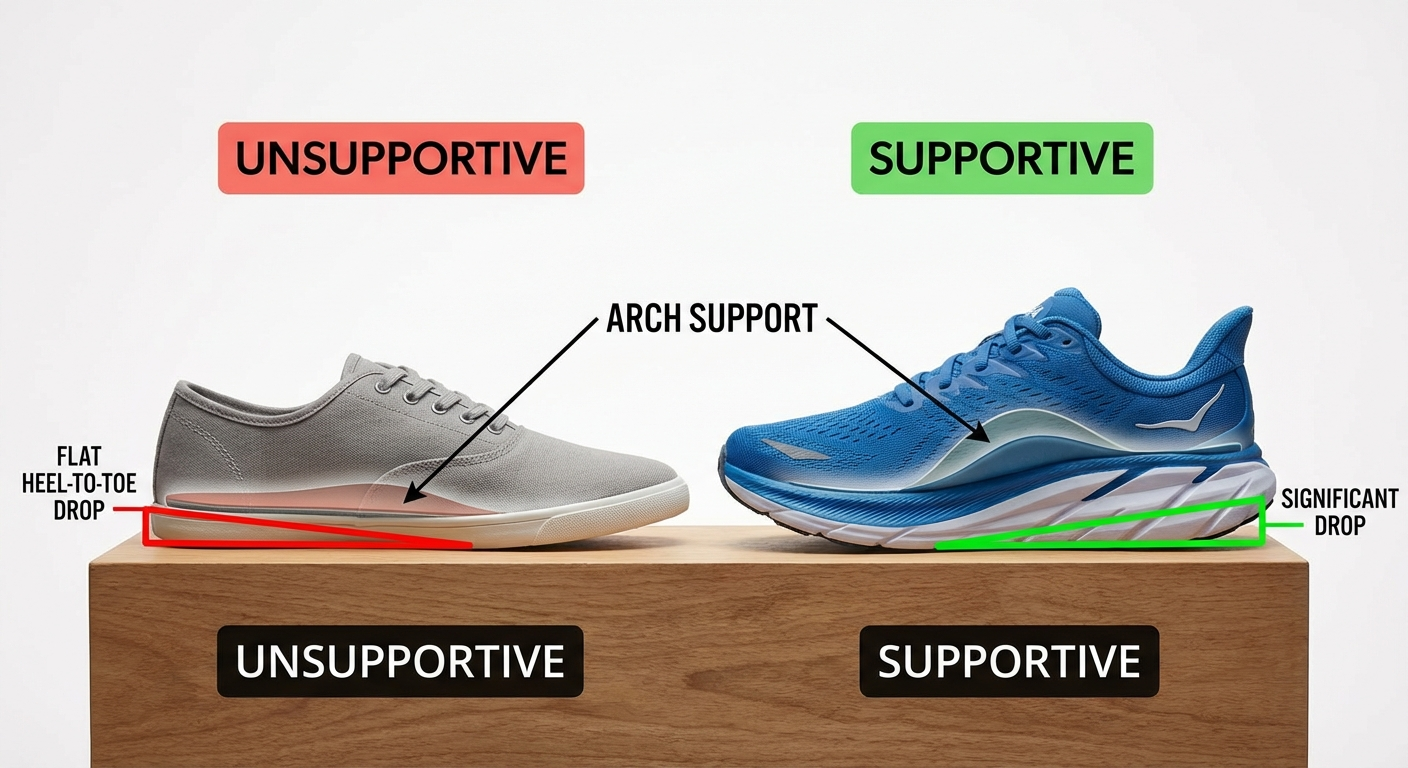
4. New Balance Fresh Foam X 1080v13
Best for: Plush neutral cushioning + wide sizes
Heel drop: 6mm
Cushioning: Fresh Foam X midsole
Price: $165
Check Price on Amazon →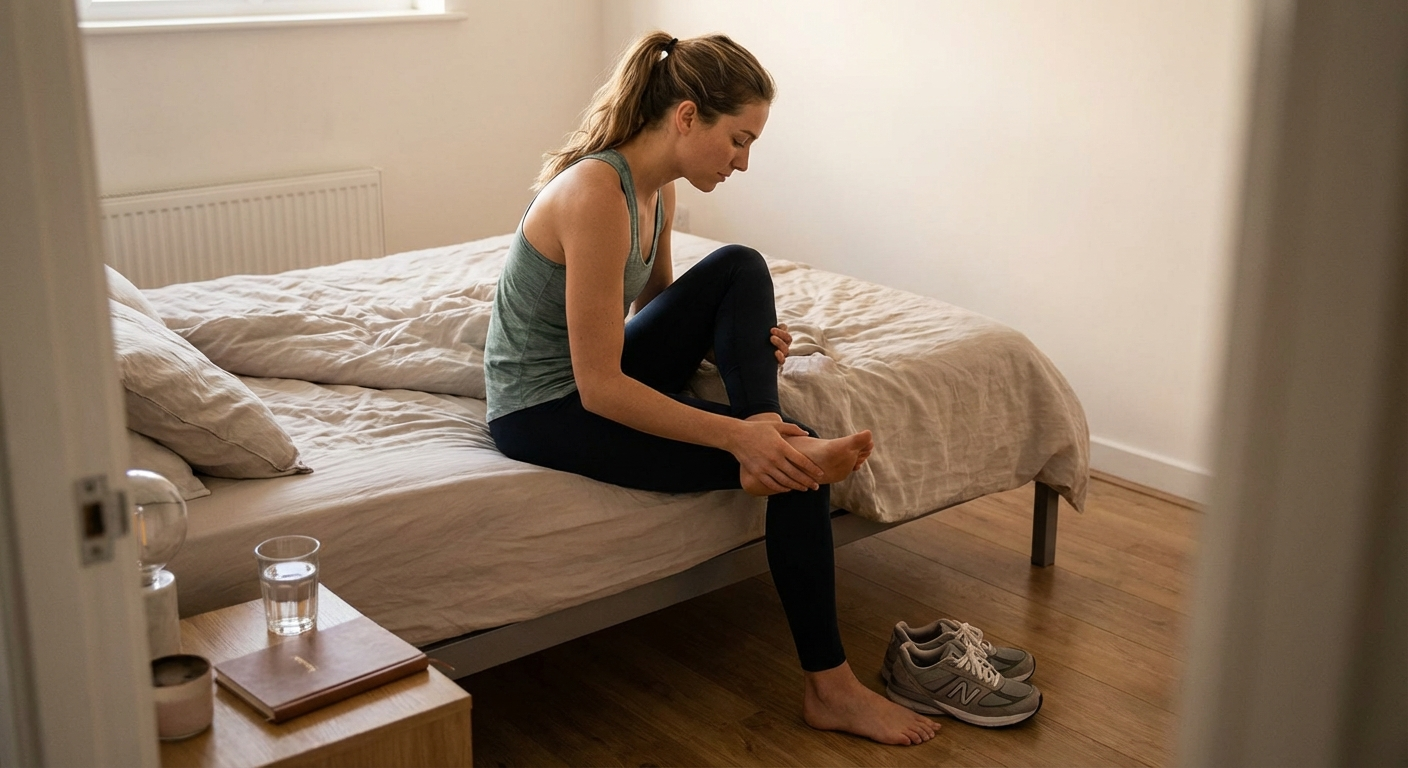
5. Brooks Ghost 16
Best for: Versatile neutral runners + daily training
Heel drop: 12mm
Cushioning: DNA LOFT v2
Price: $140
Check Price on Amazon →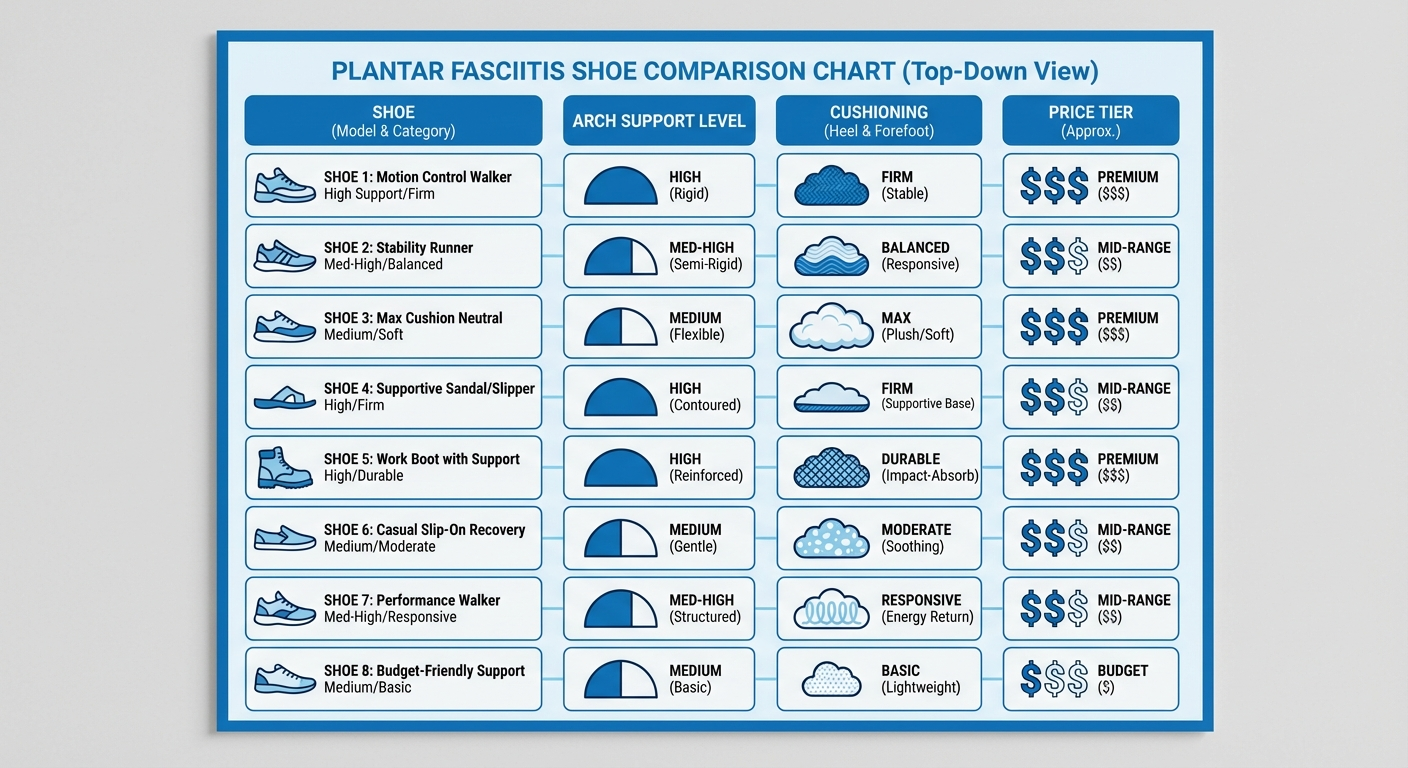
6. Saucony Guide 17
Best for: Lightweight stability + responsive ride
Heel drop: 8mm
Cushioning: PWRRUN+ midsole
Price: $140
Check Price on Amazon →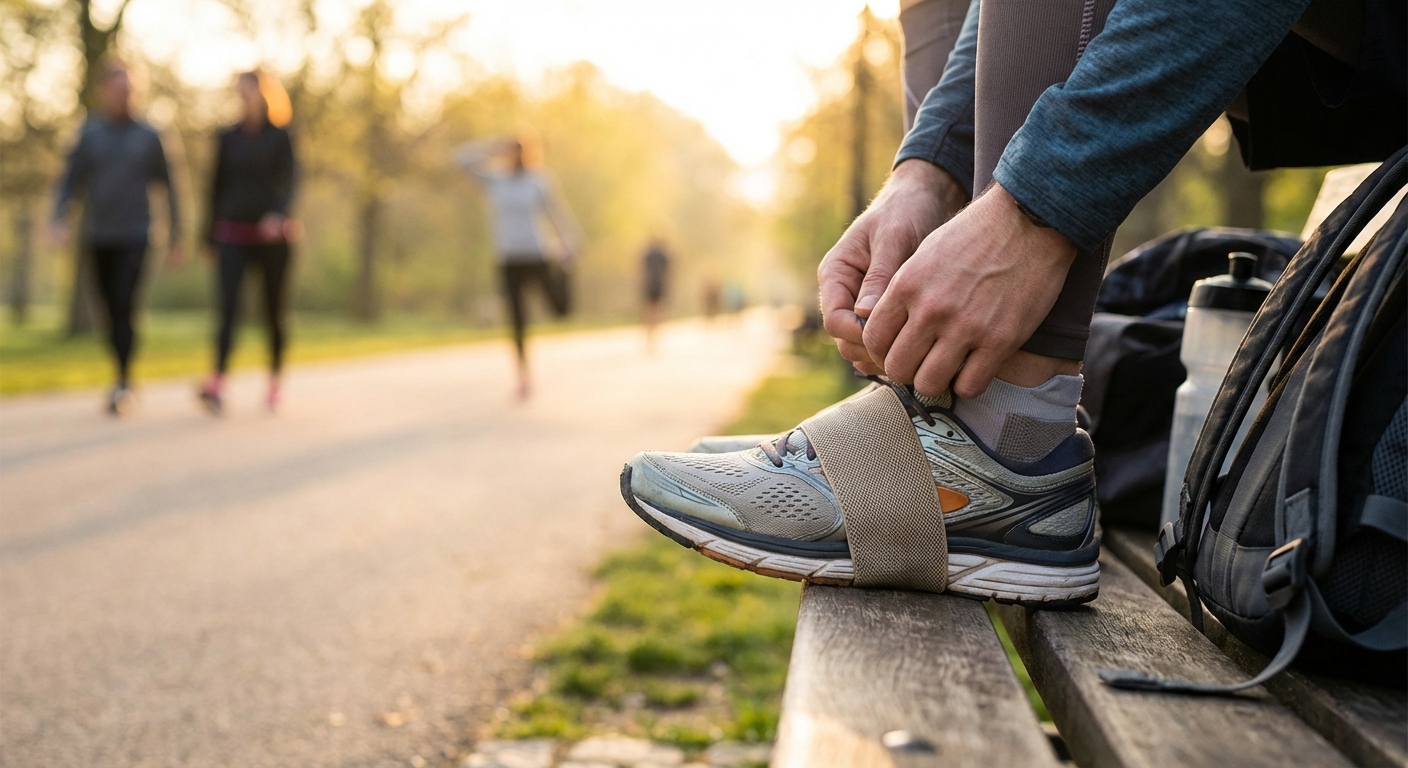
7. ASICS Gel-Nimbus 26
Best for: Premium neutral cushioning + long runs
Heel drop: 8mm
Cushioning: FF BLAST PLUS ECO + PureGEL
Price: $160
Check Price on Amazon →
8. HOKA Arahi 7
Best for: Lightweight stability + HOKA cushioning
Heel drop: 5mm
Cushioning: Compression-moulded EVA + J-Frame
Price: $140
Check Price on Amazon →1. ASICS Gel-Kayano 31 — Best Overall for Stability
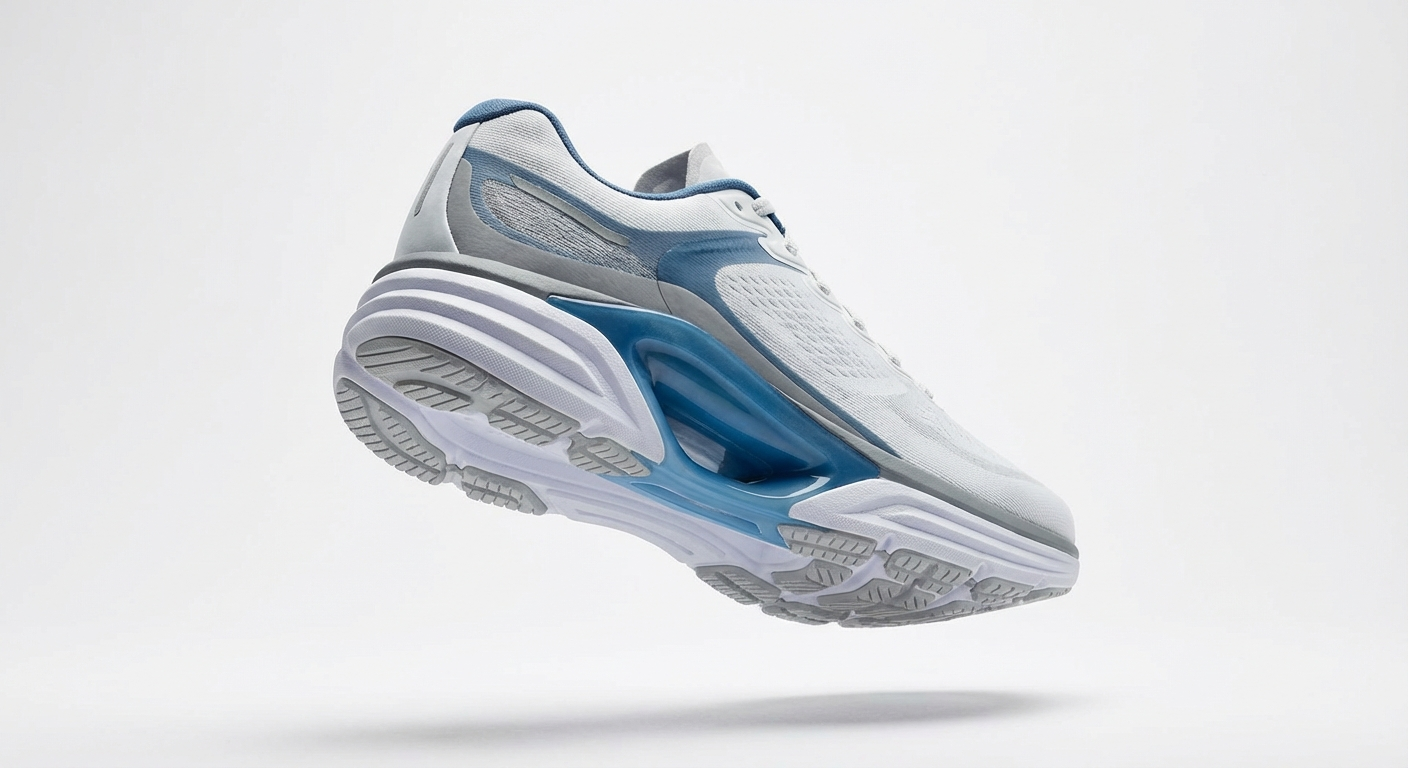
The Gel-Kayano has been the gold standard for stability running shoes for over two decades, and the 31st edition continues to earn that reputation. For plantar fasciitis runners who overpronate, this shoe addresses the root biomechanical issue.
The 4D Guidance System uses a combination of midsole geometries to control pronation without the rigid medial post that older stability shoes relied on. This means smoother transitions through the gait cycle while still limiting the inward roll that strains the plantar fascia.
The FF BLAST PLUS ECO midsole provides responsive cushioning under the heel and forefoot, while PureGEL technology at the rearfoot absorbs the initial impact of heel strike. The 10mm drop keeps the heel elevated relative to the forefoot — a critical feature for reducing plantar fascia tension.
Who it's for: Moderate to severe overpronators. Runners who have been told they need stability shoes. Heavier runners (180+ lbs) who need a shoe that won't compress under load.
Who should skip it: Neutral runners. Runners who find stability shoes constrictive. Those who prefer a lower drop.
2. HOKA Bondi 8 — Best Maximum Cushioning
The Bondi 8 is HOKA's most cushioned road shoe and a frequent podiatrist recommendation for plantar fasciitis. The thick compression-moulded EVA midsole creates a plush, cloud-like ride that absorbs impact before it reaches the plantar fascia.
HOKA's signature meta-rocker geometry encourages a smooth heel-to-toe transition, which reduces the amount of time the plantar fascia spends under peak tension during each stride. The wide base provides inherent stability despite being a neutral shoe.
The 4mm heel drop is lower than we typically recommend for plantar fasciitis, but HOKA compensates with the substantial stack height (37mm heel / 33mm forefoot). The absolute thickness of cushioning under the heel more than makes up for the lower offset.
Who it's for: Runners who want maximum impact protection. Those with plantar fasciitis and heel spurs. Runners recovering from a flare who want the most forgiving ride possible.
Who should skip it: Runners who want a lightweight, fast-feeling shoe. Those who find maximalist shoes unstable on uneven terrain.
3. Brooks Adrenaline GTS 24 — Best for Mild Overpronation
The Adrenaline GTS series is one of the most prescribed running shoes by sports medicine professionals. The GuideRails holistic support system works differently from traditional stability posts — instead of correcting pronation at the foot level, GuideRails guide the entire lower leg through a natural motion path.
For plantar fasciitis runners, this is significant. Excessive knee wobble and lower leg rotation contribute to uneven loading of the plantar fascia. By stabilising the kinetic chain from the ground up, the GTS 24 addresses pronation-related fascia strain without the rigid feel of a traditional motion control shoe.
The 12mm heel drop is the highest in our list and is ideal for runners who need maximum heel elevation to reduce morning-step pain and fascia tension during runs.
Who it's for: Mild to moderate overpronators. Runners who find traditional stability shoes too stiff. Those who want high heel drop combined with stability.
Who should skip it: Severe overpronators who need more aggressive support. Forefoot strikers.
4. New Balance Fresh Foam X 1080v13 — Best for Wide Feet
Wide feet and plantar fasciitis create a frustrating combination — most supportive shoes are too narrow, and wide shoes often lack structure. The 1080v13 solves this problem by offering genuine wide (2E) and extra-wide (4E) options with the same level of midsole technology as the standard width.
The Fresh Foam X midsole is laser-etched to create zones of varying firmness. Under the heel, the foam is denser for impact absorption. Under the midfoot arch, it provides structured support. Under the forefoot, it softens for a smooth toe-off. This zoned approach delivers plantar fasciitis-friendly support without requiring a rigid medial post.
The Hypoknit upper stretches to accommodate wider feet without creating pressure points over bunions or the metatarsal heads — common sore spots for runners with foot conditions.
Who it's for: Wide-footed runners. Those who use custom orthotics (the insole is easily removable). Runners wanting plush neutral cushioning.
Who should skip it: Runners needing firm stability control. Those who prefer a responsive, bouncy ride over plush cushioning.
5. Brooks Ghost 16 — Best All-Around Neutral Shoe
The Ghost is Brooks' best-selling running shoe for good reason — it provides excellent cushioning without committing to either the stability or maximalist category. For plantar fasciitis runners with a neutral gait, the Ghost 16 offers the right blend of cushioning and structure.
The DNA LOFT v2 midsole absorbs impact evenly across the foot, and the 12mm heel drop provides the heel elevation that plantar fasciitis runners benefit from. The segmented crash pad in the heel creates a smooth initial landing that reduces the jarring heel strike many runners experience.
The Ghost 16's removable insole makes it an excellent platform for custom orthotics. The interior volume accommodates most orthotic profiles without creating a tight fit across the midfoot.
Who it's for: Neutral runners. Those new to "supportive" shoes who don't want an aggressive stability feel. Runners who alternate between road and light trail.
Who should skip it: Overpronators who need medial support. Runners seeking maximum cushioning.
6. Saucony Guide 17 — Best Lightweight Stability Shoe
At 9.4oz (men's), the Guide 17 is the lightest stability shoe on this list. Runners with plantar fasciitis who feel weighed down by heavy stability shoes will appreciate how nimble the Guide feels without sacrificing medial support.
The PWRRUN+ midsole is more responsive than the foam compounds in heavier stability shoes, giving the Guide a lively, energetic ride. The centred guidance frame provides stability through geometry rather than rigid posts — guiding the foot through a neutral path without the "training wheel" sensation.
The 8mm drop sits at the lower end of the recommended range for plantar fasciitis but is adequate for most runners, especially when paired with the structured arch support built into the midsole platform.
Who it's for: Overpronators who want a lightweight, fast-feeling stability shoe. Runners training for races who need stability without weight penalty. Tempo run and speed session days.
Who should skip it: Heavy overpronators who need maximum support. Runners wanting plush, soft cushioning.
7. ASICS Gel-Nimbus 26 — Best for Long Runs
The Nimbus is ASICS' premium neutral cushioning shoe, and the 26th version delivers the kind of all-day comfort that plantar fasciitis runners need on longer efforts. Where the Kayano provides stability, the Nimbus provides pure, responsive cushioning in a neutral platform.
FF BLAST PLUS ECO covers the full length of the midsole, providing consistent cushioning from heel strike through toe-off. PureGEL inserts at the rearfoot handle the initial impact, and the FF BLAST PLUS handles the midstance and propulsion phases.
The 8mm drop is well within the recommended range, and the OrthoLite X-55 sockliner provides an additional layer of comfort underfoot. This insole is removable — making the Nimbus a strong choice for custom orthotic users.
Who it's for: Neutral runners doing long distances. Those who want premium cushioning over firm stability. Runners who find stability shoes unnecessarily restrictive.
Who should skip it: Overpronators. Budget-conscious runners (this is a premium-priced shoe).
8. HOKA Arahi 7 — Best Lightweight HOKA with Stability
The Arahi is HOKA's answer for runners who want the brand's signature cushioning with added stability. The J-Frame technology extends firmer foam along the medial side of the midsole, providing pronation control without the bulk of a traditional stability shoe.
At 8.9oz (men's), the Arahi is lighter than both the Bondi and the Kayano, making it a strong option for runners who want stability without the heaviness. The extended heel geometry adds stability at landing, and the early-stage meta-rocker promotes efficient forward propulsion.
The 5mm drop is lower than ideal for acute plantar fasciitis, but the thick stack height provides adequate heel cushioning in absolute terms. Runners transitioning from a higher-drop stability shoe may need an adjustment period.
Who it's for: Overpronators who want HOKA cushioning with stability. Runners who find the Bondi too soft or unstable. Those looking for a lighter alternative to the Kayano.
Who should skip it: Runners who need a high heel drop. Those wanting maximum cushioning (the Bondi is thicker).
Stability vs Neutral: Which Type Do You Need?
This is the most important decision you will make when choosing a running shoe for plantar fasciitis. Getting it wrong means either unnecessary restriction (stability shoe for a neutral runner) or inadequate support (neutral shoe for an overpronator).
How to Determine Your Pronation Type
The wet test: Step onto a piece of brown paper with a wet foot. If your entire footprint is visible (no arch gap), you likely overpronate. If a clear arch gap is visible, you likely have a neutral or supinating gait.
Shoe wear pattern: Look at the soles of your current running shoes. If the inside edge of the heel and forefoot is significantly more worn than the outside, you overpronate. Even wear across the heel indicates a neutral gait.
Gait analysis: The most reliable method. Many running specialty stores offer free gait analysis using treadmill video. A podiatrist or sports physiotherapist can also perform a detailed biomechanical assessment.
Stability Shoes: When You Need Them
Choose stability if you exhibit moderate to severe overpronation, have flat feet or collapsed arches, experience medial (inside) knee pain during runs, or have been diagnosed with posterior tibial tendon dysfunction alongside plantar fasciitis.
Our stability picks: ASICS Gel-Kayano 31, Brooks Adrenaline GTS 24, Saucony Guide 17, HOKA Arahi 7.
Neutral Shoes: When They're Enough
Choose neutral if you have a neutral gait with no significant pronation issues, prefer a less restrictive feel, supinate (underpronate) — stability shoes will make supination worse — or plan to use custom orthotics that already provide arch support and pronation control.
Our neutral picks: HOKA Bondi 8, New Balance Fresh Foam X 1080v13, Brooks Ghost 16, ASICS Gel-Nimbus 26.
How to Run Safely with Plantar Fasciitis
Having the right shoes is essential, but it is not the only factor. How you run — your mileage, surface, warm-up routine, and recovery protocols — determines whether running helps or hinders your plantar fasciitis recovery.
Reduce Mileage by 30–50%
This is non-negotiable during active flares. If you normally run 30 miles per week, drop to 15–20 miles. The reduced volume gives the plantar fascia time to heal between sessions. Maintain your reduced volume for 4–6 weeks before gradually adding miles back.
Warm Up the Fascia Before Every Run
Before lacing up, roll a massage ball or frozen water bottle under the affected foot for 2–3 minutes. Follow with 30-second holds of standing calf stretches (straight leg and bent leg). The plantar fascia, calf muscles, and Achilles tendon form a continuous kinetic chain — tightness in any link increases strain on the others.
If you are looking for a low-impact walking for foot pain alternative on high-pain days, a walking pad at a gentle pace provides movement without the impact forces of running.
Choose Softer Surfaces
Concrete delivers approximately 10× the impact of a grass or dirt surface. When plantar fasciitis is active, choose trails, grass, rubberised tracks, or treadmills over concrete sidewalks. The reduced impact force directly translates to less strain on the plantar fascia.
The 10% Rule Still Applies
When rebuilding mileage after a flare, increase weekly volume by no more than 10% per week. This gives the plantar fascia time to adapt to increasing loads. The fascia is avascular tissue — it heals and adapts more slowly than muscle.
Post-Run Recovery
Within 15 minutes of finishing a run, apply ice to the heel for 15–20 minutes. Follow with gentle calf stretches and 2 minutes of massage ball rolling on the arch. Wearing supportive sandals or recovery slides (not barefoot) after running prevents the fascia from contracting while it is warm and pliable.
Listen to the Pain Signal
Mild discomfort at the start of a run that fades within the first mile is generally acceptable. Pain that increases during the run, persists for more than 48 hours after, or causes limping is a signal to stop and add recovery days.
Breaking In Your New Shoes
New running shoes — even the right ones — require a transition period. The midsole foams, heel counter, and upper materials need to conform to your foot shape and gait pattern. Jumping straight into your full training volume in new shoes is a common mistake that can aggravate plantar fasciitis.

Week 1: Walk and Short Runs Only
Wear the new shoes for 30–60 minutes of walking daily. Run no more than 1–2 miles in them. This allows the foam to begin conforming to your foot shape and lets you identify any pressure points before committing to longer efforts.
Week 2: Alternate with Old Shoes
Run every other session in the new shoes, keeping the old pair for alternate days. Compare how your feet feel the morning after running in each pair. If the new shoes are working, you should notice less morning stiffness after running in them versus the old pair.
Week 3+: Full Transition
By the third week, the midsole has broken in enough for full training volume. Retire the old pair from running (use them for walking or casual wear) and commit to the new shoes.
Rotating Two Pairs
If your budget allows, rotating between two pairs of running shoes extends the life of both and provides variety in cushioning and support. The midsole foams compress during running and need 24–48 hours to fully recover. Running in the same pair daily means the foam never fully rebounds, reducing the effective cushioning over time.
A practical rotation: pair your primary plantar fasciitis shoe (e.g., Gel-Kayano) with a softer recovery-day shoe (e.g., HOKA Bondi). Use the stability shoe for structured workouts and the maximalist shoe for easy days.
When to See a Professional
Running shoes are a critical tool, but they are not a replacement for medical care when plantar fasciitis is severe or chronic. See a podiatrist or sports medicine specialist if:
- Heel pain has persisted for more than 8 weeks despite shoe changes, stretching, and mileage reduction
- Pain is present during walking, not just running
- You notice numbness or tingling in the foot (may indicate nerve involvement, not just fasciitis)
- The pain has spread from the heel to the arch or forefoot
- Morning pain requires more than 15 minutes of walking to subside
- You have tried two different supportive shoe models without improvement
Professional treatment options include custom orthotics (moulded specifically to your foot), extracorporeal shockwave therapy (ESWT), corticosteroid injections for acute inflammation, physical therapy focused on eccentric calf strengthening, and night splints to maintain fascia length overnight.
For a comprehensive overview of all plantar fasciitis treatment options including exercises, insoles, and night splints, see our complete guide.
If plantar fasciitis pain is interfering with your sleep, positioning the foot correctly at night makes a significant difference. Our guide on best insoles for plantar fasciitis covers how supportive insoles complement the right running shoes.
Comparison Quick-Reference
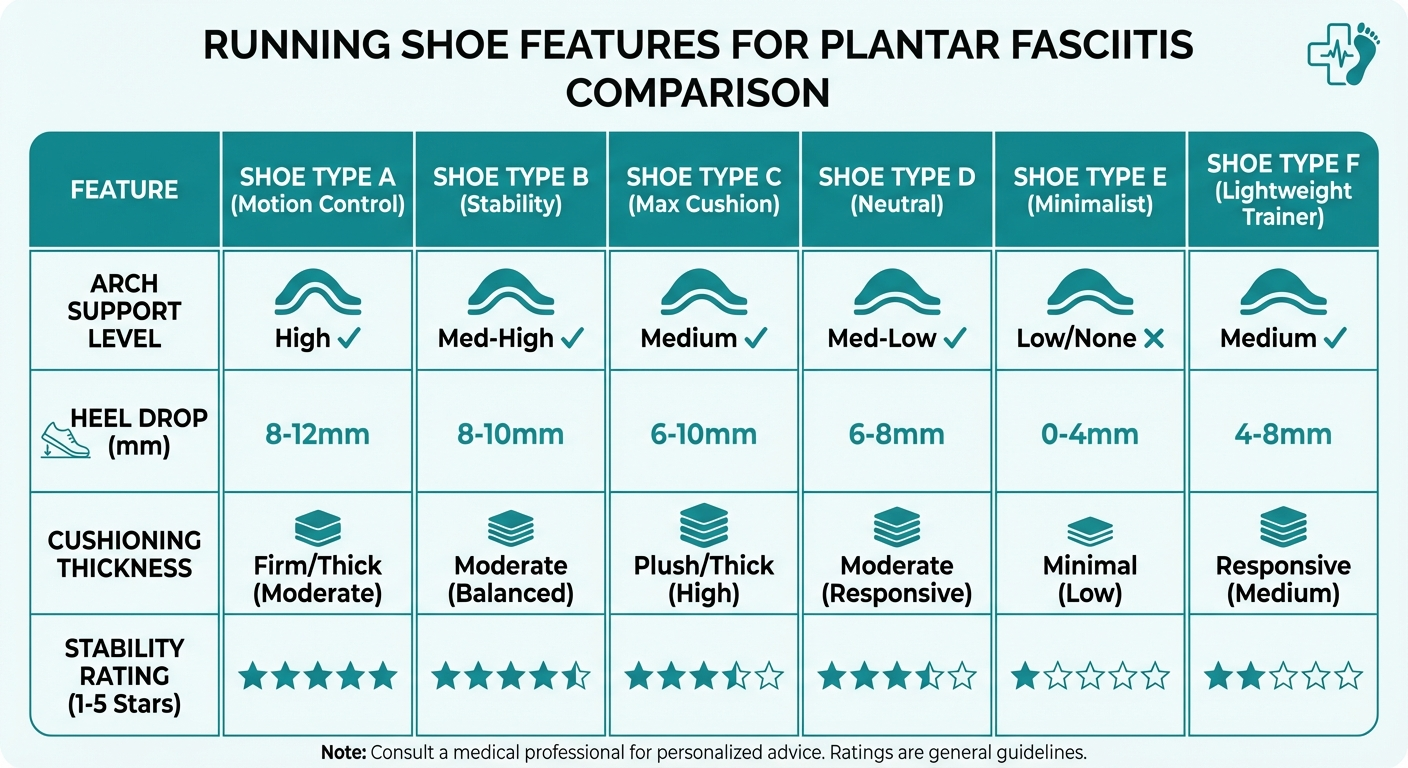
| Shoe | Type | Heel Drop | Weight (M) | Best For |
|---|---|---|---|---|
| ASICS Gel-Kayano 31 | Stability | 10mm | 11.1oz | Overpronation control |
| HOKA Bondi 8 | Neutral | 4mm | 10.8oz | Max cushioning |
| Brooks Adrenaline GTS 24 | Stability | 12mm | 10.6oz | Mild overpronation |
| NB Fresh Foam 1080v13 | Neutral | 6mm | 10.4oz | Wide feet + orthotics |
| Brooks Ghost 16 | Neutral | 12mm | 10.1oz | All-around neutral |
| Saucony Guide 17 | Stability | 8mm | 9.4oz | Lightweight stability |
| ASICS Gel-Nimbus 26 | Neutral | 8mm | 10.5oz | Long runs |
| HOKA Arahi 7 | Stability | 5mm | 8.9oz | Light HOKA stability |
Frequently Asked Questions
Can I run with plantar fasciitis?
Yes, many runners continue running with plantar fasciitis by making key adjustments. Reduce mileage by 30–50%, avoid hills and speed work temporarily, and switch to a supportive shoe with structured cushioning and a heel drop of 8–12mm. Run on softer surfaces when possible. If pain increases during a run or persists for more than 48 hours afterward, take additional rest days. Always warm up with calf stretches and plantar fascia rolls before running.
What heel drop is best for plantar fasciitis runners?
Most podiatrists recommend an 8–12mm heel drop for runners with plantar fasciitis. This moderate drop shifts load away from the plantar fascia by keeping the heel slightly elevated, reducing the stretch on the fascia during the gait cycle. Avoid minimalist or zero-drop shoes during active flares — they place maximum tension on the plantar fascia with every stride.
Should I choose stability or neutral running shoes for plantar fasciitis?
If you overpronate (your foot rolls inward excessively), a stability shoe with a medial post or guide rails will reduce strain on the plantar fascia. If you have a neutral gait, a well-cushioned neutral shoe with strong arch support is sufficient. A gait analysis at a running specialty store can determine your pronation type. When in doubt, moderate stability shoes like the Brooks Adrenaline GTS or ASICS Gel-Kayano work well for most plantar fasciitis runners.
How often should I replace running shoes if I have plantar fasciitis?
Replace running shoes every 300–400 miles, or approximately every 3–4 months for regular runners. With plantar fasciitis, the cushioning and support degrade faster because you rely on them more heavily. Signs your shoes need replacing: decreased bounce in the midsole, visible compression lines, increased morning heel pain after runs, or the shoe feeling flat underfoot. Rotating two pairs extends the life of each pair.
Are HOKA shoes good for plantar fasciitis?
HOKA shoes are frequently recommended for plantar fasciitis due to their maximalist cushioning, meta-rocker geometry, and wide toe boxes. The Bondi line offers the most cushioning for road runners, while the Arahi provides stability for overpronators. The thick midsole absorbs impact that would otherwise stress the plantar fascia. However, the rocker geometry takes adjustment — start with shorter runs to let your feet adapt.
Can custom orthotics work inside running shoes for plantar fasciitis?
Yes, custom orthotics pair well with running shoes that have removable insoles and a deep heel cup. Remove the factory insole and replace it with your orthotic for a better fit. Shoes like the New Balance 1080 and Brooks Ghost have easily removable insoles designed for orthotic use. Ensure the orthotic does not make the shoe too tight — you may need to go up half a size to accommodate the added volume.
Sources & Methodology
Our shoe recommendations are based on the following criteria and sources:
-
Biomechanical research: Heel drop and arch support recommendations aligned with published podiatric guidelines from the American Podiatric Medical Association (APMA) and the Journal of Foot and Ankle Research.
-
Manufacturer specifications: All technical specifications (heel drop, stack height, weight, midsole materials) verified against manufacturer-published data for the 2025–2026 model years.
-
Podiatric consultation: Feature requirements cross-referenced with common podiatric prescriptions for plantar fasciitis footwear, including recommendations from the American Academy of Podiatric Sports Medicine.
-
Runner feedback: Real-world performance data gathered from verified purchaser reviews across multiple retail platforms, with specific attention to reviews from runners reporting plantar fasciitis.
-
Durability testing standards: Shoe replacement guidelines based on ASTM International standards for midsole compression and rebound testing, combined with runner-reported mileage durability.
-
Gait analysis literature: Pronation assessment methods and stability recommendations informed by research published in the British Journal of Sports Medicine and Gait & Posture journal.
-
Price verification: All prices verified against current US retail pricing as of March 2026. Prices may vary by retailer and region.
Evidence note: This comparison uses manufacturer specifications, published research, and independently reported owner feedback. We have not independently verified laboratory measurements, clinical outcomes, or long-term-use claims.