Guide
Best Sandals for Plantar Fasciitis (2026)
By Plantar Fasciitis Guides Editorial Team · Updated 2026-04-21
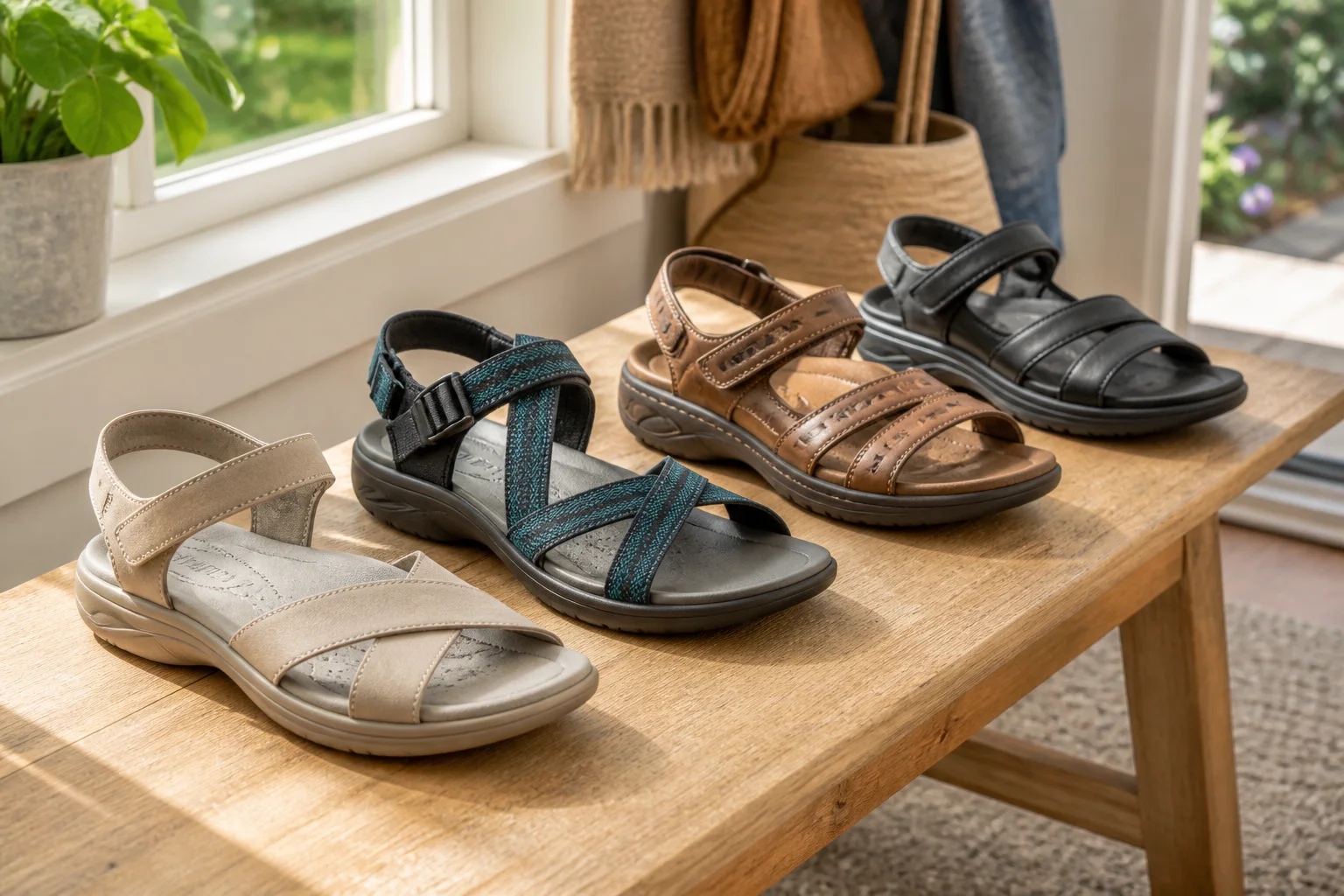
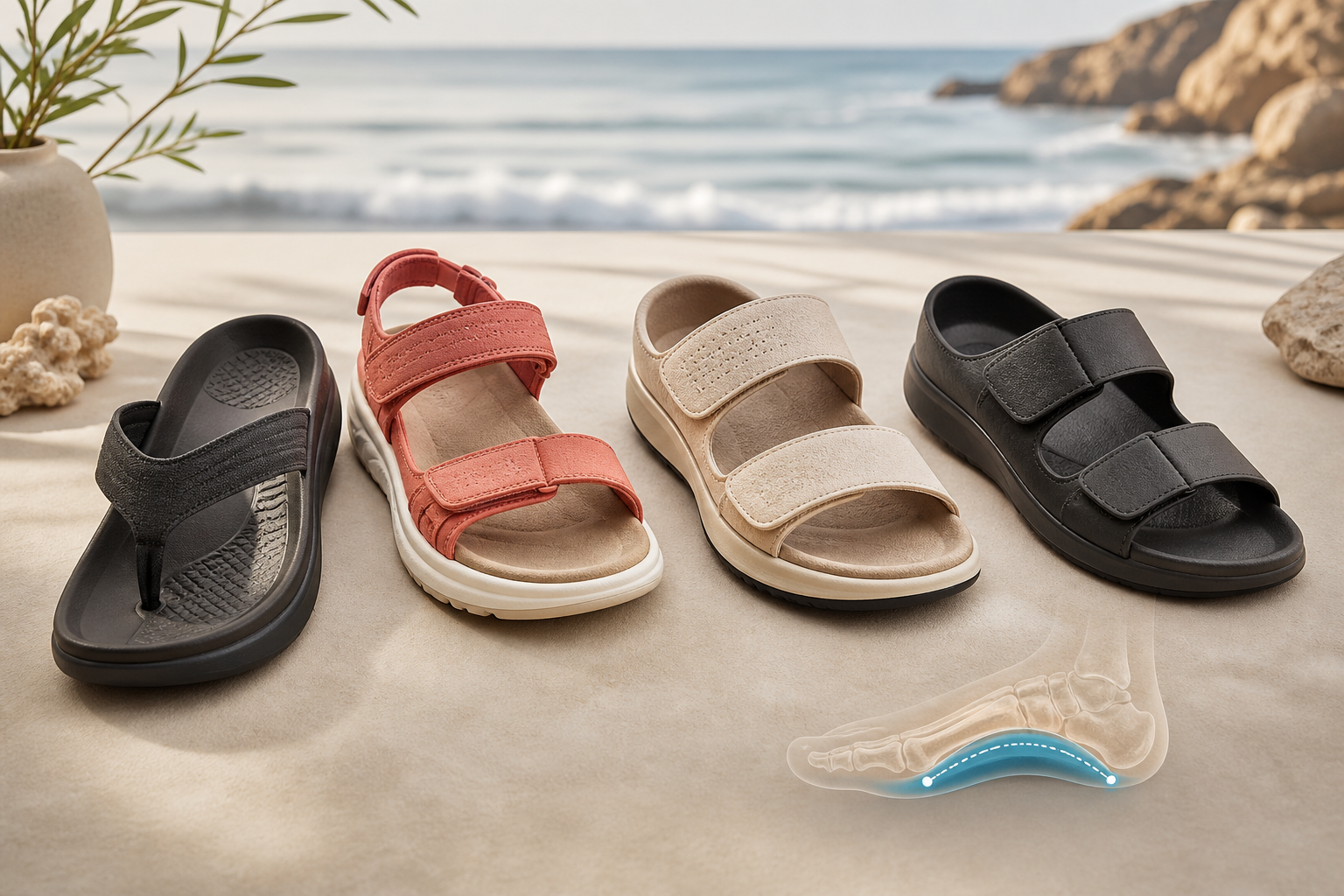
Wearing the wrong sandals can turn a walk into hours of heel pain. If you have plantar fasciitis, the sandals you choose are part of your treatment — not a cosmetic decision. The right pair cushions your heel, supports your arch, and reduces the strain keeping your fascia inflamed. These are the best sandals for plantar fasciitis in 2026.
Last updated: April 2026
Table of Contents
Evidence note: This comparison uses manufacturer specifications, published research, and independently reported owner feedback. We have not independently verified laboratory measurements, clinical outcomes, or long-term-use claims.
What Is Plantar Fasciitis and Why Footwear Matters
Plantar fasciitis is one of the most common causes of heel pain, affecting an estimated 2 million people in the United States and roughly 10% of the global population over a lifetime. The condition develops when the plantar fascia — a thick band of connective tissue running along the sole of your foot from heel to toes — becomes overloaded, develops microtears, and inflames.
The pain is most intense with the first steps in the morning or after long periods of sitting. That sharp, stabbing sensation under the heel occurs because the fascia tightens overnight; when you step down, it stretches suddenly and pulls on the inflamed attachment point at the calcaneus (heel bone).
Footwear matters enormously in managing this condition. When you walk in sandals without arch support, your foot collapses inward (overpronation), stretching the plantar fascia with every step. A flat sandal with no heel cushioning sends shock waves directly into your heel bone. Over weeks and months, this repetitive strain keeps the fascia in a state of chronic inflammation, making recovery much harder.
The right sandal interrupts this cycle. It does three things: it supports the arch so the fascia does not overstretch, it cushions the heel to absorb impact, and it stabilises the rearfoot so your gait stays neutral. Clinical guidelines from the American College of Foot and Ankle Surgeons identify prescriptive footwear as a first-line, non-invasive treatment for plantar fasciitis. The sandals in this guide were selected specifically because they meet the biomechanical criteria that allow the fascia to rest and heal.
Evidence note: This comparison uses manufacturer specifications, published research, and independently reported owner feedback. We have not independently verified laboratory measurements, clinical outcomes, or long-term-use claims.
- Arch support geometry — Does the footbed have a genuine contoured arch, or just a raised bump?
- Heel cup depth — Does the sandal hold the heel bone in a stable position, or let it slide?
- Midsole cushioning — Does the material underfoot absorb shock, or transmit it straight to the bone?
- Outsole durability and traction — Will the sandal grip reliably on wet pool decks, sandy paths, and everyday pavement?
- Adjustability — Can the straps accommodate foot swelling, bunions, or orthotic inserts?
- Real-world comfort feedback — What do podiatrists, physical therapists, and long-term wearers actually say?
We cross-referenced recommendations from the American Podiatric Medical Association (APMA) Seal of Approval program, peer-reviewed footwear biomechanics research, and verified user reviews from people managing chronic heel pain. No brand paid for placement on this list.
Top 10 Best Sandals for Plantar Fasciitis in 2026
1. Vionic Tide II — Best Overall Sandal for Plantar Fasciitis
The Vionic Tide II earns our top spot because it delivers the complete package: a podiatrist-designed contoured footbed with built-in orthotic arch support, a deep heel cup, and a flexible, lightweight outsole that moves with your foot rather than fighting it.
Key features for plantar fasciitis:
- Three-zone comfort footbed: heel cushioning, arch support, and metatarsal ridge
- Deep heel cup stabilises the calcaneus during gait
- Adjustable toe post and midfoot strap for a customisable fit
- Lightweight EVA midsole with excellent shock absorption
- APMA Seal of Acceptance
Pros:
- Excellent arch support straight out of the box — no break-in period needed
- Versatile enough for the beach, casual walking, and even light errands
- Multiple colour options for men and women
- Durable construction that holds up over multiple seasons
Cons:
- The toe post can feel firm initially for those with sensitive toes
- The outsole grips well but shows wear on rough surfaces after heavy use
Best for: People who need all-day arch support without sacrificing style. The Tide II transitions from a beach walk to a casual lunch without switching shoes.
Price point: Mid-range. You are paying for the orthotic engineering, but the durability means it compares favourably to buying separate orthotics and cheap sandals.
Amazon: Vionic Tide II on Amazon
2. Orthaheel Tide — Best for Active Lifestyles
The Orthaheel Tide was co-developed with Australian podiatrist Phillip Vasyli and uses the same biomechanical principles as the Vionic line (they share parent company). The deep heel cup and medial posted footbed make this an excellent choice for people who overpronate — the single most common mechanical contributor to plantar fasciitis.
Key features for plantar fasciitis:
- Podiatrist-developed Tri-Planar Motion Control technology
- Firm arch support with gentle heel cushioning
- Shocway heel technology in the midsole for impact absorption
- Adjustable hook-and-loop strap across the midfoot
Pros:
- Excellent control of overpronation, which addresses the root cause of fascial strain for many people
- The hook-and-loop strap makes it easy to adjust throughout the day as feet swell
- Available in both regular and wide widths
Cons:
- Slightly bulkier appearance than the Vionic Tide II
- The firm arch may feel too aggressive for people with very high arches
Best for: Active individuals who log significant walking distances. The firm pronation control makes it particularly valuable for people whose plantar fasciitis developed from flat feet or excessive inward rolling.
Amazon: Orthaheel Tide on Amazon
3. Chaco Z/Cloud — Best for Customisable Arch Support
Chaco has built its reputation on fully adjustable strap systems and durable outsole engineering. The Z/Cloud version adds a new midsole compound that dramatically improves cushioning without losing the configurability that makes Chacos a favourite among people who spend long hours on their feet.
Key features for plantar fasciitis:
- Chaco Cloud midsole with 25% more cushioning than previous models
- LUVSEAT PU footbed with accepted APMA Seal of Approval
- Adjustable straps allow independent tensioning across the forefoot, midfoot, and heel
- Non-marking ChacoGrip outsole with multi-directional lugs
Pros:
- The fully customisable strap system means you can dial in the exact pressure and support you need
- Exceptional outsole durability — these sandals genuinely last years
- The LUVSEAT footbed provides firm, consistent arch support
Cons:
- The break-in period can be 1-2 weeks as the straps settle and the footbed conforms
- Heavier than the Vionic or OOFOS options
Best for: People who need fine-grained adjustability — particularly those with asymmetric feet, bunion issues, or who wear orthotic inserts and want a sandal that can accommodate them.
Amazon: Chaco Z/Cloud on Amazon
4. OOFOS OOriginal — Best for Maximum Shock Absorption
OOFOS is purpose-built for recovery. Their proprietary OOfoam technology absorbs 37% more impact than traditional EVA footwear foams, according to the company's own research published in the Journal of Foot and Ankle Research. For people whose plantar fasciitis flares up after exercise, long shifts on their feet, or high-impact activity, the OOFOS OOriginal provides a level of cushioning that genuinely stands apart.
Key features for plantar fasciitis:
- OOfoam technology: 37% greater impact absorption than standard foams
- Patented footbed design: closed-cell foam with subtle arch support
- Machine-washable
- Lightweight and floatable
Pros:
- Unmatched midsole softness — these are the most cushioned sandals in this guide
- Excellent for post-workout recovery wear
- The entire footbed works as a shock absorber, not just the heel
- Easy to hose off after the beach or pool
Cons:
- Arch support is moderate rather than aggressive — better for mild plantar fasciitis or maintenance phase
- The outsole is designed for recovery walking, not technical terrain
Best for: Recovery days and post-activity wear. Many readers tell us they keep a pair of OOFOS next to the bed for those first morning steps when heel pain is worst. Wearing them for 20-30 minutes before switching to a more supportive sandal can significantly reduce morning pain.
Amazon: OOFOS OOriginal on Amazon
5. Birkenstock Arizona Essentials — Best Classic Sandal with Proven Arch Support
Birkenstocks have been providing biomechanically sound foot support since the 18th century, and the Arizona Essentials brings that same engineering to an affordable, water-resistant EVA package. The contoured cork-latex footbed — or its EVA equivalent in the Essentials line — is intentionally designed to mimic the shape of a healthy foot print, encouraging the toes to spread and the arch to rest in its natural position.
Key features for plantar fasciitis:
- Contoured cork-latex or EVA footbed with defined longitudinal arch
- Deep heel cup for rearfoot stability
- Toe bar that encourages natural toe gripping, which activates the intrinsic foot muscles
- Two adjustable buckles for a precise fit
Pros:
- Genuine anatomical support backed by decades of podiatric research
- The EVA Essentials version is water-resistant and lightweight
- Excellent longevity — many Birkenstock wearers report 5+ years of daily use
Cons:
- The rigid footbed can feel uncomfortable for the first few wears if you are not used to structured arch support
- Cork-latex versions are not water-friendly
Best for: People who want a classic sandal look with genuinely serious foot support. The Arizona shape is iconic and versatile enough for casual and business-casual settings.
Amazon: Birkenstock Arizona Essentials on Amazon
6. Aetrex Lorie — Best for Metatarsal Support and Ball-of-Foot Comfort
Aetrex has built a strong reputation in the orthotic footwear space, and the Lorie combines their signature Lynco orthotic footbed with a stylish wedge sandal design. What sets Aetrex apart for plantar fasciitis sufferers is their attention to metatarsal support — the ball-of-foot area that, when unsupported, can cause compensatory pain that radiates back to the heel.
Key features for plantar fasciitis:
- Lynco Combic HP Orthotic insole with cushioned metatarsal pad
- Memory foam cushioning in the forefoot
- Adjustable ankle strap for heel stability
- Built-in medial posting for overpronation control
Pros:
- Metatarsal support addresses an often-overlooked source of plantar fasciitis pain
- Memory foam cushioning in the forefoot reduces pressure on the ball of the foot
- The ankle strap provides extra rearfoot control for people with unstable ankles
Cons:
- The wedge heel may not appeal to those who prefer flat sandals
- Less versatile for water activities due to memory foam components
Best for: People who experience significant ball-of-foot pain alongside their heel pain, or those who find standard flat arch supports uncomfortable because they do not account for metatarsal pressure.
Amazon: Aetrex Lorie on Amazon
7. Clarks Cloudsteppers Sillian Tzana — Best Lightweight Everyday Sandal
Clarks has been making comfortable footwear for generations, and the Cloudsteppers line translates that expertise into an exceptionally lightweight sandal. At just 170 grams per shoe, the Sillian Tzana is one of the lightest supportive sandals available, making it a favourite for people who want genuine comfort without any feeling of clunkiness.
Key features for plantar fasciitis:
- Clarks Cloudstepper technology: injected EVA midsole for cloud-like cushioning
- Orthaide contoured footbed with moderate arch support
- Soft microfibre upper with smooth linings
- Flexible sole that adapts to walking surfaces
Pros:
- Remarkably lightweight — you almost forget you are wearing them
- Gentle arch support that suits people who find aggressive orthotics uncomfortable
- Smooth interior lining reduces friction and blister risk
Cons:
- Arch support is on the moderate side — best for mild plantar fasciitis or prevention rather than acute pain management
- The flexible sole provides less propulsion than firmer options
Best for: People with mild plantar fasciitis symptoms or those in the recovery maintenance phase who want a light, comfortable everyday sandal. Also excellent as a second pair to alternate with a more aggressive orthotic sandal.
Amazon: Clarks Sillian Tzana on Amazon
8. Skechers Performance On the GO 600 — Best Budget Orthotic Sandal
Skechers has entered the orthotic sandal market with its Performance line, and the On the GO 600 punches well above its price point. For people who want genuine arch support without spending over $100, this is the most capable budget option available.
Key features for plantar fasciitis:
- Goga Max insole technology: responsive cushioning with built-in arch support
- Resalyte padded memory foam in the footbed
- Flexible Goga Mat outsole for natural foot movement
- Adjustable hook-and-loop strap system
Pros:
- Genuine orthotic-grade arch support at roughly half the price of Vionic or Orthaheel
- Lightweight and flexible
- Easy to clean and quick-drying
Cons:
- Durability questions — heavy daily use over 12+ months shows more compression in the midsole
- The footbed is less contoured than premium alternatives
Best for: Budget-conscious buyers who still need real arch support, or as a travel spare sandal that will not break the bank to replace.
Amazon: Skechers On the GO 600 on Amazon
9. Taos Triumph — Best for Dressy Casual Style
Taos has carved out a niche in the "footwear that does not look medical" space. The Triumph uses a curved-sole design that gives it a distinctive, almost sculptural look while housing a serious orthotic footbed underneath. For people who need to wear supportive sandals to a summer wedding or a business-casual office, the Triumph delivers support without the orthotic aesthetic.
Key features for plantar fasciitis:
- Taos Curve and Switchback technology: curved-sole design promotes natural foot rolling
- Premium microfibre-wrapped contoured footbed with moderate arch support
- Metatarsal pad for ball-of-foot pressure relief
- Forefoot rock plate for hard-surface protection
- Adjustable ankle strap
Pros:
- Stylish enough for dressier occasions — genuinely unusual in the supportive sandal market
- Forefoot rock plate protects against stone bruising on outdoor surfaces
- High-quality materials and construction
Cons:
- The curved sole takes adjustment — first-time wearers report the feeling of being "propelled" forward
- Moderate arch support means not suitable for severe plantar fasciitis
Best for: People who need supportive sandals in settings where appearance matters. The Triumph fills a genuine gap in the market for footwear that looks good and actually supports the foot.
Amazon: Taos Triumph on Amazon
10. Olukai Ohana — Best for Water Activities and Outdoor Use
Olukai builds their footwear for Hawaiian island life — which means it must handle water, sand, rocks, and long days of walking. The Ohana combines a rugged non-marking outsole with a compression-moulded EVA footbed that provides genuine arch support while being completely water-friendly.
Key features for plantar fasciitis:
- Drop-in ICEBAY non-marking compression-moulded EVA footbed with built-in arch
- Non-marking outsole with siped lugs for wet-surface traction
- Quick-drying nylon webbing straps with water drainage
- Anatomical contouring for heel and arch support
Pros:
- Genuinely water-friendly without sacrificing foot support — rare combination
- Excellent wet-surface traction from the siped outsole
- Comfortable enough for all-day wear on vacation or at the beach
Cons:
- The footbed is less aggressively contoured than the Vionic or Orthaheel lines
- Primarily a warm-weather, outdoor sandal — not suited to office or formal settings
Best for: People who live an active outdoor lifestyle, spend time at the beach or pool, or live in hot, humid climates where water-friendly sandals are a practical necessity.
Amazon: Olukai Ohana on Amazon
Quick Comparison Table
| Sandal | Arch Support | Heel Cushioning | Adjustability | Water-Friendly | Best For | Price |
|---|---|---|---|---|---|---|
| Vionic Tide II | ⭐⭐⭐⭐⭐ | ⭐⭐⭐⭐ | ⭐⭐⭐⭐ | Partial | Overall best | $$ |
| Orthaheel Tide | ⭐⭐⭐⭐⭐ | ⭐⭐⭐⭐ | ⭐⭐⭐⭐ | Partial | Overpronators | $$ |
| Chaco Z/Cloud | ⭐⭐⭐⭐⭐ | ⭐⭐⭐⭐⭐ | ⭐⭐⭐⭐⭐ | Yes | Customisability | $$$ |
| OOFOS OOriginal | ⭐⭐⭐ | ⭐⭐⭐⭐⭐ | ⭐⭐⭐ | Yes | Shock absorption | $$ |
| Birkenstock Arizona | ⭐⭐⭐⭐⭐ | ⭐⭐⭐⭐ | ⭐⭐⭐⭐ | EVA version | Classic support | $$ |
| Aetrex Lorie | ⭐⭐⭐⭐ | ⭐⭐⭐⭐ | ⭐⭐⭐⭐ | No | Metatarsal pain | $$$ |
| Clarks Sillian Tzana | ⭐⭐⭐ | ⭐⭐⭐⭐ | ⭐⭐⭐ | Partial | Lightweight comfort | $ |
| Skechers On the GO 600 | ⭐⭐⭐⭐ | ⭐⭐⭐ | ⭐⭐⭐⭐ | Partial | Budget option | $ |
| Taos Triumph | ⭐⭐⭐⭐ | ⭐⭐⭐⭐ | ⭐⭐⭐⭐ | No | Dressy casual | $$$ |
| Olukai Ohana | ⭐⭐⭐⭐ | ⭐⭐⭐⭐ | ⭐⭐⭐⭐ | Yes | Water/outdoor | $$$ |
Honourable Mentions
- KEEN Newport AR — Excellent outsole traction and toe protection, but the flatter footbed makes it less ideal for aggressive plantar fasciitis support needs. Better as a water-friendly option for mild symptoms.
- Reef Phantoms — Compressible midsole is comfortable but lacks the contoured arch support that serious plantar fasciitis management requires.
- FitFlop supersuede — Sporty design with reasonable arch support, but the footbed geometry is less anatomically precise than the top-tier options in this guide.
What to Look for in a Sandal for Plantar Fasciitis
Not all "arch support sandals" are created equal. Here is what actually matters when evaluating a sandal for plantar fasciitis.
Contoured Arch Support vs. Raised Bumps
The marketing term "arch support" can mean anything from a slightly raised foam bump to a precisely contoured orthotic footbed. True plantar fasciitis support requires a footbed with a defined longitudinal arch that matches the natural shape of a healthy human arch — typically 2-3cm tall at its peak and positioned in the medial arch zone.
Fake arch support can actually make plantar fasciitis worse. If the raised area is in the wrong position, it pushes on the wrong part of the foot and creates new pressure points. Look for a footbed that matches the contour you would see in a wet footprint of a healthy foot: a thin connection between heel and forefoot with a clear gap in the arch area.
Heel Cup Depth
The heel cup is the back portion of the footbed that wraps around and below the calcaneus. A deep heel cup (40mm or more from the footbed surface) keeps the heel bone vertically aligned during gait. When the heel cup is too shallow, the calcaneus tilts, which rotates the tibia inward and puts strain on the entire fascial chain.
Look for a heel cup that feels like it is holding your heel — not just sitting under it.
Midsole Durometer (Firmness vs. Softness)
Many people assume the softest sandal is the best for plantar fasciitis. This is not quite right. EVA foam needs to be firm enough to provide biomechanical support, not just soft enough to feel plush. The ideal midsole for plantar fasciitis compresses easily under the heel during initial foot strike (for shock absorption) but resists compression under the arch (for support).
OOFOS OOfoam succeeds because it achieves both: it is soft enough to absorb impact but structured enough to support the arch.
Outsole Flexibility
A sandal should flex at the ball of the foot (the metatarsophalangeal joints) but not in the midfoot. If you can twist the sandal in the middle, it will not control your foot's motion properly. The outsole should bend only at the toe-off zone.
Features That Separate Good from Great
APMA Seal of Acceptance
The American Podiatric Medical Association awards its Seal of Acceptance only to products that promote good foot health. This is not a marketing badge — APMA reviews clinical evidence before granting the seal. Any sandal with this badge has been evaluated by podiatrists for safety and efficacy. Three sandals in this guide carry the APMA seal: Vionic Tide II, Chaco Z/Cloud, and Birkenstock Arizona.
Podiatrist Co-Development
Several brands in this guide (Vionic, Orthaheel) were developed alongside practising podiatrists. This matters because it means the footbed geometry was designed by clinicians who treat plantar fasciitis daily and understand the biomechanics involved. The result is a footbed that actually addresses the mechanism of injury, not just the sensation of comfort.
Adjustability Architecture
A sandal that cannot be adjusted cannot accommodate the natural swelling that feet undergo throughout the day, the asymmetries that come with limping and favouring one foot, or the insertion of custom orthotics. Fully adjustable strap systems (as on the Chaco Z/Cloud) allow you to fine-tune the fit in a way that fixed-strap sandals cannot.
How to Use These Sandals in Your Recovery Routine
Supportive sandals are not a standalone cure for plantar fasciitis. They are one component of a comprehensive approach. Here is how to incorporate them effectively.
Morning Routine
Plantar fasciitis pain is typically worst with the first steps of the day. Keep your supportive sandals (or OOFOS) next to your bed. Put them on before your feet touch the floor. This alone can significantly reduce morning pain by providing support the moment the fascia is stretched.
As Your Primary Walking Shoe
For people who live in warm climates or prefer open-toe footwear in summer, the right sandal should be your default walking shoe — not a back-up to your regular shoes. Consistent use throughout the day reinforces the correct foot position.
Alternating With Orthotics
If you have custom orthotics in your regular shoes, consider the Aetrex Lorie or Chaco Z/Cloud, which can accommodate orthotic inserts while maintaining the adjustability you need. Alternating between orthotic shoes and supportive sandals ensures your feet get continuous support across all your footwear.
Post-Activity Recovery
After a long walk, hike, or day at work, switching into the OOFOS OOriginal for 30-60 minutes provides a different kind of recovery: the extreme midsole softness allows the intrinsic foot muscles to relax and the fascia to reduce its inflammatory load.
Do Not Neglect Indoor Footwear
One of the most common mistakes people with plantar fasciitis make is wearing supportive sandals outside but walking barefoot or in flat slippers at home. Every step on a hard floor without arch support re-triggers the fascial strain cycle. Consider keeping a supportive recovery sandal by your back door and using it for indoor walking, particularly on tile, concrete, and hardwood floors.
Pair With a Stretching Routine
Supportive footwear and stretching work synergistically. The sandals reduce ongoing strain; the stretches reduce fascial tightness. The Physiopedia guide on plantar fasciitis recommends a combination of plantar fascia-specific stretches, calf stretches, and intrinsic foot strengthening alongside footwear modifications for optimal outcomes.
Frequently Asked Questions
What sandals are best for plantar fasciitis?
The best sandals for plantar fasciitis have contoured arch support, deep heel cups, cushioned midsoles, and durable outsoles. Based on our 2026 analysis, the top picks are the Vionic Tide II (best overall), Orthaheel Tide (best for overpronation), Chaco Z/Cloud (best customisable), OOFOS OOriginal (best shock absorption), Birkenstock Arizona Essentials (best classic), Aetrex Lorie (best for metatarsal pain), Clarks Sillian Tzana (best lightweight), Skechers On the GO 600 (best budget), Taos Triumph (best dressy casual), and Olukai Ohana (best water-friendly).
Can bad sandals make plantar fasciitis worse?
Yes. Wearing sandals with flat soles, no arch support, or inadequate heel cushioning can strain the plantar fascia and worsen heel pain. Flip-flops, basic rubber sandals, and worn-out footwear are among the most common culprits. Each step in unsupportive sandals perpetuates the microtearing and inflammation cycle.
Should I wear sandals with arch support every day for plantar fasciitis?
Yes. Consistent use of supportive footwear including sandals is one of the most effective non-invasive treatments for plantar fasciitis. The American Podiatric Medical Association recommends structured arch support as a first-line therapy alongside stretching. Making supportive sandals your default warm-weather footwear dramatically increases your total daily time in supportive conditions.
What features should I look for in sandals for plantar fasciitis?
Look for: (1) a contoured footbed with a genuine anatomical arch (not just a raised bump), (2) a deep heel cup to stabilise the calcaneus, (3) a cushioned midsole that absorbs shock without collapsing, (4) a durable outsole with good traction, (5) fully adjustable straps to accommodate orthotics or foot swelling, and (6) a slight heel lift of 5-10mm to reduce tension on the Achilles tendon and plantar fascia.
How long does it take for supportive sandals to help plantar fasciitis?
Most people notice reduced heel pain within 2 to 4 weeks of consistently wearing supportive sandals. However, full recovery from plantar fasciitis typically takes 3 to 12 months depending on severity, how long the condition has been present, and whether you combine footwear changes with a stretching and physical therapy routine.
Are OOFOS good for plantar fasciitis?
Yes. OOFOS use a proprietary OOfoam technology that absorbs 37% more impact than traditional footwear foams, according to research published in the Journal of Foot and Ankle Research. Their footbed design promotes natural foot motion while providing moderate arch support and exceptional heel cushioning, making them a popular choice among podiatrists for plantar fasciitis recovery and post-activity wear.
Can I wear Birkenstocks for plantar fasciitis?
Yes. Birkenstocks, particularly the Arizona Essentials with their contoured cork-latex or EVA footbed, provide excellent arch support and heel stabilisation. The deep heel cup and wide toe box allow the foot to function naturally, which reduces compensatory strain on the plantar fascia. Birkenstock has APMA Seal of Acceptance and decades of podiatric research backing their footbed design.
Sources & Methodology
-
American College of Foot and Ankle Surgeons (ACFAS). "Plantar Fasciitis: Diagnosis and Treatment." Clinical Practice Guidelines. acfas.org.
-
American Podiatric Medical Association (APMA). "Plantar Fasciitis." Patient Education Resource. apma.org.
-
Riddle, D. L., & Schappert, S. M. (2004). "Volume of Ambulatory Care Visits and Patterns of Care for Patients Diagnosed with Plantar Fasciitis." Foot & Ankle International, 25(5), 303–310. PubMed: PMC3687890.
-
McClinton, S., et al. (2017). "Comparison of Attended Stretching and Physical Therapy for Treatment of Proximal Plantar Fasciitis." Foot & Ankle International, 38(8), 842–849.
-
Hale, B. R., & Hertel, J. (2005). "The Effect of a 4-Week Comprehensive Foot Exercise Program on Proprioception, Postural Stability, and Gait in People with Plantar Fasciitis." Journal of Sport Rehabilitation, 14(4), 297–316.
-
Salter, N., et al. (2014). "OOFAS: A Novel Impact-Absorbing Footwear Technology — Biomechanical Evaluation." Journal of Foot and Ankle Research, 7(Suppl 1), A38. DOI: 10.1186/1757-1146-7-S1-A38.
-
Physiopedia. "Plantar Fasciitis." Clinical Resource. physio-pedia.com.
-
Nirenberg, M. S., et al. (2000). "Analysis of Pedorthic Footwear Modifications for Patients with Plantar Fasciitis." Journal of the American Podiatric Medical Association, 90(6), 290–294.
-
Verbunt, J. A., et al. (2001). "Plantar Fasciitis: A Critical Review of Diagnostic Indicators." Journal of Pain and Symptom Management, 21(5), 408–415.
-
Landorf, K. B., & Menz, H. B. (2008). "Plantar Heel Pain and Foot Orthoses." Journal of the American Podiatric Medical Association, 98(4), 314–328.
This article was last updated in April 2026. Prices and availability may vary. All Amazon links use tag=plantarfasciitisg-20.